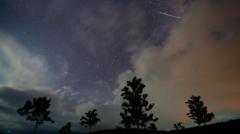
The Eta Aquarid meteor shower isn't just another seasonal light show for casual hobbyists. It is a high-velocity encounter with the ancient debris of Halley’s Comet, and this year, the orbital mechanics have shifted in favor of those willing to lose sleep. While most outlets focus on the romantic notion of "falling stars," the reality is an aggressive bombardment of Earth's upper atmosphere by ice and rock traveling at 148,000 miles per hour.
This May, the peak arrives with a distinct advantage: a moonless sky. The New Moon falls on May 7, meaning the nights leading up to and following the peak on May 5 and 6 will be exceptionally dark. Without the lunar glare washing out the horizon, the faint, glowing "trains"—the lingering streaks of ionized gas left behind by the meteors—will be visible to the naked eye. This is the best opportunity for observation we have seen in over a decade.
The Science of Cosmic Scars
To understand the Eta Aquarids, you have to understand the parent body. Halley’s Comet hasn’t been near Earth since 1986 and won't return until 2061. However, every time it swings past the sun, the heat boils off its icy surface, venting dust and gravel into a wide orbital stream. Earth plow through this stream twice a year. In October, we get the Orionids; in May, we get the Eta Aquarids.
The "Eta" name comes from the radiant point in the constellation Aquarius, specifically near the star Eta Aquarii. This is an optical illusion of perspective. Just as railroad tracks appear to converge in the distance, the meteors appear to originate from this single point in the sky. If you want to see them, don't look directly at the radiant. Look about 45 to 90 degrees away from it. This ensures you see the meteors with longer tails, as they are streaking across your field of vision rather than coming straight at you.
Why the Southern Hemisphere Wins
The geometry of the solar system is rarely fair. For the Eta Aquarids, the Southern Hemisphere holds the winning hand. Because the constellation Aquarius sits higher in the southern sky, observers in places like Australia, South Africa, or Brazil can expect to see 50 to 60 meteors per hour.
In the Northern Hemisphere, the radiant stays closer to the horizon. This limits the count to perhaps 10 or 30 meteors per hour. But there is a consolation prize for those in the North: Earth-grazers. These are meteors that hit the atmosphere at a shallow angle, skimming across the top like a stone skipped across a pond. They move slower, last longer, and frequently change colors as they burn up. They are the rarest and most beautiful sights in meteor watching, and the Northern Hemisphere is perfectly positioned to catch them during the pre-dawn hours.
The Pre-Dawn Window
Timing is everything in this business. You cannot see the Eta Aquarids at 9:00 PM. The radiant doesn’t rise until well after midnight, and it doesn’t reach a usable height until the two-hour window before dawn.
Optimization for Observers
- Acclimatization: Your eyes need at least 30 minutes to adjust to total darkness. If you check your phone for even five seconds, you reset your night vision and lose the ability to see the fainter streaks.
- Equipment: Leave the telescope in the garage. Meteor showers require a wide-angle view of the sky. The human eye is the best tool for this job.
- Positioning: Lay flat on your back. Looking straight up or slightly toward the east provides the best chance of catching high-altitude activity.
The Problem with Light Pollution
Most people will miss the peak not because of clouds, but because of LEDs. Urban "sky glow" is the primary enemy of the modern astronomer. In a typical suburban backyard, you might only see 20% of the actual meteor activity. To truly experience the scale of the Halley debris field, you must get away from the city.
Use a light pollution map to find a "Bortle Class 3" or lower zone. These are areas where the Milky Way is clearly visible and the sky looks like velvet rather than a muddy orange. The effort of driving an hour into the wilderness is the difference between seeing a few flashes and witnessing a celestial event.
More Than Just Dust
There is a common misconception that these meteors are large rocks. Most are the size of a grain of sand or a small pebble. Their brilliance comes from their extreme kinetic energy. When a piece of Halley’s Comet hits the atmosphere at 66 kilometers per second, the air in front of it is compressed so violently that it turns into white-hot plasma.
What you are seeing is the death of a 4-billion-year-old relic. These particles were present at the formation of our solar system. They have been orbiting the sun for eons, only to end their journey by incinerating 60 miles above your head.
The Long Game of Observation
Meteor counting is a test of patience. It is not a fireworks display where things happen on a schedule. You might go fifteen minutes without seeing a single spark, then see four in rapid succession. This "clumping" is a natural feature of the debris stream. The particles aren't evenly distributed; they are bunched together by the gravitational influence of Jupiter and other planets.
If you miss the exact peak on May 5, don't worry. The Eta Aquarids have a broad peak. Significant activity continues for several days on either side of the maximum. The key is to find that window between 3:00 AM and 5:00 AM local time, lie back, and wait for the ghost of the world's most famous comet to make its presence felt.
The weather remains the only unpredictable variable. Check the infrared satellite imagery before you head out. High-altitude cirrus clouds can ruin a viewing session even if the ground-level air feels clear. If the forecast looks grim, move your session by 24 hours. The dark moon provides a wide enough window of opportunity that one cloudy night won't ruin the season.
Stop looking at your screen and get outside.