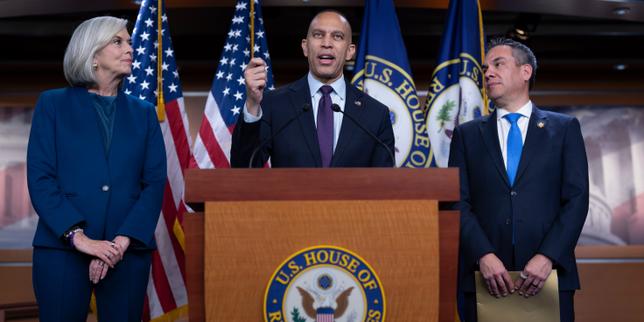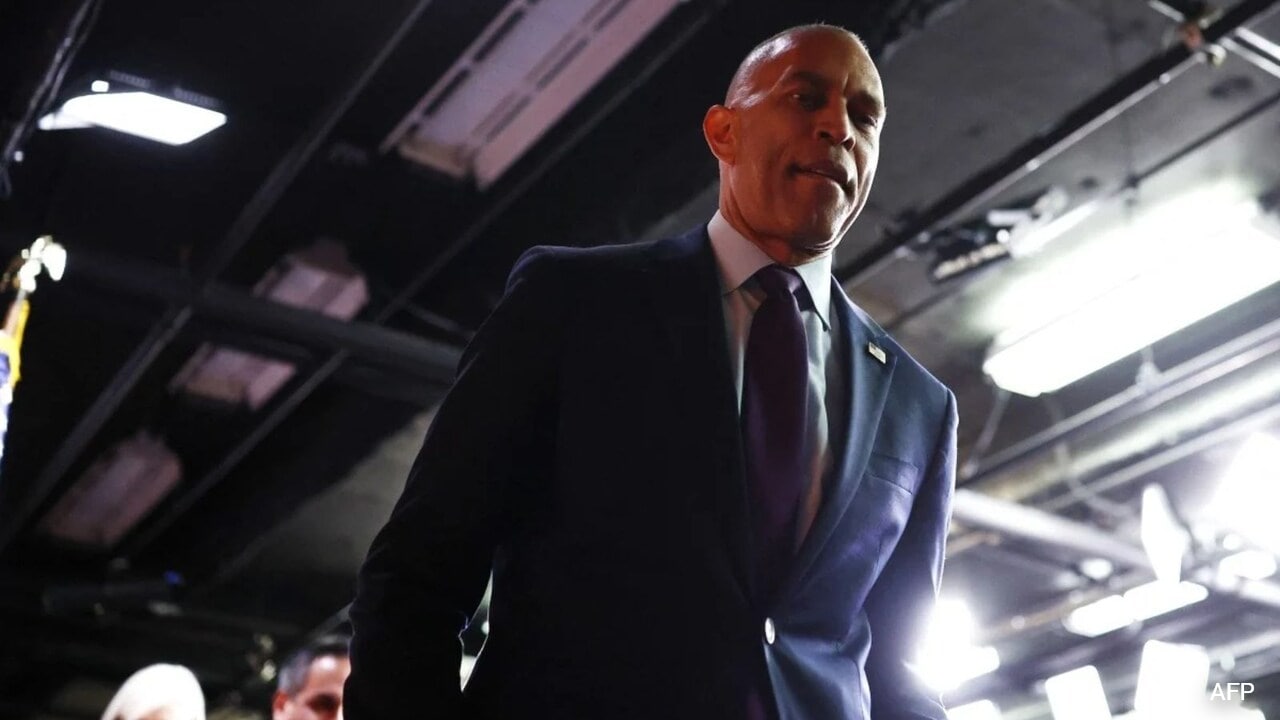
Hakeem Jeffries is poised to make American political history on January 3, 2027, when the 120th Congress convenes and elects him as the first African-American Speaker of the House. Following a sweeping Democratic victory in the November 2026 midterm elections that flipped control of the chamber, House Democrats nominated the Brooklyn congressman in a 251–11 closed-door caucus vote on November 18, with two members abstaining. Yet beneath the historic milestone lies an immediate governing test. Jeffries must hold together an expanded, ideologically fractured majority while confronting a hostile White House and an aggressive Oversight agenda from day one.
For decades, Washington coverage of leadership transitions has defaulted to biographical triumphalism. A barrier falls. Cameras flash. Pundits declare a new era. That framing misses how power actually works on Capitol Hill. Securing the nomination is the easy part when your party rides a wave into the majority. Keeping 250-plus members moving in the same direction—when half of them owe their seats to swing-district moderates and the other half answer to an energized, anti-establishment left—is where Speakers either build dynasties or get eaten alive.
The Arithmetic of a Wave Election
Start with the raw numbers. On November 3, 2026, voters handed Democrats a massive rebound, swinging dozens of seats into the party's column and ending four years of Republican House control. With 432 of 435 races called by late November, Democrats had secured 259 seats to the Republicans' 173, well past the 218 threshold required to control the floor.
On paper, a cushion of more than 40 seats looks like a luxury. Ask anyone who watched Republican Speakers Mike Johnson and Kevin McCarthy bleed out on the House floor over three- and four-vote margins during the previous two Congresses, and they will tell you Jeffries has breathing room his predecessors could only dream of.
Numbers lie when a caucus splits along geographic and generational fault lines. A 40-seat majority does not mean 40 free passes; it means 40 distinct local political realities. Freshmen elected in purple suburban districts across New York, California, and Pennsylvania won by promising kitchen-table economic relief and institutional stability. Meanwhile, a new cohort of incoming urban progressives ran on sweeping structural demands, foreign policy overhauls, and uncompromising confrontation with the executive branch.
Jeffries knows this math cold. He did not rise from Crown Heights to the top of the Democratic hierarchy by misreading a whip count. Before the November 18 caucus vote, he spent days working the phones and meeting individually with nearly every incoming and returning faction, refusing to take even an unopposed nomination for granted. That discipline produced the 251–11 margin, alongside unanimous nods for his top lieutenants—Katherine Clark as Majority Leader, Pete Aguilar as Majority Whip, and Joe Neguse as Assistant Speaker. Together, that quartet represents a complete generational and demographic overhaul of the old Nancy Pelosi, Steny Hoyer, and James Clyburn leadership troika that ran House Democrats for twenty years.
Eleven Dissenters and a Warning Shot
Pay closer attention to those eleven "no" votes. In a blowout leadership election, dissenters rarely matter on the tally sheet, yet they almost always telegraph where the floor fights will erupt six months later.
Seven of the lawmakers who opposed Jeffries's nomination went public immediately after the closed-door session. Five of them—Darializa Avila Chevalier and Claire Valdez of New York, Melat Kiros of Colorado, Chris Rabb of Pennsylvania, and Donavan McKinney of Michigan—are affiliated with the Democratic Socialists of America. Joined by incoming Representatives Adam Hamawy of New Jersey and Frederick Haynes of Texas, the group laid out four non-negotiable pressure points:
- Healthcare expansion, specifically pushing Medicare for All back onto the legislative calendar.
- Immigration enforcement, demanding aggressive checks on U.S. Immigration and Customs Enforcement operations.
- Campaign finance, targeting corporate and outside money in Democratic primaries.
- Foreign policy, calling for an immediate halt to U.S. military backing for Israel's war in Gaza.
Notice what happened next. Rather than publicly berating the rebels or threatening committee exile, Jeffries absorbed the blow and kept talking. Within days, Donavan McKinney—himself an African-American incoming lawmaker from Michigan—told local press that while he voted against Jeffries in caucus, their ongoing conversations left him hopeful he could back Jeffries on the House floor in January.
That is classic Pelosi-era management, updated for a younger caucus. Pelosi kept the original "Squad" inside the tent not by agreeing with their platform, but by giving them high-profile oversight seats and treating their leverage with respect behind closed doors. Jeffries has already secured public backing from key left-wing power brokers, including Representative Alexandria Ocasio-Cortez, Congressional Progressive Caucus Chair Greg Casar, and New York City Mayor Zohran Mamdani. By neutralizing the heavyweights early, Jeffries isolated the November dissent to a manageable handful.
Still, disarming a revolt in November is not the same as surviving a reconciliation bill or a government funding deadline in March. Many rank-and-file Democrats have not forgotten Jeffries's controversial August 2026 meeting with Trump envoy Jared Kushner, an encounter that triggered open incredulity among members who want zero back-channel accommodation with the administration. Every time Jeffries signals willingness to cross the aisle on bipartisan legislation, the left flank will ask what he gave away.
The Institutionalist Versus the Street Fighter
To understand how Jeffries will wield the gavel, look at the contradiction at the center of his career. Critics on the left routinely paint him as a cautious corporate moderate—a former commercial litigator from Brooklyn who protects incumbents and speaks in calibrated, poll-tested cadences. Critics on the right depict him as an uncompromising partisan obstructionist.
Both caricatures miss the actual record. Jeffries is an institutionalist who treats legislative procedure as a weapon. During his earlier years in the House, he partnered across the aisle with conservative Republican Doug Collins to pass the First Step Act—the most significant federal sentencing reform in a generation—and the Music Modernization Act. He understands how to move bills through committee markup without blowing up the chamber.
Yet when cornered by a Republican majority in July 2025, Jeffries held the House floor for a record-breaking speech opposing the GOP tax package, turning dry parliamentary rules into a viral marathon of resistance. Since the November 2026 election, he has framed the incoming majority around two words: affordability and accountability.
That dual mandate reveals his real strategy for the final two years of the Trump presidency.
- The Legislative Track (Affordability): House Democrats know any sweeping progressive bill passed by their chamber will hit a brick wall at the Resolute Desk. Rather than wasting floor time on pure messaging bills that alienate frontline moderates, Jeffries wants targeted cost-of-living and healthcare measures that force Senate Republicans and the White House into unpopular vetoes ahead of 2028.
- The Investigative Track (Accountability): While Jeffries keeps his own hands focused on floor management and message discipline, he is unleashing his committee chairs. Incoming House Oversight Committee Chairman Robert Garcia has already fired off preservation notices to Vice President J.D. Vance, White House Chief of Staff Stephen Miller, and President Trump's sons Donald Jr. and Eric, demanding records tied to their political and business dealings.
This division of labor is deliberate. Let the Oversight gavel draw the administration's fire and satisfy the base's hunger for confrontation, while the Speaker's office projects calm, disciplined governance to suburban voters.
Why the Historic Milestone Carries Heavy Weight
None of this diminishes the sheer gravity of what happens when the clerk calls the roll on January 3. For 237 years, the Speaker's chair—second in the presidential line of succession—has been occupied exclusively by white lawmakers, and until Nancy Pelosi broke the gender barrier in 2007, exclusively by white men.
Jeffries already broke the party leadership barrier in 2023 when he became the first African American to lead a caucus in either chamber of Congress. Stepping into the Speakership elevates that symbolism to constitutional permanence. Coming out of Crown Heights, shaped by Brooklyn's Cornerstone Baptist Church and decades of New York retail politics, Jeffries embodies the Black political establishment that has served as the Democratic Party's most reliable electoral backbone for half a century.
History does not pass appropriations bills, and symbolism does not survive a government shutdown. When the gavel drops in January, the ceremonial applause will last roughly ninety seconds. Immediately afterward, Hakeem Jeffries will face a debt ceiling standoff, an appropriations backlog, an emboldened subpoena war with the executive branch, and a caucus that expects him to deliver results without fracturing. Winning the Speakership proves he knows how to count votes; keeping it intact will prove whether he can govern a party at war with its own instincts.
For further perspective on the caucus dynamics behind the nomination, watch Hakeem Jeffries Wins Democratic Speaker Nomination 251-11, which breaks down the vote margin and the immediate floor test awaiting him in January.