Deconstructing Headline Aggregation and Incident Mechanics
Standard breaking-news aggregation treats two separate shootings on the same weekend—one killing three people at a baby shower in Parma, Ohio, and another wounding nine people at a concert in Strathmore, California—as a single shock headline. Putting two violent events side by side grabs attention, yet lumping them together blurs how different spaces fail. A dispute inside a private family gathering follows completely different escalation paths than gunfire breaking out at a crowded music show in a small town.
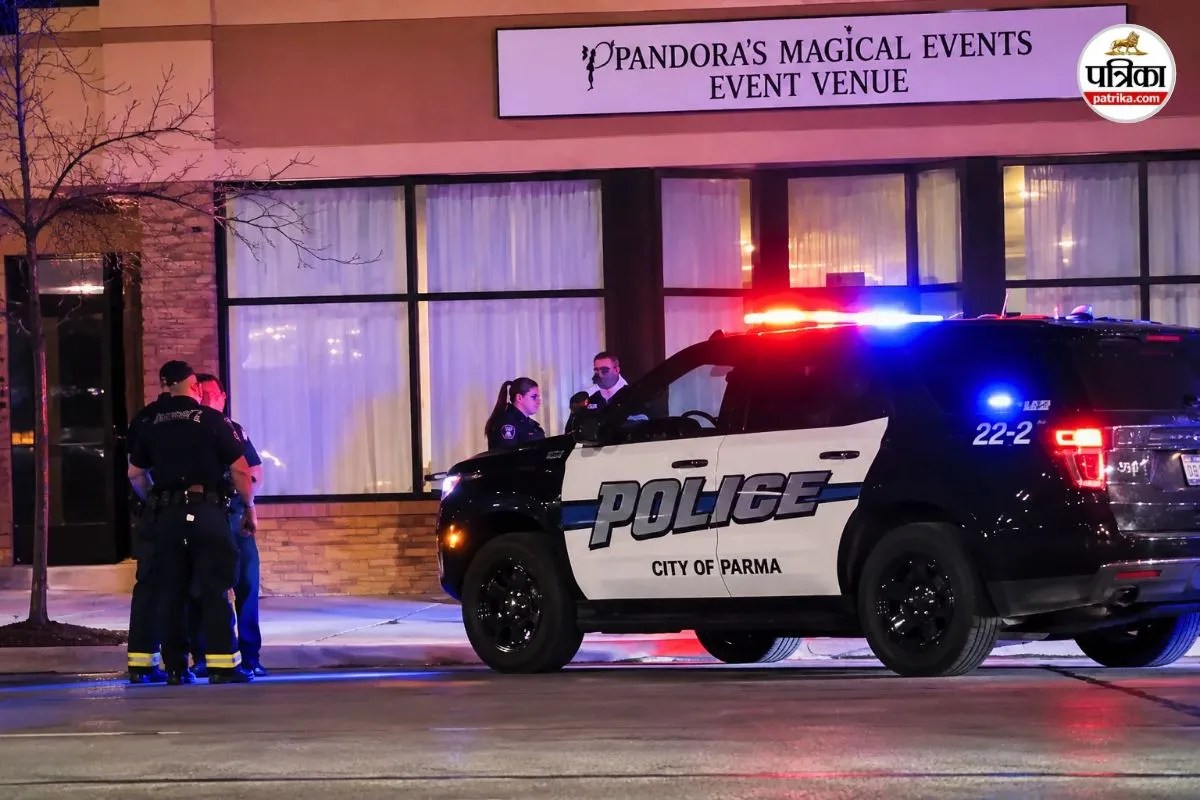
To understand what happened and what public safety teams must fix, separate the raw incident counts from the structural conditions that allowed lethal force to erupt. Verified reporting from late November 2026 establishes the baseline facts: in Parma, Ohio, around 6:05 p.m. on Saturday, November 21, 2026, gunfire at an event venue left 17-year-old Leasia England, 45-year-old Jayson Lamont Townsend, and a 19-year-old man dead, while injuring a 39-year-old woman in the leg. Police reported that the 19-year-old man was the father of the unborn child and had not been invited to the shower, that Townsend was the expectant mother's father, that gunfire was exchanged involving a 29-year-old man later taken into custody without immediate charges as detectives investigated aggression versus self-defense, and that two firearms were recovered. Roughly ninety minutes later, around 7:30 p.m. in Strathmore, California, a concert drawing about 150 attendees in a town of roughly 3,000 residents saw gunfire that wounded nine people—including a 26-year-old man in critical condition with a chest wound requiring surgery, two other victims aged 19 and 22 also requiring surgery, and six others with minor injuries—with no immediate arrests announced and authorities noting the incident may be gang-related.
The core analytical problem is simple: headline aggregation conflates interpersonal escalation inside closed social networks with crowd-exposed violence in public or semi-public entertainment spaces. Treating both under one generic shock frame misses why fatalities concentrate in close-quarters disputes while casualty counts climb when projectiles enter a dense crowd.
Structural Flaws in Standard Breaking-News Framing
Conventional event roundups rely on three habits that weaken analysis:
- Additive Body Counts Over Causal Pathways: Listing three deaths in Ohio alongside nine injuries in California invites readers to compare severity by headcount alone. Fatality rates depend heavily on shot placement, proximity, and emergency medical response times, whereas injury counts reflect crowd density and line-of-sight exposure.
- Premature Label Compression: Calling an event a "baby shower shooting" or a "concert shooting" names the venue rather than the operational mechanism. An uninvited guest arriving at a family event creates a boundary and de-escalation failure, whereas armed conflict spilling into an audience of 150 people creates a crowd-protection and perimeter failure.
- Unexamined Investigative Uncertainty: Early police briefings necessarily contain provisional findings. In Parma, investigators noted they were reviewing surveillance video and witness statements, conducting ballistics testing to match projectiles to the two recovered firearms, and evaluating whether a detained individual acted as an aggressor or in self-defense. In Strathmore, the sheriff's department reported an unspecified number of suspects, no initial arrests, and a working belief that the shooting might be gang-related without elaborating further. Treating preliminary statements as closed explanations misleads readers about what is known versus what remains under investigation.
Two Analytical Frameworks for Evaluating Shooting Incidents
The Three Pillars of Domestic and Social Gathering Escalation
When violence occurs at a private celebration such as a baby shower, three structural pillars govern how a disagreement turns lethal:
- Access Control and Perimeter Friction: Invitations set social boundaries, not physical barriers. In Parma, witnesses reported to police that the 19-year-old man was not invited to the shower. When an uninvited person with personal ties to the event enters or confronts attendees at an event space, host families rarely have trained security protocols to manage refusal without escalating tension.
- Relational Proximity and Mutual Armed Response: Domestic and family disputes carry high emotional stakes because participants know one another's histories and grievances. Police indicated that gunfire was exchanged and two firearms were recovered at the scene. Once two parties are armed within close quarters, reaction windows shrink to seconds, and distinguishing initial aggression from self-defense requires forensic reconstruction via video, witness accounts, and ballistics.
- Bystander Compression in Enclosed Rooms: Event venues concentrate relatives across age groups in tight floor plans—here including a teenager, middle-aged adults, and extended family. Even targeted exchanges between two armed individuals endanger everyone along the line of fire.
Consider a conceptual example: a family milestone event booked at a rented hall has a front door unlocked for arriving guests. A relative or former partner arrives unannounced, an argument starts near the entrance, and two people draw weapons in rapid succession. Because the space is compact and emotionally charged, bystanders have almost no time to separate or take cover before shots are fired.
The Crowd Exposure and Casualty Function
At public or semi-public gatherings such as a concert, the mechanics shift from interpersonal confrontation to crowd exposure, which can be modeled conceptually as a function of four variables: crowd size, spatial density, number of shooters or firing positions, and sightlines or egress bottlenecks.
In Strathmore, roughly 150 people attended a show in a small rural community of around 3,000 residents, featuring performers from neighboring states. When an unspecified number of suspects open fire toward a gathering of that scale, several causal links follow:
- Multi-Victim Dispersion: A single burst or volley aimed into a crowd of 150 can strike multiple people—producing nine wounded victims in this case, three severe enough to require surgery.
- Surge Load on Local Emergency Systems: Small towns often rely on regional trauma and surgical capacity rather than massive on-site hospitals. Three surgical cases plus one critical chest injury from a single event test triage, transport, and operating-room scheduling simultaneously.
- External Network Spillover: Booking acts from neighboring states or drawing crowds beyond a 3,000-person local base can bring outside disputes or gang rivalries into a local venue. Local law enforcement may face jurisdictional and intelligence gaps when suspects leave quickly and no arrests are immediately made.
Imagine a small-town venue hosting a regional show with single-file entry and a dimly lit parking lot. If a dispute among outside attendees spills into the crowd and more than one shooter fires, attendees surge toward limited exits while critical patients need rapid transport to distant medical centers.
Distinguishing Verified Facts From Working Hypotheses
Rigorous analysis requires keeping confirmed facts separate from provisional explanations:
- Known Facts (Parma, Ohio): Three people died—17-year-old Leasia England, 45-year-old Jayson Lamont Townsend, and a 19-year-old man—and a 39-year-old woman sustained a non-life-threatening leg wound at Pandora's Magical Events Venue around 6:05 p.m. on Saturday, November 21, 2026. Police identified Townsend as the expectant mother's father and the 19-year-old man as the father of the unborn child, noted gunfire was exchanged, recovered two firearms, and detained a 29-year-old man without immediate charges while investigating.
- Educated Hypotheses / Active Investigative Questions (Parma): Detectives are determining who initiated the gunfire, whether the 29-year-old man acted as an aggressor or in self-defense, and which firearm fired each fatal or non-fatal round.
- Known Facts (Strathmore, California): Nine people were shot around 7:30 p.m. on Saturday, November 21, 2026, at a concert attended by about 150 people in Tulare County. A 26-year-old man suffered a critical chest injury requiring surgery, two victims aged 19 and 22 also required surgery, six others had minor injuries, performers came from neighboring states, and no arrests were announced initially.
- Educated Hypotheses / Unconfirmed Leads (Strathmore): Authorities stated the shooting may be gang-related without providing public details, and the exact number of shooters and their motives remain under investigation.
Operational Playbook for Venue Operators and Event Organizers
Reducing risk at private functions and live events requires concrete operational controls rather than generic warnings.
Securing Private and Family Gatherings
- Enforce Controlled Entry and Guest Lists: Assign a designated point person at the entrance of rented halls or family events to verify arrival and manage uninvited visitors calmly before they reach the main room.
- Establish an Escalation Cutoff Rule: Agree in advance that if a heated dispute begins, hosts move the argument outside or call law enforcement immediately rather than attempting prolonged verbal standoffs in crowded rooms.
- Pre-Plan Egress and Cover: Identify secondary exits and solid structural barriers upon arrival so guests know immediate exit routes if a conflict turns physical.
Hardening Concerts and Community Events
- Screen Entry and Separate Queues: Use structured entry checkpoints, bag checks, and clear sightlines so conflict cannot easily carry weapons or escalate right at the threshold.
- Coordinate Pre-Event Intelligence With Local Policing: When booking regional or out-of-state acts in smaller jurisdictions, share event schedules, expected attendance, and security staffing with local sheriff or police departments ahead of time.
- Stage Trauma Response and Crowd Flow: Keep exit lanes unobstructed, train staff in bleeding control and crowd direction, and map nearest trauma facilities before doors open.
Limitations and Strategic Play
No operational checklist eliminates gun violence. Private gatherings depend on voluntary compliance among family and acquaintances, and even diligent event organizers cannot fully control external actors who arrive armed or retaliate outside venue property. Similarly, law enforcement investigations into complex exchanges of gunfire or multi-suspect incidents take time because witness accounts conflict and forensic ballistics or video reviews must establish legal culpability.
Strategic Play: Stop publishing combined body-count headlines as if they share a single cause; instead, build separate prevention and response playbooks for closed-network interpersonal disputes—focused on access control, early de-escalation, and rapid separation—and open-crowd public gatherings, focused on entry screening, cross-jurisdictional threat sharing, and pre-staged trauma and egress management.