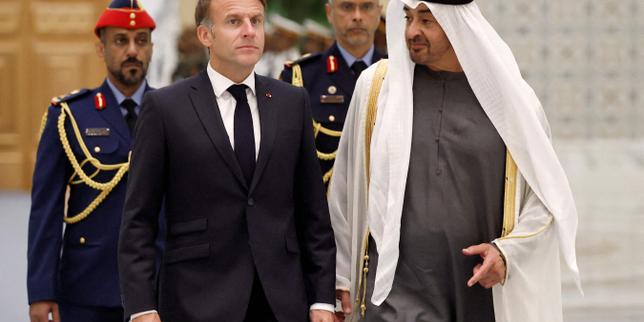
Headline commitments of 200,000 tonnes of monthly diesel from the United Arab Emirates and Bahrain cover roughly 7 percent of France's monthly diesel consumption on their own, and combined with 95,000 tonnes from Saudi Arabia reach 295,000 tonnes—just over 10 percent of domestic demand. Diplomatic announcements of supply pledges rarely solve retail fuel bottlenecks on their own because physical delivery depends on maritime routing, refining yields, commercial lifting contracts, and domestic stock drawdowns.
Standard wire reporting on President Emmanuel Macron's October 2026 Gulf tour treats diplomatic pledges as immediate supply relief. That framing conflates political intent with physical barrels. A sovereign commitment announced in Abu Dhabi, Manama, or Kuwait City establishes a bilateral framework, yet physical flows require commercial execution, vessel availability, and unobstructed transit corridors.
How Competitor Coverage Misreads Supply Pledges
Conventional news coverage of fuel diplomacy typically follows a linear sequence: a leader visits an exporter, announces a tonnage figure, and links that volume to lower pump prices. This logic omits three operational layers that separate announced volumes from retail relief in France.
First, reporting often treats monthly tonnage as an instantaneous addition to domestic supply rather than a share of a much larger balance. French presidency disclosures put total Gulf commitments—combining the 200,000 tonnes per month from the UAE and Bahrain with 95,000 tonnes per month from Saudi Arabia for October and November—at 295,000 tonnes per month, or slightly above 10 percent of French consumption. Roughly nine-tenths of monthly consumption still relies on existing domestic refining, intra-European flows, other import origins, or strategic inventory drawdowns.
Second, headlines rarely separate physical routing risk from headline volume. When regional conflict disrupts maritime chokepoints such as the Strait of Hormuz, transit security and insurance affect how refined products move out of the Persian Gulf. Reporting around the October 2026 tour noted that Kuwait's diesel and kerosene commitments for Mayotte and Réunion were routed through Oman specifically to bypass Strait of Hormuz disruptions. Any volume originating inside or near contested waters faces routing, war-risk insurance, and scheduling variables that raw tonnage figures do not capture.
Third, news summaries blur the boundary between stock releases and ongoing import flows. Alongside the Gulf pledges, France released 10 million barrels of diesel from reserves with the stated aim of lowering prices by 12 to 18 cents per liter—roughly 5 to 8 percent—starting the following month. Drawing down strategic reserves is a finite buffer mechanism, whereas Gulf deliveries represent recurring monthly supply commitments.
The Four Pillars of Fuel Supply Security
Evaluating whether diplomatic diesel agreements ease domestic pressure requires breaking supply security into four operational pillars:
- Volume Share: The ratio of pledged monthly tonnage to total national consumption, which determines how much of a supply deficit or price spike the agreement can offset.
- Transit Resilience: The physical maritime or overland path from refinery or export terminal to destination ports, including exposure to chokepoints, rerouting through alternative terminals such as Omani ports, and tanker availability.
- Commercial Execution: The conversion of political announcements into binding lifting schedules, product specifications, and commercial contracts involving state producers and refiners.
- Buffer Dynamics: The interaction between recurring imports and finite strategic stock releases, which governs how long authorities can smooth price spikes without depleting emergency reserves.
When one pillar is weak, strength in another cannot fully compensate. For example, securing 295,000 tonnes per month on paper improves diversification, yet if transit routes face bottlenecks or commercial contracts lag diplomatic statements, near-term market tightness persists.
Cause-and-Effect Chains in Fuel Pricing and Domestic Tension
Rising diesel prices since February 2026 and protests over living costs—including demonstrations around October 17—created acute political pressure in France. Tracing the causal chain from Gulf supply talks to the retail pump reveals why price adjustments are often smaller or slower than officials project.
A political commitment first has to move through physical logistics. Even when Gulf producers commit refined middle distillates, loading schedules, voyage durations to European or overseas terminals, and onshore blending or distribution take time. If regional security incidents threaten Gulf shipping lanes, shipowners and insurers price in higher risk, raising landed costs even when nominal supply agreements are signed.
Domestic pricing adds another layer of friction. Pump prices reflect crude and refined product benchmarks, refining margins, taxes, distribution costs, and retailer pricing decisions. Public reporting around the October 2026 measures highlighted friction between government expectations for pump price reductions and commercial commitments from fuel suppliers such as TotalEnergies. A supply pledge or reserve release can ease physical tightness at the margin, but retail discounts depend on how wholesale costs pass through the supply chain.
Consider two contrasting operational scenarios:
- Smooth Execution Scenario: Export terminals operate without disruption, vessels transit on schedule, and reserve releases coincide with steady arrivals. Wholesale supply loosens gradually, helping cap further spikes while giving policymakers breathing room.
- Logistics Friction Scenario: Regional hostilities raise maritime risk or force rerouting, vessel schedules slip, and domestic demand remains inelastic. Even with 295,000 tonnes of monthly commitments on the ledger, physical tightness keeps wholesale differentials elevated and limits retail relief.
Separating Confirmed Facts from Analytical Hypotheses
Rigorous assessment requires keeping verified disclosures separate from working hypotheses:
- Confirmed Facts: The French presidency announced commitments for an additional 200,000 tonnes of diesel per month from the UAE and Bahrain during Macron's Gulf visit in October 2026. Combined with 95,000 tonnes per month from Saudi Arabia for October and November, total Gulf diesel commitments reached 295,000 tonnes per month—just over 10 percent of French consumption. France also announced a release of 10 million barrels of diesel from reserves, targeting a 12-to-18-cent (5 to 8 percent) price reduction starting the next month, while diesel prices had been rising since February amid domestic cost-of-living protests. Kuwait also committed diesel and kerosene for Mayotte and Réunion via Oman to bypass Strait of Hormuz disruptions.
- Educated Hypotheses: Because public announcements specify aggregate monthly tonnage rather than full contract terms, analysts must infer how quickly those volumes translate into landed cargoes and whether they represent net new supply to Europe or diversions from other buyers. Similarly, whether reserve releases achieve the full 12-to-18-cent reduction depends on commercial pass-through and ongoing regional shipping stability.
Operational Limits and Risks of Energy Diplomacy
Relying on bilateral fuel pledges carries clear limitations. Diplomatic agreements do not eliminate global commodity price exposure; diesel remains a globally traded refined product whose price responds to international refining capacity, geopolitical risk premia, and broader energy markets.
Reserve drawdowns carry their own trade-off. Releasing 10 million barrels addresses immediate affordability and political pressure, but emergency stocks are finite and must eventually be replenished, potentially adding future demand when market conditions are still fragile.
Geopolitical concentration is a third constraint. Turning to Gulf exporters during a period of Middle East conflict and maritime disruption trades one vulnerability for another if transit lanes or export infrastructure face renewed strikes or shipping delays. Energy diplomacy works best as a bridge across acute bottlenecks, not as a standalone structural fix.
Tactical Playbook for Tracking Supply Execution
Anyone monitoring or managing exposure to this agreement can track execution through a disciplined sequence:
- Audit Net Versus Gross Volumes: Compare the 295,000-tonne monthly total against France's baseline monthly diesel demand and verify whether committed cargoes are incremental or reallocated from existing trade flows.
- Track Chokepoints and Rerouting: Monitor maritime transit conditions around the Strait of Hormuz and watch whether shipments rely on alternative export points or routing corridors such as Oman.
- Verify Commercial Lifting: Look for concrete cargo movements, port arrivals, and refinery or terminal scheduling rather than relying solely on diplomatic statements.
- Measure Retail Pass-Through: Compare pump prices against the government's 12-to-18-cent (5 to 8 percent) target and track supplier pricing announcements to see how much relief reaches end users.
- Monitor Reserve Replenishment Needs: Track remaining strategic stock levels and outline contingency plans in case regional disruptions extend beyond the initial window of relief.
Strategic Action
Treat the UAE, Bahrain, and Saudi diesel commitments—alongside the 10-million-barrel reserve release—as a temporary stabilization bridge covering roughly 10 percent of monthly French consumption, and pair that bridge with strict monitoring of maritime routing, commercial cargo arrivals, and domestic retail pass-through before assuming durable price relief.