Medicine used to wait until a baby took their first breath before fixing major structural problems. That old rulebook is officially gone. When specialists operate on an infant while they are still floating inside the womb, they aren't just practicing advanced medicine—they are rewriting the limits of human survival.
Consider the case of baby Theo, who made medical history as the first British infant to undergo a pioneering in-utero procedure for complex gastroschisis. If you aren't familiar with the condition, gastroschisis happens when the abdominal wall fails to close properly during early development, leaving the baby's intestines growing completely outside the body. Historically, doctors waited until birth to handle this. But waiting exposes delicate organs to amniotic fluid for months, triggering severe inflammation, long-term digestive failure, and a grueling series of neonatal intensive care operations.
Instead of waiting for a crisis, medical teams are treating the womb as an active surgical suite.
The Logistics Behind International Fetal Medicine
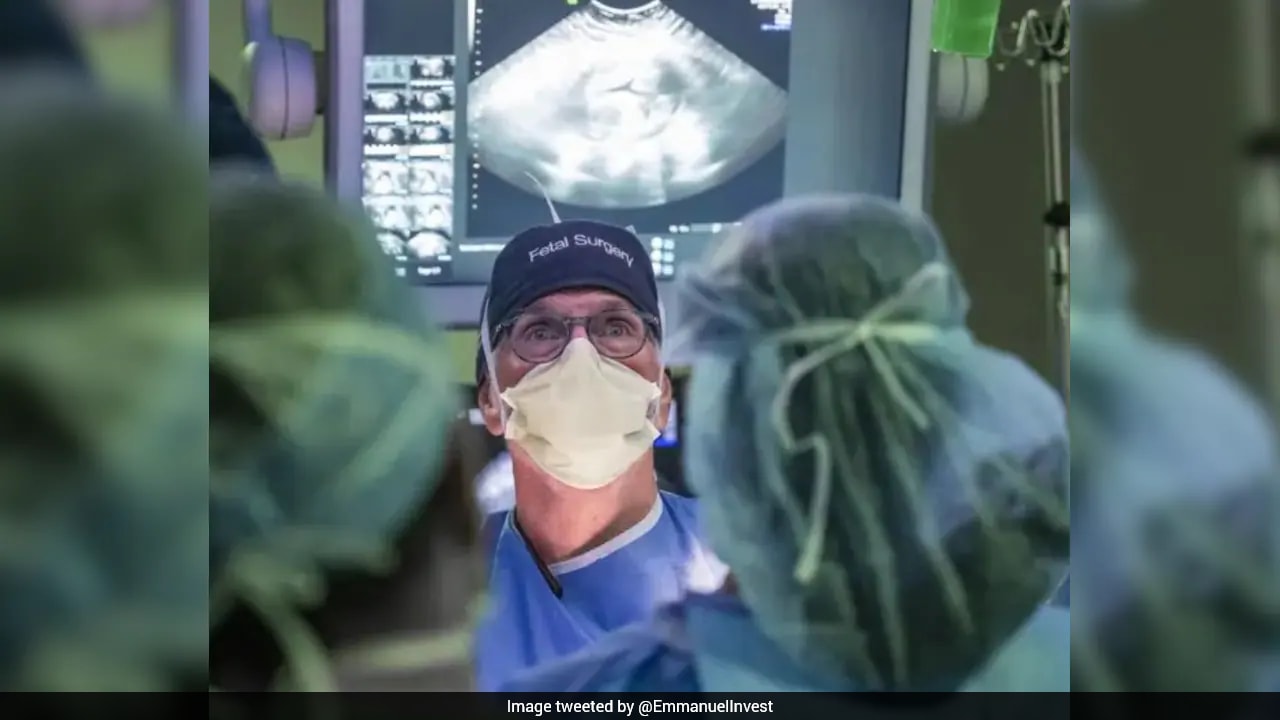
Pulling off a procedure of this magnitude requires an extraordinary chain of global coordination. For London-based parents Maisie Savage and Josh French, a routine twenty-week scan turned their world upside down when specialists at Great Ormond Street Hospital identified the severe defect. Because specialized trials for this specific type of in-utero correction weren't widely available locally, the medical team referred them to a specialized program at Texas Children's Hospital in Houston, led by surgeon Dr. Michael Belfort.
The roadmap to recovery started long before anyone boarded a transatlantic flight. First, the parents traveled to Leuven Hospital in Belgium. There, doctors administered a precise injection of Botox into the fetus's abdominal wall. This step relaxed the muscles, making it physically possible later on to slide the protruding organs back inside without tearing developing tissue.
When the mother reached twenty-six weeks of pregnancy, the actual fetal surgery took place in the United States. Surgeons partially exposed the uterus, swapped out the natural amniotic fluid for carbon dioxide to create a functional working pocket, and used minimalist keyhole instruments to return the intestines to the abdominal cavity before sealing the defect.
Most people assume an operation like this forces an immediate emergency delivery. It doesn't. After healing from a uterine incision much larger than a standard C-section, the mother carried the pregnancy for another fourteen weeks, eventually delivering full-term.
Why Prenatal Intervention Changes Long-Term Prognosis
Surgeons aren't performing these operations just to grab headlines. Early correction changes the entire trajectory of a child's life. When organs develop outside the abdominal cavity for months, they swell, thicken, and lose their normal function. Pushing them back inside during the safety of the second trimester stops that damage dead in its tracks.
We see similar shifts in how medicine handles conditions like open spina bifida. Traditional care meant waiting until after birth to close gaps in the spinal column. Modern fetal medicine protocols now allow multidisciplinary teams to repair those spinal cords months earlier. Data shows that closing these defects prenatally drastically reduces the need for brain shunts later in life and dramatically improves independent motor function and mobility down the road.
It shifts the paradigm from damage control to actual prevention.
The Reality of High-Risk Fetal Interventions
Let's be clear about what this entails. This isn't routine healthcare. It involves immense physical and emotional tolls on the family. Traveling across multiple continents while navigating a high-risk pregnancy requires mental resilience that most people never have to muster.
Maternal risks are real, too. Opening the uterus during pregnancy carries distinct complications, including the threat of premature labor or uterine rupture. This is why these treatments remain strictly confined to specialized clinical trials and elite pediatric medical centers rather than standard community hospitals.
Yet, for families facing bleak prognoses during routine scans, these trials offer something invaluable: a genuine chance at a normal childhood. Five months after birth, babies like Theo are developing right on track, proving that the boldest leaps in modern medicine often happen before the patient ever takes a breath outside.