The media cycle follows a predictable, exhausting script. A political leader warns of an imminent, massive enemy surge. Frontlines are drawn on television maps with thick, menacing red arrows. Analysts talk about "breakthroughs" and "sweeping maneuvers" as if we are still living in 1943.
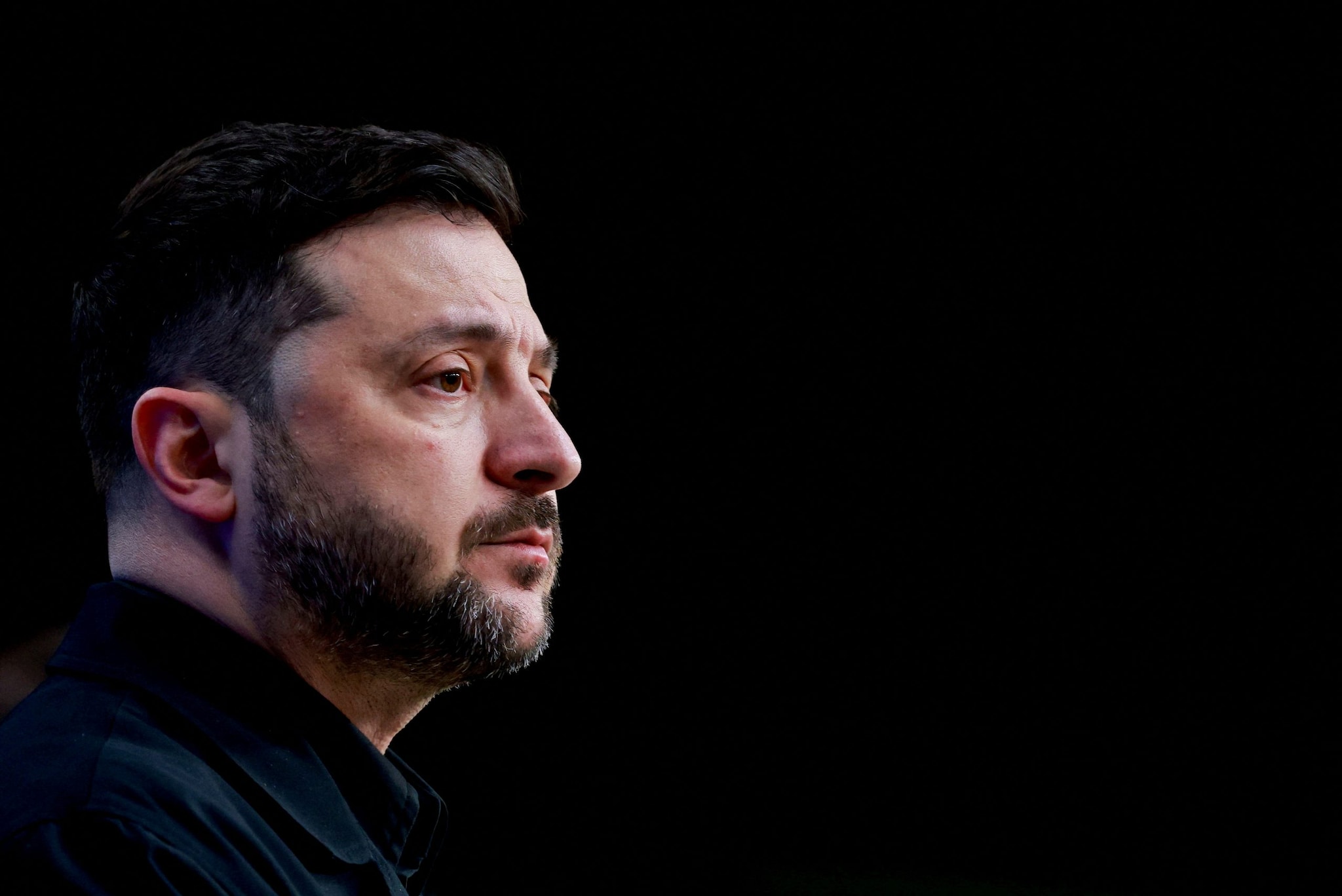
When Ukrainian President Volodymyr Zelenskiy warns that Russia is preparing a major new offensive, the international press immediately buys into the theater of the grand breakthrough. They picture columns of armor rolling across plains, seizing massive swaths of territory in days.
They are wrong. The entire premise of the "major breakthrough offensive" in modern peer-to-peer warfare is dead.
By focusing on the specter of a massive, sweeping invasion force, commentators miss the brutal reality of what is actually happening on the ground. This is not a war of rapid movement. It is a war of industrial exhaustion. Expecting a massive, cinematic offensive ignores the defining technological and structural realities of the current battlefield.
The Death of Tactical Surprise
The fundamental reason a massive, sudden offensive cannot happen today is simple: the transparent battlefield.
In past conflicts, armies could mass tens of thousands of troops and hundreds of tanks in secret. Today, commercial satellite imagery, high-altitude reconnaissance drones, and electronic signals intelligence make secrecy impossible.
You cannot mass a brigade for an attack without the enemy spotting it hours, if not days, in advance.
When either side attempts to concentrate armor and infantry for a large-scale push, they are detected immediately. Once detected, they are targeted by long-range precision artillery, cluster munitions, and first-person view (FPV) drones before they even reach the line of departure.
I have analyzed military logistics pipelines for over a decade. The pattern is always the same. Western observers look at troop concentrations and assume a massive blitzkrieg is coming. What actually follows is a series of grinding, localized engagements. The air is too dense with surveillance for anything else.
The Math of Attrition vs. The Fantasy of Maneuver
Let us dismantle the "People Also Ask" obsession with geographic gains. Media consumers constantly ask: How much territory changed hands this month? This is the entirely wrong metric for assessing a modern war of attrition.
In a war of exhaustion, territory is secondary. The primary objective is the destruction of the enemy’s material and manpower relative to your own replacement rate.
Military theorist Carl von Clausewitz noted that the defensive form of warfare is inherently stronger than the offensive form. Modern technology has amplified this imbalance tenfold. Consider what is required to execute a "major attack" today:
- Minefield Breaching: Thousands of anti-tank and anti-personnel mines litter every square kilometer of the front. Clearing them requires specialized engineering vehicles that are slow, highly visible, and easily destroyed.
- Drone Suppression: An offensive force must move outside the umbrella of their static electronic warfare systems, leaving them highly vulnerable to swarms of cheap, explosive drones.
- Logistical Overextension: Moving forward means moving away from established supply lines and entering pre-sighted artillery kill zones.
When a state prepares a "new attack," they are not preparing a blitzkrieg. They are preparing to feed more resources into a meat grinder in the hope that the adversary's system breaks first. It is a logic of accumulation, not acceleration.
The Operational Reality of Localized Pressure
Instead of a grand offensive, what we actually see—and will continue to see—is a strategy of distributed attrition.
| Metric | Grand Offensive Fantasy | Modern Attrition Reality |
|---|---|---|
| Frontage | Concentrated on one or two breakthrough axes | Small-scale attacks across dozens of disconnected points |
| Unit Size | Divisions and Corps acting in unison | Company and platoon-sized assault groups |
| Objective | Deep penetration to capture strategic cities | Forcing the enemy to commit and deplete reserves |
| Speed | Tens of kilometers per day | Hundreds of meters per week |
By striking in multiple areas simultaneously, an army forces its opponent to shift dwindling reserves back and forth across a massive frontline. This burns fuel, wears down equipment, and exhausts troops. It is death by a thousand cuts, not a single executioner's blow.
Why Political Leaders Keep Pushing the "Major Attack" Narrative
If the reality on the ground is a slow, grueling stalemate of attrition, why do political leaders on both sides constantly warn of massive, imminent offensives?
Because nuance does not secure funding, and nuance does not sustain domestic morale.
For Ukraine, highlighting the threat of a massive Russian surge is a vital diplomatic tool. It creates urgency in Western capitals, driving the delivery of air defense systems, ammunition, and financial aid. If the situation is framed as a static, slowly burning conflict, foreign taxpayers lose interest. Fear is a powerful catalyst for procurement.
For Russia, projecting the image of an unstoppable, gathering storm serves an psychological warfare purpose. It aims to convince the West that Ukrainian resistance is ultimately futile and that Western aid is merely delaying an inevitable outcome.
Both sides use the rhetoric of the grand offensive to serve political ends, while their generals on the ground operate under the strict, unforgiving constraints of trench warfare and drone surveillance.
The Downside of the Grinding Truth
Admitting that the war has settled into a deep, positional struggle of attrition carries a heavy cost. It means acknowledging that this conflict will not end with a decisive, clean military victory on the battlefield anytime soon.
It means realizing that the side with the greater industrial capacity, the larger population pool, and the higher tolerance for casualties holds the structural advantage over the long term. This is an uncomfortable truth for Western policymakers who prefer clean, tech-heavy solutions and quick returns on investment.
The Western defense industrial base is built for short, high-tech interventions. It is fundamentally unequipped for a protracted, high-intensity industrial war requiring millions of standard artillery shells per year. Pointing out that Russia's "major offensive" is actually just a relentless, multi-year industrial grinding operation forces a terrifying realization: the West is losing the production race.
Stop looking at the maps for dramatic shifts. Stop waiting for the grand offensive that will settle the score in a single season. The war of the big red arrows is over. The war of the factory floor has begun.