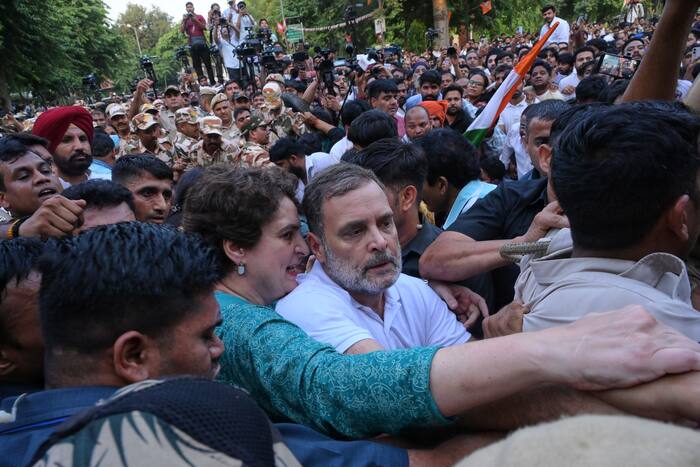
When the police shoved Rahul Gandhi into the back of a holding van outside New Delhi's central administrative district, the ruling establishment revealed its core panic. This was not about maintaining traffic order or enforcing municipal assembly restrictions. It was a desperate bid to sanitize the optics of a structural crisis that threatens the foundation of Indian democracy. Across the country, opposition leaders and citizen movements are confronting an administrative maneuver of staggering proportions: the systematic disenfranchisement of millions through a mass voter list purge.
The statistics emerging from the Election Commission of India's special revision exercises are alarming. Under the official guise of clearing out dead entries, duplicate names, and foreign nationals, election authorities have knocked tens of millions of citizens off active electoral rolls. In national urban centers like Delhi, nearly a third of the electorate has been scrubbed in a single sweep.
To understand the mechanics of this operation, one must look past the dry language of bureaucratic compliance. The Indian electoral roll is managed through software systems vulnerable to administrative manipulation, bulk deletions, and algorithmic targeting. Opposition investigators analyzing regional rolls have uncovered recurring anomalies, including repeated use of identical photographic placeholders and mass deletions in non-ruling-party constituencies. When a database is altered to exclude opposition-leaning demographics under administrative pretexts, the result is an engineered election long before a single ballot is cast.
This is why the detention of high-profile political figures fails to quell the unrest. The friction has already moved past standard legislative bickering. Spurred by grassroots networks like the student-led "Cockroach" coalitions that previously brought down cabinet ministers over state exam scandals, public anger has found structural discipline. Citizens are organizing offline, sharing physical verification sheets house-to-house, and challenging the legitimacy of an election commission they accuse of partisan alignment.
The state's response relies on rapid containment. Mobile internet services are throttled in protest zones, assembly curfews are invoked under emergency legal provisions, and prominent opposition figures are shuttled into brief preventive detentions. Yet these tactics operate on an outdated playbook. In a fractured media environment where independent digital feeds broadcast police vans hauling away elected parliamentarians in real-time, every arrest magnifies the underlying grievance.
The political calculus of Prime Minister Narendra Modi's administration depends on framing these challenges as local anomalies or partisan tantrums by frustrated dynasts. But the geographical spread of the demonstrations—stretching from northern state capitals down to southern hubs like Kochi—shatters that narrative. When citizens from diverse socioeconomic backgrounds realize their franchise has been administratively erased, the issue stops being a party dispute and transforms into a fundamental battle over popular sovereignty.
As deadlines approach for final electoral roll rectifications, the pressure on independent institutions intensifies. The judiciary faces mounting petitions demanding judicial oversight of the purge, while street-level resistance refuses to disperse under tear gas and temporary custody. Detaining an opposition leader for a few hours provides a temporary television headline, but it leaves the underlying administrative rot untouched. The rolls remain compromised, the public remains unconvinced, and the fight for the integrity of the Indian vote inches closer to a breaking point.
Opposition demands election chief's resignation over voter list claims
This video report from the ground details how opposition leaders and grassroots activists escalated their nationwide campaign demanding the resignation of the Chief Election Commissioner over disputed electoral rolls.


