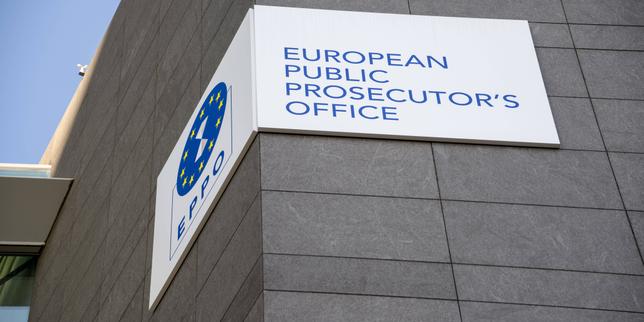
The prosecution of 22 individuals in Greece, including four political figures, for siphoning millions of euros in European Union agricultural subsidies has exposed a truth that Brussels has spent decades trying to ignore. This is not a story of a few rogue actors slipping through the cracks of a complex system. It is the inevitable result of a multi-billion-euro funding apparatus that rewards land ownership over actual food production, creating a playground for political syndicates to pillage public funds while genuine farmers starve.
For years, the European Union's Common Agricultural Policy (CAP) has operated on a simple, flawed premise. The more land you control, the more money you receive. In Greece, this formula collided with a weak land registry, a culture of political patronage, and an administrative apparatus that was systematically blind to fraud. The current judicial scandal, involving high-ranking officials and systemic exploitation of the state agricultural payments agency, OPEKEPE, shows that the system did not fail by accident. It functioned exactly as those who designed the loopholes intended.
The Mechanics of the Ghost Pasture
To understand how 22 people could divert millions of euros in taxpayer money, one must understand the concept of the ghost pasture.
Under the rules of the CAP, direct payments are distributed based on declared eligible hectares. You do not need to grow a single tomato, nor do you need to milk a single cow to qualify for these funds. You simply need to prove you have access to land that could, in theory, be used for agricultural activity.
This is where the fraud began.
Local syndicates, working in tandem with corrupt officials within regional agricultural registries, identified vast tracts of state-owned land, forest reserves, and abandoned private plots. Using falsified lease agreements and forged notary deeds, they registered these lands under their own names or the names of shell companies.
The scale of this phantom agriculture is staggering. Thousands of hectares of mountain scrubland, unsuitable for any livestock, were officially recorded as prime grazing pastures.
To satisfy the bare minimum of compliance, the fraudsters used fake animal registries. They declared herds of sheep and cattle that existed only on paper. They traded ear tags like currency. When inspectors scheduled a rare physical audit, the fraudsters temporarily moved rented herds from legitimate farms to the declared plots, creating a brief, expensive theater of productivity. Once the inspectors left, the animals vanished, and the cash flowed.
Why the Systemic Blindness Was Protected
A fraud of this magnitude cannot occur in a vacuum. It requires either profound administrative incompetence or active political protection. In this case, it was a calculated mix of both.
OPEKEPE, the Greek agency responsible for distributing EU funds, has been a battleground of political patronage for generations. Appointments to its leadership and regional offices are frequently used as rewards by mainstream political parties. This created a culture where whistleblowers were isolated and audits were delayed until the statute of limitations rendered them useless.
Politicians understood that agricultural subsidies were the lifeblood of rural constituencies. By ensuring that local cooperatives and influential landowners received their annual payments without too many questions asked, politicians secured loyal voting blocks.
[EU CAP Funds] ──> [OPEKEPE Agency] ──> [Political Intermediaries] ──> [Local Voter Networks]
This cycle of mutual benefit created a wall of silence. When honest civil servants tried to flag irregularities in the land declarations, they were routinely reassigned to minor posts. The geographic information systems used to map eligible land were left outdated on purpose. For years, the agency relied on obsolete satellite data and paper maps that allowed the same plot of land to be claimed by three different people simultaneously.
The Illusion of Brussels Supervision
In Brussels, the response to these systemic failures has long been characterized by a preference for paperwork over reality.
The European Commission operates on a model of shared management. It writes the checks and sets the guidelines, but leaves the policing to the member states. This structure assumes that national governments have a vested interest in protecting EU taxpayers' money.
They do not.
To a national government, EU agricultural funds are essentially free money injected into the local economy. There is little domestic political incentive to aggressively police these funds if doing so means clawing back millions from rural communities and admitting to systemic corruption.
When the European Anti-Fraud Office (OLAF) did intervene, its investigations were met with bureaucratic foot-dragging. Case files sent to Greek prosecutors languished in regional courts for years. By the time a case reached a judge, the assets had been moved through offshore networks, and the shell companies had been liquidated.
The European Commission’s primary weapon against this fraud is the financial correction, a mechanism where a portion of the subsidies is clawed back from the national treasury. But this penalty does not punish the fraudsters. It punishes the average taxpayer, as the national government uses public funds to pay the fines while the corrupt actors keep their illicit gains.
The Devastating Cost to Genuine Agriculture
While political syndicates grew wealthy on paper farms, the actual Greek agricultural sector entered a slow death spiral.
The inflation of land values is the most damaging side effect of this subsidy fraud. Because ghost pasture operators needed land to secure their payments, they artificially bid up the price of land leases across the country.
Genuine young farmers, trying to rent land to grow actual crops or graze real herds, found themselves priced out of the market. They could not compete with fraudsters who did not need to make a profit from farming because their entire business model was predicated on harvesting subsidies.
Consider the reality of a genuine livestock farmer in Thessaly or Epirus. They face rising feed costs, expensive veterinary care, and unpredictable weather. To survive, they rely on CAP payments. Yet, because of the administrative chaos caused by the fraud networks, legitimate payments are frequently delayed, frozen, or reduced to cover the collective fines imposed by Brussels.
The younger generation is simply giving up. Rural villages are emptying as young people abandon the land for opportunities in the cities or abroad. The average age of a Greek farmer now hovers near sixty. By turning agricultural aid into a financial instrument for the politically connected, the system has actively strangled the future of European food security.
The Broken Promise of Digital Reform
In response to the growing scandal, the Greek government and European authorities have promised that technology will solve the problem. They speak of satellite monitoring, artificial intelligence verification, and automated land registries.
These promises miss the point.
The problem is not a lack of technology. The problem is a lack of political will to enforce the law.
Any digital system is only as reliable as the data fed into it. If local officials retain the power to override automated flags, or if the courts refuse to prosecute those caught by the software, the most advanced monitoring system in the world becomes nothing more than an expensive screen saver.
True reform requires dismantling the direct payment system that prioritizes sheer acreage. Until subsidies are tied directly to verifiable, ecologically sound food production rather than the ownership of land on a map, the incentive to commit fraud will remain.
The prosecution of 22 individuals in Greece is a victory for the prosecutors who risked their careers to build the case, but it is a microscopic drop in a very deep bucket. Across the European Union, from the pastures of Greece to the forests of Central Europe, the land grab continues. The money flows, the fields remain empty, and the real farmers continue to disappear.