In a quiet research lab tucked away in the Haidian District of Beijing, the hum of cooling fans creates a steady, rhythmic thrum. It is the sound of a heartbeat. This is not the sterile, polished silence of a Silicon Valley campus where the sun always shines on glass-walled cafeterias. This is something grittier. Here, engineers are not just writing code; they are building a lifeboat.
For years, the global AI race felt like a sprint on a well-paved track. Everyone used the same shoes, the same starting blocks, and the same high-octane fuel—mostly provided by Nvidia’s ubiquitous H100 chips and the architectural blueprints of Western giants. But then, the gates slammed shut. Export controls tightened. The high-end hardware stopped shipping. The "standard" way of building intelligence became a luxury China could no longer afford to import.
When you are cut off from the world’s supply of oxygen, you learn to breathe differently.
This is the backdrop for the deepening alliance between Huawei and DeepSeek. On the surface, it looks like a corporate partnership: a hardware titan joining forces with a lean, aggressive AI startup to optimize the DeepSeek-V4 model. In reality, it is a desperate, brilliant act of engineering alchemy. They are trying to prove that you can build the brain of the future using the tools you have in your own backyard, rather than the ones held hostage overseas.
The Architect and the Iron
To understand why this matters, consider a hypothetical engineer named Liang. Liang spent a decade mastering the intricacies of CUDA, the software layer that allows Nvidia’s chips to perform the heavy lifting of AI. In his world, CUDA was the language of God. If you wanted to train a massive Large Language Model (LLM), you spoke that language.
When the sanctions hit, Liang didn't just lose access to chips; he lost his vocabulary.
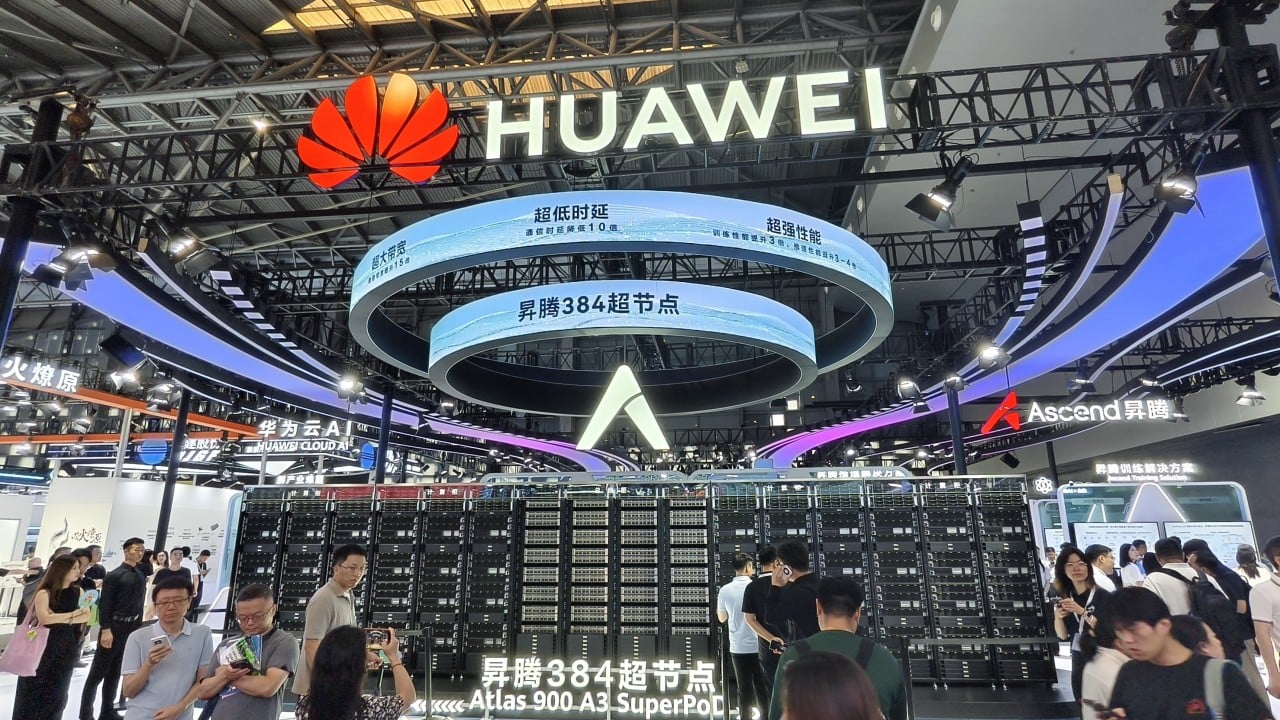
Huawei’s Ascend 910C chips are the "iron" in this story. They are powerful, yes, but they are different. They don't speak CUDA. They speak CANN (Compute Architecture for Neural Networks). For a developer, moving from one to the other isn't like switching from a Ford to a Toyota; it’s like being told you have to build a skyscraper using only the tools found in a 14th-century blacksmith’s shop, except the blacksmith is actually a genius who has invented a new type of steel you don't quite understand yet.
DeepSeek-V4 represents the "brain" being fitted into this new iron body. DeepSeek has already shocked the industry by producing models that rival GPT-4 while using a fraction of the computational power. They are the ultimate scavengers of efficiency. While others throw billions of dollars and tens of thousands of chips at a problem, DeepSeek looks for the mathematical shortcut. They find the hidden path through the woods.
By pairing DeepSeek’s architectural efficiency with Huawei’s indigenous silicon, China is attempting to bypass the Western blockade entirely. They aren't just trying to catch up. They are trying to build an entirely parallel evolution of intelligence.
The Invisible Stakes of Efficiency
We often talk about AI in terms of "parameters" and "tokens," words so dry they practically turn to dust in the mouth. But consider what happens when a country’s entire digital infrastructure—from its power grids to its medical diagnostics—is dependent on a technology it cannot repair or replicate. That is a state of fundamental fragility.
DeepSeek-V4 is being built on a foundation of "Mixture-of-Experts" (MoE) architecture. Imagine a massive library where, instead of one librarian trying to know everything, you have a thousand specialists. When you ask a question about quantum physics, only the physics experts wake up. The poets, the chefs, and the historians stay asleep, saving energy.
This isn't just a clever trick. It’s a necessity. When your hardware supply is constrained, you cannot afford to be wasteful. Every watt of electricity and every cycle of the processor must be squeezed for its last drop of utility. The collaboration between these two companies is about "full-stack optimization." This means they are tuning the software to the very specific quirks of the Huawei chips, like a tailor fitting a suit to a man with a slightly crooked spine. It fits him, and only him, better than anything off the rack ever could.
The Ghost in the Machine
There is a palpable tension in this shift. In the West, the prevailing philosophy has been "Scale is All You Need." If the model isn't smart enough, make it bigger. Add more chips. Burn more coal. It is a philosophy of abundance.
The Huawei-DeepSeek alliance is a philosophy of scarcity.
It is born from the realization that the "Great Firewall" is no longer just about keeping information out; it is about the world keeping technology in. This has forced a level of vertical integration that Western companies are only now beginning to mimic. Huawei controls the silicon, the factory, the drivers, and the framework. DeepSeek provides the algorithmic soul.
When these two layers are fused perfectly, the result is a terrifying level of resilience.
Consider the "V4" designation. It isn't just a version number. It represents a pivot toward a model that can handle reasoning and logic—the kind of "Chain of Thought" processing that allows AI to solve complex math or coding problems rather than just predicting the next likely word in a sentence. This is the bridge from a chatbot that can write a decent poem to an autonomous system that can design a new semiconductor.
The Human Cost of the Code
What does this feel like for the people on the ground? It feels like a long, sleepless night.
For the developers at DeepSeek, the stakes aren't just market share or stock options. There is a heavy, unspoken sense of national duty. If they fail to make their models run efficiently on Huawei hardware, the entire Chinese AI ecosystem remains a hostage to the secondary market of smuggled chips and aging tech.
There is an emotional weight to writing code that must work because there is no Plan B.
Imagine Liang again. He stays late, staring at a screen filled with errors that no one on Stack Overflow can help him with, because the hardware he’s using is so new and so proprietary that there is no global community to lean on. He is an island. But he is an island connected to a thousand other islands by a bridge of sheer will.
When he finally sees the model converge—when the loss curves drop and the machine begins to "understand"—it isn't just a technical victory. It’s a middle finger to the concept of obsolescence.
A Fracture in the Sky
The world is currently witnessing the birth of two distinct intelligences. One is being raised in the silicon nurseries of California, fed on a diet of unlimited capital and the finest hardware money can buy. The other is being forged in the heat of Shenzhen and Beijing, hardened by constraints and sharpened by the need to survive on less.
The DeepSeek-V4 collaboration is the clearest signal yet that the decoupling is complete. We are no longer living in a globalized tech era. We are living in an era of digital sovereignty, where the very math we use to define "smart" is starting to diverge.
If Huawei and DeepSeek succeed in making V4 a world-class model on indigenous hardware, the sanctions won't have stopped Chinese AI. They will have simply ensured that it grew up to be something the West no longer recognizes or controls.
The cooling fans in Haidian continue to hum. The "experts" in the Mixture-of-Experts model are waking up, one by one. They are speaking a language that wasn't taught in the universities of the West. It is a language of forced innovation, written in the dark, intended to shine a light on a path that no one else can block.
The lifeboat is no longer just a draft on a whiteboard. It is in the water. And it is moving fast.