The United States is currently the only major economy in the world paying billions of dollars to ensure energy projects are never built. While the European Union and China race to secure the high seas for the next generation of industrial power, the Trump administration has moved from verbal hostility toward offshore wind to a scorched-earth fiscal policy. By utilizing the federal Judgment Fund to buy out leases and issuing stop-work orders under the banner of national security, the administration is effectively dismantled a nascent domestic industry.
The strategy is a stark reversal of the "all-of-the-above" energy mantras of previous decades. Instead, the U.S. is decoupling from the global renewable surge. As of May 2026, the cost of this retreat is no longer measured just in lost carbon targets, but in hard taxpayer cash and skyrocketing utility projections for the Atlantic coast. For a more detailed analysis into this area, we suggest: this related article.
The Billion Dollar Ransom for Empty Oceans
In March 2026, the Department of the Interior, led by Secretary Doug Burgum, finalized a landmark $928 million deal with TotalEnergies. The terms were unprecedented. The federal government paid nearly a billion dollars in taxpayer funds to the French energy giant to relinquish two major offshore wind leases. This wasn't a standard regulatory cancellation; it was a buyout.
The deal came with a massive strings-attached clause: TotalEnergies must reinvest that equivalent amount into American fossil fuel projects, specifically natural gas and liquefied natural gas (LNG). A similar deal worth roughly $885 million was struck with Ocean Winds. By the end of this spring, the administration has spent nearly $2 billion to prevent energy generation. For broader background on this issue, in-depth analysis can also be found on Forbes.
Critics argue this is an end-run around the congressional appropriations process. By using the Judgment Fund—a permanent, indefinite appropriation used to pay settlements against the government—the administration is bypassing the need for a vote on energy spending. This is a tactical maneuver to kill projects that have already cleared years of environmental and technical hurdles.
The National Security Shield
When fiscal buyouts aren't enough, the administration has pivoted to "national security" as a blunt force instrument. In December 2025, the Department of the Interior issued stop-work orders for five major projects already under construction: Vineyard Wind 1, Coastal Virginia Offshore Wind, Revolution Wind, Empire Wind 1, and Sunrise Wind.
The justification? Potential radar interference and maritime navigation risks identified by the Department of War (the administration’s rebranded terminology for military oversight). The timing was curious. These projects were between 80% and 95% complete.
The courts have, so far, provided the only check on this power. Federal judges granted preliminary injunctions in early 2026, allowing construction to resume. The judicial consensus was that the government failed to prove an "imminent" threat that justified halting billions in active investment. However, the legal cloud has achieved the administration’s secondary goal: poisoning the well for future investment.
Global Acceleration vs American Stagnation
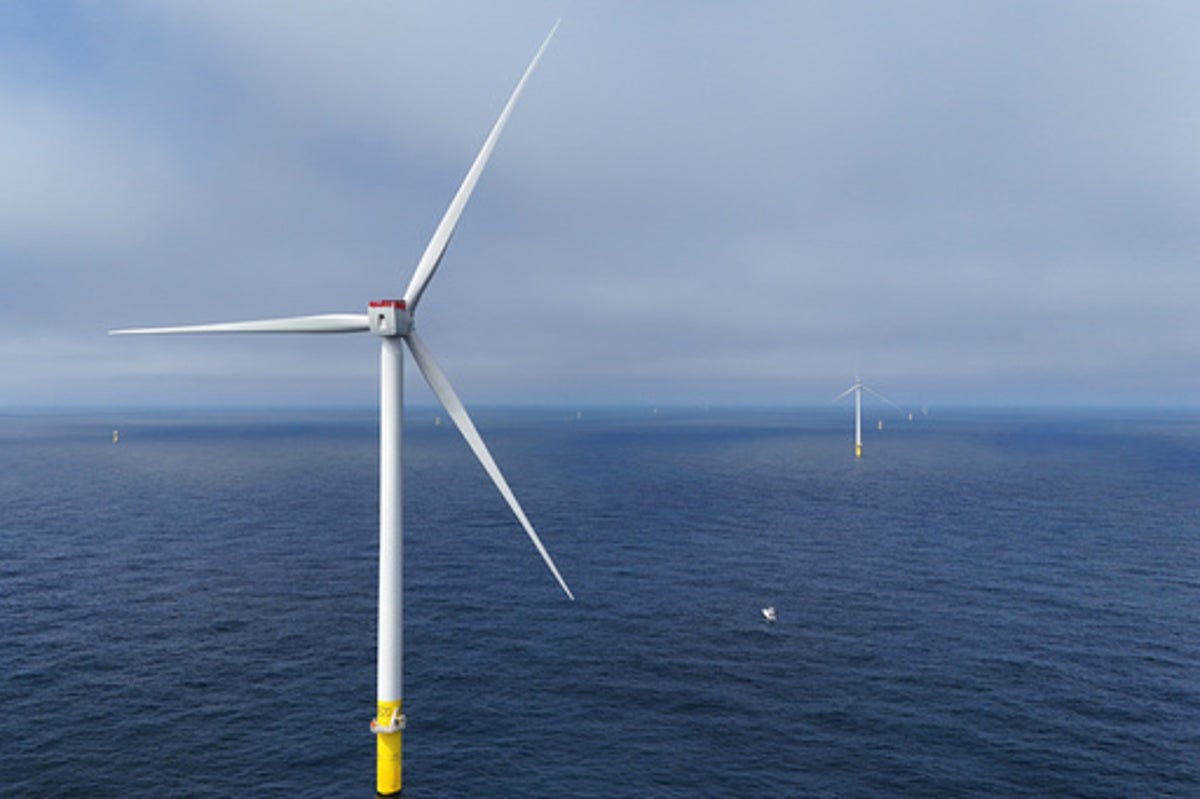
Outside the 12-mile limit of U.S. federal waters, the story is entirely different. The global offshore wind market is not just growing; it is maturing into a primary pillar of industrial strategy. In 2025 alone, the world added 9.3 gigawatts of offshore capacity—enough to power 10 million homes.
- China: Now accounts for 56% of all projected offshore wind additions through 2030. They are not just building farms; they are dominating the supply chain for subsea cables and specialized turbine installation vessels.
- Europe: Ten nations recently signed the Hamburg Declaration, a pact to transform the North Sea into a unified "clean energy hub."
- Canada: Nova Scotia has moved to fill the vacuum left by the U.S., announcing plans for 15 GW of offshore capacity, specifically targeting the Northeastern U.S. market that the Trump administration is currently starving.
The disparity creates a massive industrial risk. While American shipyards are being told to pivot back to traditional offshore oil support, the rest of the world is building the high-tech fleet required for 15-megawatt turbine installations.
The Ratepayer Penalty
The economic fallout is landing directly on the doorsteps of East Coast residents. Because offshore wind has zero fuel costs, it acts as a "price shaver" during periods of high demand. During the January 2026 cold snap—Winter Storm Fern—natural gas prices spiked by 17%. Projects like South Fork Wind, which remained operational with a 51.6% capacity factor during the freeze, proved they could stabilize the grid when fossil fuel prices went vertical.
The American Clean Power Association estimates that if the current freeze and buyout strategy results in the permanent cancellation of the five primary East Coast projects, ratepayers in 15 states will face an additional $45 billion in electricity costs over the next decade. That averages out to nearly $1,000 per household.
The Shipbuilding and Steel Vacuum
Beyond the grid, the war on wind is hitting the "Rust Belt of the Sea." Offshore wind was supposed to be the catalyst for a new era of American shipbuilding. Specialized vessels, known as Wind Turbine Installation Vessels (WTIVs), are required to be built in U.S. yards under the Jones Act.
Each cancelled or bought-out project represents thousands of tons of domestic steel that won't be forged and dozens of maritime contracts that won't be signed. By paying companies to walk away, the administration is effectively subsidizing the atrophy of these specialized maritime skills.
The industry is now in a state of "litigated limbo." Developers are caught between iron-clad state mandates for clean energy and a federal executive branch that is actively paying them to quit. This isn't just a policy shift; it is a fundamental reconfiguration of how the U.S. government interacts with private infrastructure investment.
The immediate result is a massive transfer of taxpayer wealth to multinational energy firms in exchange for nothing but empty horizons. The long-term result is an American energy grid that remains tethered to the volatility of global commodity markets while the rest of the industrialized world anchors its future to the floor of the sea.