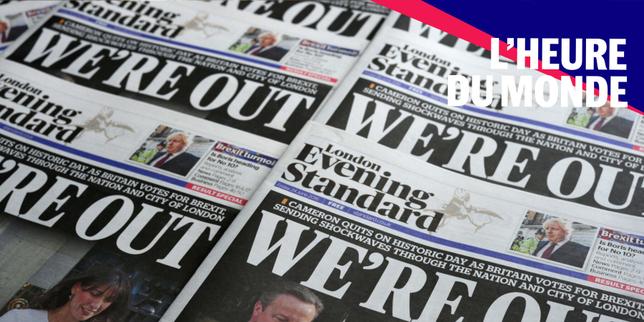
Ten years ago, the British public upended the global geopolitical order by voting to leave the European Union. A decade later, the media echo chamber has settled on a comfortable, lazy consensus: Brexit was a pointless act of economic self-harm that achieved absolutely nothing. Standard punditry points to flatlining productivity, trade friction, and GDP divergence models to declare the entire experiment an unmitigated disaster.
They are measuring the wrong things.
The narrative that Brexit was "for nothing" relies on a fundamental misunderstanding of what the vote actually represented. Economists treated a profound constitutional and political realignment as if it were a quarterly corporate earnings report. By judging Brexit solely through the lens of short-term trade data, analysts miss the structural decoupling that is quietly reshaping the British economy. The real story of the past decade is not that Brexit failed, but that the British political establishment spent years paralyzing the state because they could not comprehend a post-EU reality.
The Flaw in the Growth Forecasts
Open any mainstream financial newspaper and you will see the same chart: a hypothetical line showing where the UK economy "should" be if it had remained in the single market, contrasted against actual performance. These models, usually built on synthetic control methods, are treated as absolute truth.
They are highly flawed.
These projections assume that the European Union remained a static, high-growth environment over the last ten years. Look across the English Channel. The Eurozone has spent the last decade battling chronic stagnation, suffocating regulatory overreach, and an energy crisis that crippled its industrial core. Germany, the traditional engine of Europe, is flirting with structural deindustrialization. France is drowning in public debt.
To suggest that the UK would have sailed through the 2020s in a state of frictionless economic bliss inside the EU is a fantasy. The UK did not leave a booming economic superpower; it decoupled from a regulatory bloc that is systematically falling behind both the United States and Asia in technology, capital deployment, and innovation.
The Regulatory Divergence Myth
Critics love to point out that the UK has not burned every piece of EU legislation as promised. They claim that because British standards still largely match European ones, the entire exercise was pointless.
This view misses how regulatory competition actually works.
Regulatory freedom is not about creating a race to the bottom or abolishing worker rights. It is about speed and adaptability. The European Union operates on the precautionary principle, a framework that treats new technologies as hazardous until proven completely innocent. This approach has effectively strangled the continent's tech sector.
Consider the fields of artificial intelligence, life sciences, and green technology. While the EU spent years drafting heavy-handed regulations that protect incumbent monopolies, the UK has been able to establish more agile regulatory frameworks. The Medicines and Healthcare products Regulatory Agency (MHRA) proved during the pandemic that it could move faster than the European Medicines Agency. That operational agility is now being applied to clinical trials and advanced gene editing.
The benefit is not a sudden explosion in GDP. It is the steady accumulation of an institutional advantage that will take another decade to fully manifest.
The Trade Realignment Reality
The most common grievance is that Brexit damaged trade with the UK's closest neighbors. Border checks, customs declarations, and supply chain delays are frequently cited as proof of failure.
No one denies that adding friction to trade hurts in the short term. I have talked to manufacturing executives who spent millions restructuring their logistics networks just to move parts across the Channel. It was painful, expensive, and messy.
But treating this friction as a permanent death sentence ignores basic market dynamics. Markets adapt.
UK Trade Structural Shift (Hypothetical Asset Allocation Trend)
[2016] EU Dominated Trade ----> [Friction Shock] ----> [2026] Global Services Expansion
British trade has undergone a massive structural shift. While goods trade with the EU faced headwinds, UK services exports hit record highs. The UK economy is fundamentally driven by services—finance, law, consulting, education, and digital architecture. These sectors do not rely on roll-on/roll-off ferries at Dover. By forcing companies to look beyond the European horizon, the post-Brexit environment accelerated a shift toward high-growth global markets, particularly in the Indo-Pacific and North America.
Dismantling the People Also Ask Nonsense
The public debate is dominated by a few superficial questions that appear constantly in search results. Let us dismantle them directly.
Did Brexit cause the UK inflation crisis?
No. This is a classic case of correlation confused with causation. The inflation surge that gripped the UK was driven by global energy shocks following the Ukraine conflict and the massive monetary expansion triggered by pandemic lockdowns. The Eurozone experienced identical inflationary pressures, with several EU countries seeing higher peak inflation rates than the UK. Attributing global macroeconomic shifts to a local customs border is mathematically illiterate.
Has immigration dropped since leaving the EU?
The short answer is no, but the nature of that immigration has completely changed. The lazy assumption was that Brexit was purely a xenophobic anti-immigration vote. In reality, ending the free movement of people allowed the UK to implement a points-based system. The result? A sharp decline in low-wage European labor and a massive increase in skilled non-EU migration. The state now decides who enters based on economic need rather than geographic luck. Whether the government managed the volume correctly is a separate political failure, but the mechanism of control was successfully reclaimed.
The Real Failure is Political Cowardice
If Brexit has not delivered its full potential, the blame does not lie with the voters who chose sovereignty. It lies with a political class that spent a decade fighting rearguard actions instead of building a competitive state strategy.
For years after the vote, Whitehall was gripped by institutional paralysis. Instead of using newly won powers to radically reform corporate tax, overhaul the restrictive planning system, or create free ports with genuine economic teeth, successive administrations hovered in a state of timid indecision. They wanted the benefits of independence without the discomfort of divergence.
You cannot win a competitive game by mimicking your competitor's playbook while wearing heavier boots. The UK won the right to set its own economic rules but kept using the old European script out of sheer bureaucratic inertia.
The Cost of the Status Quo
To understand the true value of breaking away, one must examine what staying inside the EU would have cost the UK over the next twenty years.
The European project is moving inexorably toward fiscal centralization. The introduction of joint EU debt during the pandemic set a precedent that cannot be undone. Had the UK remained a member, it would currently be on the hook for underwriting the structural deficits of Southern Europe, while simultaneously navigating a European Parliament increasingly hostile to the financial services sector that powers London.
Brexit was an expensive, messy escape from a burning building. The fact that the UK is currently standing in the cold, wet rain does not mean leaving the building was a mistake. It just means the hard work of building a new house has barely begun.
The consensus that Brexit was a failure is comfortable because it requires no deep thought. It allows commentators to blame every structural problem in the UK—from broken rail networks to underfunded hospitals—on a single political event. But a cold analysis of global economic trends shows that the UK has successfully decoupled from a stagnant continent, retained its structural dominance in high-value services, and regained the constitutional flexibility required to navigate an increasingly volatile century.
The economic ledger of Brexit cannot be written in a single decade. The old order is gone, and looking back is a luxury the British economy can no longer afford.