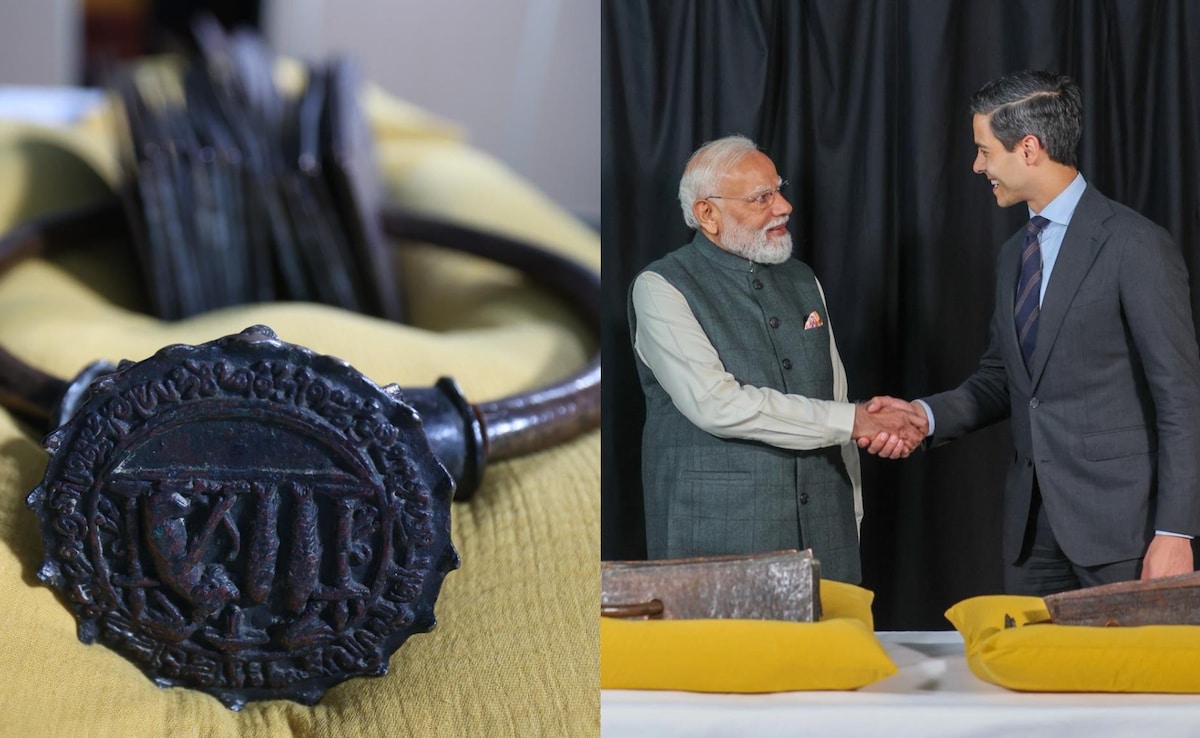
The global heritage industry is currently congratulating itself over a high-profile act of cultural diplomacy. The Netherlands recently returned a set of 1,000-year-old Chola-era copper plates to India. The media coverage follows a predictable, lazy script. It frames the event as a triumph of decolonization, a victory for historical justice, and a moral reckoning for European institutions.
This narrative is entirely wrong. For a closer look into this area, we recommend: this related article.
Museum directors and bureaucrats are celebrating a superficial victory while ignoring the actual mechanics of cultural preservation. Returning a few sheets of inscribed copper does not fix the systemic rot in how the world manages antiquities. In fact, these high-profile handovers often serve as cheap public relations smoke screens. They allow Western institutions to retain thousands of unprovenanced artifacts while giving local authorities a photogenic victory to flash on social media.
We need to stop treating restitution as a moral finish line. It is time to look at the cold, hard logistical reality of what happens when history gets sent home. To get more context on this development, comprehensive coverage can be read on BBC News.
The Mirage of Decolonization
The current consensus assumes that returning an object to its geographic point of origin automatically restores its cultural context. It does not.
When a Chola-era artifact is dug up, smuggled out, displayed in Amsterdam, and then flown back to Chennai, it does not magically revert to a sacred object. It merely moves from a climate-controlled vitrine in Europe to a different climate-controlled vitrine—or worse, a dusty storeroom—in Asia. The religious, political, and social ecosystem that created the Chola copper plates a millennium ago is gone.
I have spent years tracking how antiquities move through global supply chains, from illicit digs in rural temples to the clean auction blocks of London and New York. I have seen governments throw multi-million-dollar tantrums over a single high-profile bronze statue while ignoring the fact that local, unprotected shrines are being pillaged by organized syndicates every single week.
True repatriation requires more than a handover ceremony and a press release. It requires an infrastructure capable of securing, studying, and displaying these items. Without that, restitution is just a logistical shell game.
The Dangerous Reality of Post-Return Storage
Let us address the question no one wants to ask: What actually happens to these objects after the airport photo-op?
In a perfect world, returned artifacts would go straight into world-class local museums where domestic audiences could study their own history. The reality is far less inspiring. Many objects returned to developing nations end up trapped in bureaucratic purgatory. They are locked away in high-security government vaults, inaccessible to both researchers and the public, effectively erasing them from global scholarship.
Even worse is the security vacuum. Consider the state of regional museums and temple storehouses across Tamil Nadu, the heartland of Chola history. For decades, the India Pride Project—a volunteer network dedicated to tracking looted art—has documented how poorly secured local temples are targeted by thieves.
Imagine a scenario where an international court orders the return of ten priceless Chola bronzes to a remote village temple that lacks basic security cameras, let alone climate control or round-the-clock guards. Within six months, those same bronzes are stolen again, moving back into the black market with fresh, clean paperwork. This is not a hypothetical risk; it is a recurring pattern.
Western museums definitely have a history rooted in colonial exploitation. However, keeping an object in a secure, public museum in Europe often preserves it better than returning it prematurely to an environment where it faces theft, neglect, or environmental degradation. That is an uncomfortable truth that the art world refuses to voice publicly.
Dismantling the Top Repatriation Myths
The public debate around restitution is warped by bad premises and emotional arguments. Let us dismantle the most common assumptions guiding this discussion.
Does returning artifacts fix historical injustice?
No. Returning an object does not rewrite history, nor does it compensate for centuries of economic exploitation. Treating a copper plate as a substitute for actual diplomatic or economic accountability is a cheap cop-out for former colonial powers. It allows European governments to claim moral superiority without paying a single cent in actual reparations.
Are western museums the biggest threat to global heritage?
Historically, yes. Today, no. The biggest threat to ancient heritage is not the British Museum or the Rijksmuseum; it is the modern illicit antiquities trade driven by private collectors and facilitated by local corruption. Focusing exclusively on institutional restitution ignores the ongoing, active looting happening right now under the noses of local law enforcement.
Should every single looted object be sent back immediately?
An immediate, blanket return of all unprovenanced material would cause a cultural disaster. Many nations currently lack the specialized conservation facilities required to maintain fragile organic materials, ancient textiles, or decaying manuscripts. A rushed return policy prioritizes political optics over physical preservation.
The Hidden Cost of the Restitution Obsession
The obsession with high-profile returns has a massive opportunity cost. Every dollar spent on international legal battles, provenance research lawyers, and state dinners could instead be used to build better security fences, train local curators, and digitize existing domestic collections.
Right now, thousands of ancient sites across India, Southeast Asia, and North Africa sit completely unprotected. They lack fencing, security guards, or proper documentation. Local looters can walk onto these sites with shovels and metal detectors completely undisturbed.
When we pour all our collective energy into celebrating the return of one set of Chola copper plates, we ignore the fact that ten more sites were looted while the press conference was happening. We are fixing the leak in the bathroom while the entire basement is underwater.
A Pragmatic Blueprint for Global Heritage
If the current model of restitution is broken, how do we fix it? We must shift our focus from absolute ownership to global accessibility.
- Digital Sharecropping: Instead of physically moving fragile objects across oceans, institutions must fund high-resolution 3D scanning and open-source digital archiving. A scholar in Madurai should have the exact same access to a digital rendering of a Chola plate as a curator in Paris.
- Long-Term Shared Custody: We need to normalize long-term loan agreements. Let the ownership remain with the source country, but allow the physical object to rotate through global museums. This maintains international visibility while respecting legal sovereignty.
- Aggressive Local Protection: Western nations looking to atone for colonial crimes should stop focusing on symbolic handovers. They should instead fund the training and equipment of specialized heritage police forces in the countries they once plundered.
The goal of cultural preservation should be to ensure that future generations can see, study, and draw inspiration from human history. The current hyper-fixation on borders, national pride, and political point-scoring does not achieve that goal.
Stop cheering for the return of the Chola plates. Start demanding to know why the temples they came from are still completely unprotected.