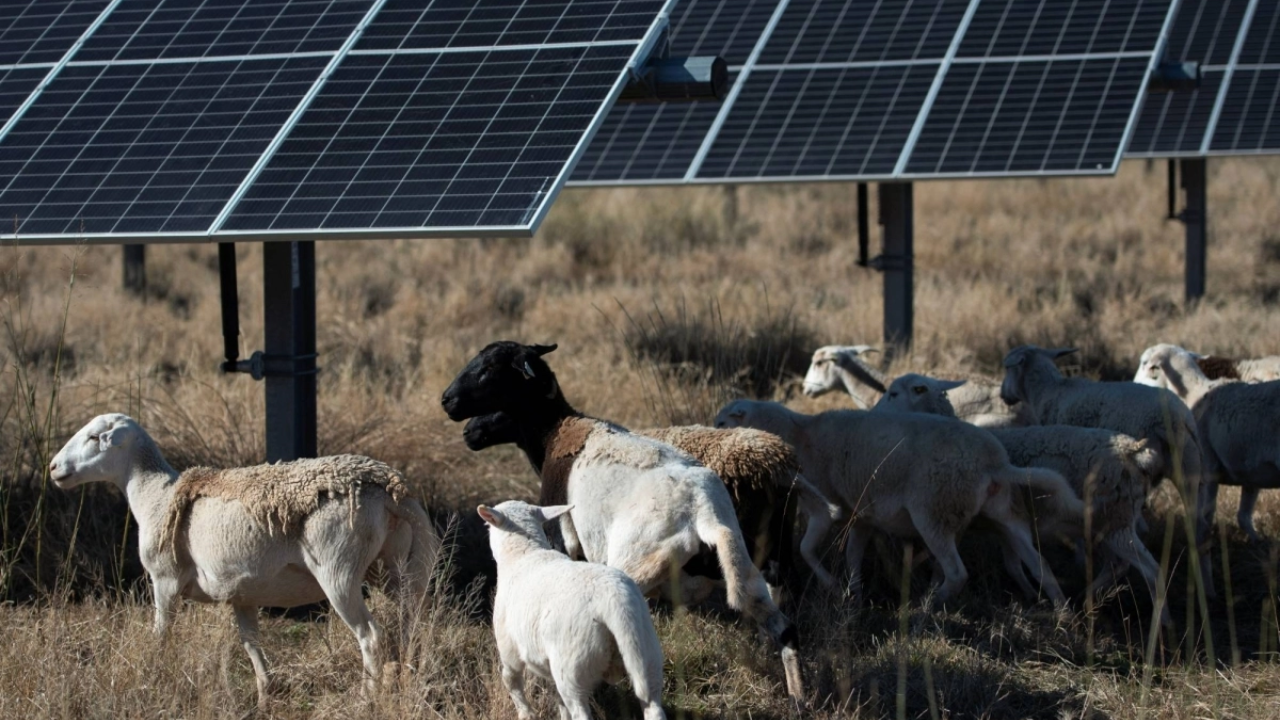
Imagine staring down a small flock of 27 sheep and wondering if you have to sell them off because land is too expensive and the grass won't grow right. Then utility-scale solar arrays move in next door, and suddenly energy developers are paying you to let your animals eat the grass.
That exact flip is powering one of the wildest shifts in modern agriculture. Across Texas and the wider U.S., sheep producers are scaling from a few dozen animals to operations managing roughly 10,000 sheep across as much as 40,000 acres by turning flocks into living vegetation crews for solar farms. According to the American Solar Grazing Association, solar grazing has expanded across hundreds of farms and tens of thousands of acres nationwide, with Texas leading the charge in sheer acreage.
If you're looking at solar grazing from the outside, it sounds almost too neat. Solar companies get cheap, quiet weed control without risking rocks kicked up by mowers into glass panels. Farmers get access to pasture without paying traditional land leases, earn vegetation management fees, and still raise lambs or wool for market.
Honestly, though, the romance fades fast once you're hauling water in July heat or tracking down stray ewes around perimeter fencing. It works, and it works well, when you treat it like a real logistics business rather than a gimmick.
How Solar Grazing Flips Farm Economics
Traditional ranching is a brutal math problem when land prices spike and drought stretches out. You buy or lease ground, pray for rain, pay for inputs, and hope market prices hold by sale day.
Solar grazing flips the script because the solar operator needs vegetation kept low so grass doesn't shade panels, create fire hazards, or block technician access. Instead of paying a landowner to graze, a solar shepherd often gets paid a service fee per acre or per grazing cycle while still capturing livestock revenue. In real-world operations in Texas, producers like JR Howard of Texas Solar Sheep and Ely Valdez have scaled from tiny starter flocks into operations spanning thousands of sheep and tens of thousands of solar acres as utility solar buildouts boomed. Meanwhile, other Texas growers—such as cotton farmer Chad Raines, who pivoted into solar grazing—have shown how contracting flocks with major developers like Enel North America can turn struggling acreage into serious farm income.
From the utility side, the math isn't charity. Mechanical mowing across large arrays requires crews, fuel, and frequent passes during peak growing seasons, plus string trimmers around racking posts. Worse, a mower blade kicking up gravel can crack a module or slice a cable. Sheep stay low, nibble under panel edges, and don't throw rocks. Data shared by Enel from earlier solar grazing sites has even pointed to major gains in soil organic matter over time as manure and rotational grazing rebuild topsoil.
Still, don't assume every solar contract is pure profit. Bidding too low on vegetation management just to win a site is a classic rookie mistake. If grass explodes after a spring rain and you don't have enough headcount or backup mowing support, you'll burn through margins fast.
Why Sheep Beat Goats and Cattle Around Panels
People always ask why it's sheep instead of goats or cows. There's a very practical reason.
Goats are browsers and climbers. Give a goat a sloped solar panel or a low wire and it may treat it like playground equipment or chew on wiring and equipment it shouldn't touch. Cattle, on the other hand, are big enough to bend conduit, rub hard on posts, or trample wet ground if stocking density isn't tightly managed—though researchers and graziers, including specialists at Michigan State University Extension, are actively testing carefully managed cattle and multi-species grazing on certain sites.
Sheep hit the sweet spot for most utility arrays. Hair sheep breeds, such as Katahdins or Dorpers, are especially popular in warm climates like Texas because they shed their wool naturally, avoiding shearing bottlenecks and reducing heat stress.
The shade underneath moving or fixed panels actually helps both sides of the equation:
- Heat relief for livestock: Panels cast dappled or moving shade that gives sheep a break from harsh sun, which graziers report can reduce water stress compared to wide-open baking pasture.
- Moisture retention: Shaded soil loses moisture more slowly, helping forage persist longer into dry spells.
- Fewer fossil-fuel passes: Replacing gas-powered mowers cuts emissions and noise around rural neighbors.
That said, shade isn't magic. Under-panel grass can get patchy or shaded out depending on row spacing and panel tilt, which means you still have to match stocking rates to actual forage growth rather than guessing from an aerial map.
The Hidden Headaches Nobody Mentions in Brochures
If you only read headlines, you'd think solar grazing is effortless money. In practice, scaling from dozens of sheep to thousands introduces serious operational friction.
First is water and infrastructure. Solar sites weren't built around livestock water troughs. Hauling water to remote arrays—or setting up reliable troughs, float valves, and haul schedules without interfering with site maintenance—takes real labor every single day.
Second are predators, parasites, and health. Coyotes, feral dogs, and other predators don't care that you're on a clean-energy site. Perimeter security, guardian animals, and rotational paddock moves matter enormously. Parasites are another quiet trap: concentrating sheep on lush or damp grass can spike worm loads if you rotate too slowly or skip fecal monitoring.
Third is site access and safety rules. Unlike your own back pasture, a utility solar farm is an active industrial electrical facility. You'll deal with gate protocols, safety orientations, de-energization rules near certain equipment, muddy roads after storms, and strict expectations around keeping grass below contract height thresholds.
There's also a real debate in rural communities about farmland conversion. Agrivoltaics keeps agricultural activity alive under panels, which helps preserve farming skills and rural livelihoods, yet critics still argue over prime agricultural land use, decommissioning responsibilities decades down the road, and how evenly benefits are shared with local producers. Being honest about those trade-offs keeps the conversation grounded.
Practical Next Steps If You Want to Get Into Solar Grazing
If you're a farmer, rancher, or land manager eyeing this space, don't start by buying a massive flock on spec. Build your system in layers.
- Start small and learn the site rules. If you already have sheep, test rotational grazing on a smaller or pilot parcel first so you can dial in fencing, water hauling, and animal behavior around solar racking.
- Connect with industry groups and extension resources. Tap into the American Solar Grazing Association and local agricultural extension programs to benchmark contract structures, insurance expectations, and stocking math before signing a multi-hundred-acre agreement.
- Price your true costs, not just gross revenue. Factor in fuel, water trailers, fencing gear, veterinary care, guard animals, and contingency mowing for overgrown corners so a wet spring doesn't wipe out your profit.
- Build relationships with O&M contractors early. Operations and maintenance (O&M) companies often manage day-to-day vegetation compliance for asset owners. Showing up as reliable, communicative, and safety-conscious is how small operators win repeat contracts.
The biggest takeaway from Texas's solar sheep boom isn't just that sheep eat grass. It's that pairing old-school animal husbandry with modern energy infrastructure can keep working families on the land when traditional margins get squeezed.