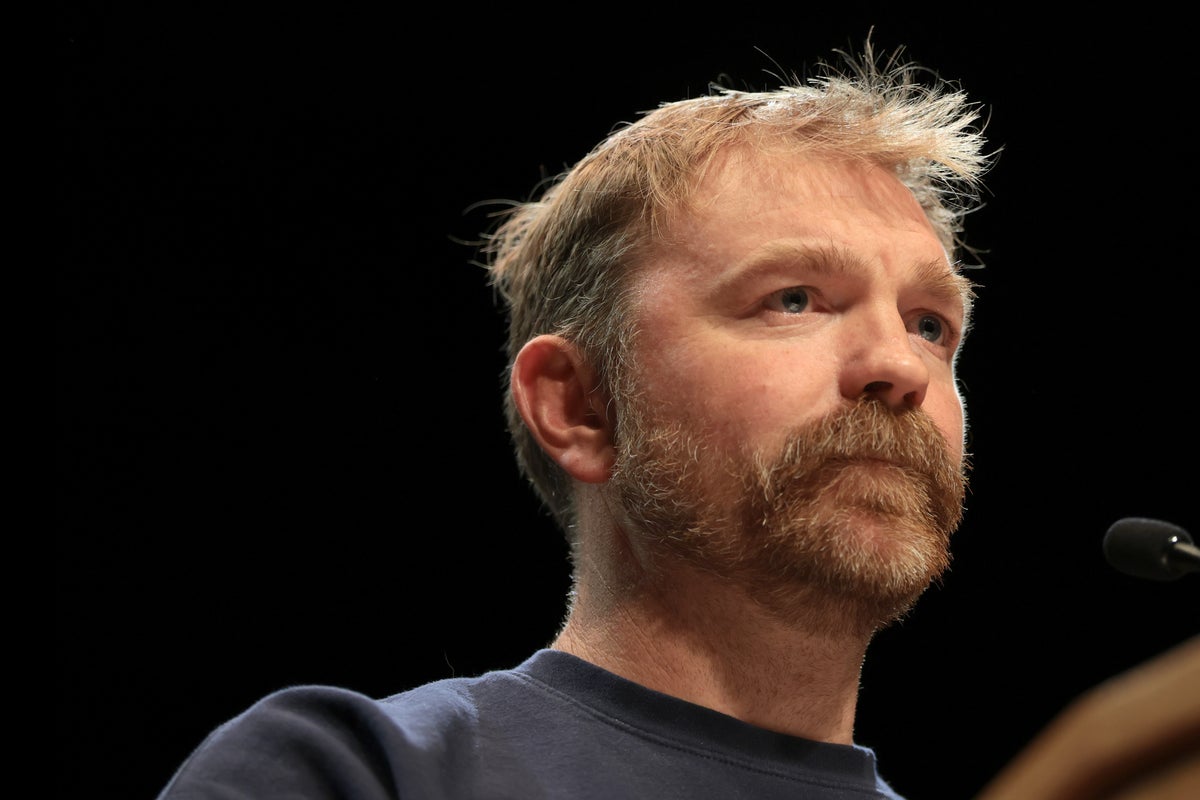
The progressive movement’s high-stakes gamble to reclaim the United States Senate has collided with a grim reality in Maine. Graham Platner, a charismatic combat veteran and oyster farmer who built a roaring populist movement on working-class economic grievances, is no longer just fighting the entrenched political machine of Republican Senator Susan Collins. He is fighting the cumulative weight of his own past, laid bare in an increasingly devastating sequence of personal scandals.
The crisis reached a boiling point following a New York Times report detailing allegations of physical intimidation and volatile behavior from multiple ex-girlfriends. Most damaging to his carefully curated narrative of self-taught redemption is an accusation that directly dismantles his defense regarding a controversial chest tattoo. Lyndsey Fifield, who dated Platner from 2013 to 2015, told reporters that Platner was well aware the skull-and-crossbones symbol on his body was a Nazi Totenkopf long before entering public life. He allegedly joked about it, calling it "my Totenkopf." Platner has fiercely denied the claims, calling the allegations false, distorted, and orchestrated by a partisan operative aiming to tank his political career. For another view, consider: this related article.
Yet the institutional panic sweeping through national Democratic circles is unmistakable. The primary election is just days away. While Platner remains the presumptive nominee following Governor Janet Mills’ campaign suspension, his political future is now a referendum on whether a candidate can outrun a pattern of toxic personal conduct by leaning on systemic structural importance.
The Anatomy of the Denial
Platner’s strategy for surviving political radioactivity relies on a distinct, recurring blueprint. He acknowledges a foundational layer of bad behavior, attributes it to a documented trauma narrative, and then flatly denies the most severe specific charges by labeling them as politically motivated hits. Further coverage on this trend has been provided by Reuters.
When confronted on television about Fifield’s claims—which include an incident where he allegedly twisted her arm behind her back and trapped her in a bedroom—Platner pivoted to a familiar defense. He has spoken openly for months about a "dark period" in his life marked by undiagnosed post-traumatic stress disorder (PTSD) and heavy alcohol self-medication following his military service.
"There are some allegations in this piece that are simply not true," Platner stated during an appearance on MS NOW with Chris Hayes. "Anything alleging physicality, anything alleging I knew what my tattoo was, these are the statements of somebody politically motivated."
This defense creates a convenient firewall. By admitting to being a "far from perfect boyfriend" and leaning into the realities of combat-related mental health struggles, he attempts to satisfy the voter's desire for authenticity and personal growth. But by drawing a hard line at physical misconduct and ideological awareness of hate symbols, he attempts to insulate himself from disqualifying scandals.
The political calculations are transparent. The campaign released statements highlighting Fifield’s professional resume as a conservative activist and visiting fellow at the Independent Women’s Forum, framing her entirely as a GOP operative. But this framework begins to splinter when weighed against the sheer volume of corroborating accounts. The reporting cited six women, three of whom described volatile, demeaning, or reckless behavior. Among them was Jenny Racicot, a Maine Democrat whose motivations cannot be easily dismissed as partisan sabotage. Racicot stated that reading Platner's old, controversial Reddit posts—which included dismissive remarks about military sexual assault—forced her to recognize a troubling version of the man she had experienced firsthand.
The Totenkopf Paper Trail
Of all the recent disclosures, the revelation regarding the Totenkopf tattoo hits at the core of Platner’s political integrity. When the tattoo first became a campaign issue, Platner claimed complete ignorance. He insisted he received the ink during a drunken night eighteen years ago while serving in the Marines and had no idea it carried neo-Nazi significance until campaign staffers flagged it. He had the image covered up in late October.
The defense was flimsy from the start, but it allowed voters to extend the benefit of the doubt to a young, reckless serviceman. Fifield's account destroys that defense. If he knew the term "Totenkopf" a decade ago, his public narrative of sudden, shocking enlightenment during the campaign collapses into a calculated falsehood.
The political fallout of a lie is often more damaging than the original sin. For a candidate built on raw, unvarnished honesty, a documented deception regarding a hate symbol undermines the moral authority required to challenge an incumbent like Collins.
| Timeline of the Tattoo Controversy | Campaign Narrative | Contradicting Allegations |
|---|---|---|
| Circa 2008 | Acquired during a reckless, drunken night in the Marines. | Characterized as a youthful, uneducated mistake. |
| 2013–2015 | Period of alleged total ignorance regarding the symbol's meaning. | Allegedly referred to it explicitly as "my Totenkopf" in private. |
| Late October | Discovered the meaning via staff; immediately sought a cover-up. | Framed as a swift, responsible reaction to new information. |
| June 2026 | Maintains absolute ignorance prior to the campaign cycle. | Accused by K-File and print reporting of a multi-year cover-up. |
The Progressive Shield and Institutional Silence
The most revealing aspect of the Platner crisis is not the behavior of the candidate, but the calculated calculations of his high-profile backers. Leaders of the progressive left, including Senators Bernie Sanders, Elizabeth Warren, and Representative Ro Khanna, have spent years championing systemic accountability, gender equity, and zero-tolerance policies for toxic workplace and personal conduct.
Yet, their reactions to Platner’s spiraling controversies reveal the cold math of institutional survival. Khanna still joined Platner for a major rally in Bar Harbor, minimizing the toxic behavior as something the candidate has "acknowledged" while seeking "redemption."
This transactional alignment exposes a glaring double standard. If a moderate or conservative candidate faced simultaneous scandals involving explicit extramarital text messages, vulgar internet posts, historical use of ableist slurs, and multiple accounts of domestic volatility, the progressive apparatus would demand an immediate exit from the race. Instead, because Platner is viewed as the solitary vehicle capable of flipping a crucial Senate seat, the institutional left has opted to build a protective wall around him.
The justification among local party loyalists relies on a distinction between private marital struggles and public fitness. Some voters have praised Platner's wife, Amy Gertner, for her public vulnerability regarding their marital counseling, choosing to view personal evolution as an asset rather than a disqualifier.
But this perspective ignores the fundamental nature of the office Platner seeks. A lawmaker cannot easily compartmentalize a history of alleged physical intimidation and volatile outbursts. The defense that these actions belonged to a bygone era of undiagnosed trauma loses its potency when fresh revelations—like the explicit text messages sent early in his current marriage—suggest that the underlying patterns of behavior remain uncorrected.
The Path forward for Maine Voters
The ultimate decision rests with the electorate in Tuesday's primary. Because Governor Mills suspended her campaign in April, Platner’s name will appear on the ballot without a functional, well-funded alternative. He will almost certainly secure the nomination.
But winning a primary via structural default is vastly different from building the broad coalition required to unseat an incumbent in a general election. The independent voters of Maine, historic swing voters who value stability and personal character, are watching an accumulation of baggage that will be systematically weaponized by opposition ad campaigns through November.
Platner’s campaign insists that his populist message on healthcare costs, affordable housing, and working-class representation will ultimately transcend the "gossip" of his personal life. They are betting that material economic anxieties outweigh concerns over a candidate’s private conduct. It is a cynical bet, running entirely counter to the moral frameworks that the progressive movement typically claims to champion.
The tragedy of the Platner campaign is that the urgent economic issues he champions are being completely obscured by the candidate himself. By refusing to step aside, Platner is forcing a choice between political utility and ethical consistency. The structural reality ensures he will lead the ticket, but the compounding weight of these unaddressed patterns suggests that the movement he built may ultimately be crushed under the weight of its own creation.