The wind off the Moray Firth does not care about heritage. It sweeps across the highlands of Scotland with a damp, biting chill that clings to the skin and rattles the bones. It is a far cry from the thin, sun-baked air of the Peruvian Andes, some six thousand miles away.
Yet, on a quiet morning at the Highland Wildlife Park in Kincraig, a miracle of adaptation took its first fragile breath.
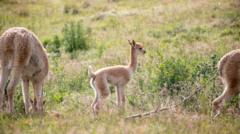
To the untrained eye, it was just another birth at a zoo. A routine press release. A couple of cute photos destined for a three-second scroll on social media before being swallowed by the digital void. But look closer at the spindly legs, the oversized ears, and the impossibly soft, golden-brown coat of the newborn vicuña.
Within that tiny, shivering frame lies a story of survival, near-extinction, and a delicate thread of hope that stretches across centuries and continents.
The Whisper of the Inca
Long before this baby took its first wobbly steps on Scottish soil, its ancestors were considered sacred.
The Incas called the vicuña the "golden fleece." To them, these wild, elegant relatives of the alpaca were not property to be owned, but a divine gift to be protected. They were never killed for their wool. Instead, once every four years, tens of thousands of people would gather for the Chaccu—a massive, communal roundup.
The community would form a human chain, chanting and singing, gently driving the wild herds into stone enclosures. There, they were sheared. Only the finest, most delicate fibers were harvested, destined exclusively for royalty. Then, the animals were released back into the wild, unharmed, to roam the high-altitude grasslands of the Altiplano.
Imagine the scene: a sea of gold moving across the peaks, protected by an empire's sacred law.
Then, the world changed.
Conquistadors arrived with firearms and a brutal disregard for ancient conservation. The communal harmony of the Chaccu was replaced by slaughter. For centuries, the vicuña was hunted relentlessly, not for its companionship, but for the staggering price its wool could fetch on the global luxury market.
By the 1960s, the species was staring into the abyss. Only about 6,000 individuals remained on the planet. They were ghosts on the verge of vanishing entirely.
A Different Kind of Sanctuary
When we think of conservation, we often picture vast national parks in Africa or dense rainforests in the Amazon. We rarely think of the rolling hills of the Cairngorms.
But sanctuary is not always about replicating a home down to the last blade of grass. Sometimes, it is about creating a space where a species can simply exist without the threat of human greed.
Enter the keepers at Kincraig.
They do not wear the traditional textiles of the Andes, but their devotion is no less profound. For months, they monitored the mother, keeping a watchful eye on her changing silhouette, calculating dates, and preparing for the arrival. The birth of a vicuña is a high-stakes gamble. The gestation period lasts nearly eleven months, resulting in a single, vulnerable offspring called a cria.
There are no second chances. No safety in numbers.
When the cria finally arrived, it was a test of resilience. Born in the temperamental Scottish weather, the young male had to stand within minutes. In the wild, a baby that cannot run within an hour is food for predators. Here, the stakes were different but equally high. The keepers watched from a distance, resisting the urge to intervene, letting the ancient bond between mother and child re-establish itself in a brand-new landscape.
To see the baby now, darting behind its mother, testing its boundaries with clumsy, joyful leaps, is to witness a triumph of patience.
The Weight of a Single Thread
Why does the birth of a single animal in Scotland matter to someone sitting thousands of miles away?
It matters because the vicuña is a living barometer of our relationship with the natural world.
Its fleece remains the finest natural fiber on Earth. It is lighter than wool, warmer than cashmere, and softer than silk. A single coat made from its fiber can easily command tens of thousands of dollars in the fashion houses of Milan and Paris. The temptation to exploit them remains a constant, shadow threat.
But the survival of the vicuña is proof that we can choose a different path. Through strict international protections and the revival of traditional harvesting methods in South America, the wild population has rebounded significantly.
Yet, wild populations are always vulnerable to disease, climate shifts, and sudden political instability.
This is where the Highland Wildlife Park plays its quiet, critical role. By maintaining a healthy, genetically diverse population of vicuñas in captivity, they are not just putting on a show for visitors. They are holding a safeguard. They are preserving a genetic insurance policy for a species that humanity nearly wiped off the face of the Earth.
The next time you look at a photograph of a newborn animal, look past the immediate cuteness.
See the centuries of history carried in those long, delicate limbs. See the dedication of keepers who brave the Scottish winter to ensure a mother and her baby are safe. See the fragile, unbroken line that connects the sacred rituals of the Inca Empire to a quiet wildlife park in the highlands.
We are capable of devastating destruction. But we are also capable of fierce, enduring protection.
The little cria in Kincraig does not know about the Andes. He does not know about the conquistadors, or the luxury fashion runways, or the global effort to keep his kind alive. He only knows the warmth of his mother’s side, the taste of her milk, and the feel of the cool Scottish wind rushing through his golden coat as he runs.