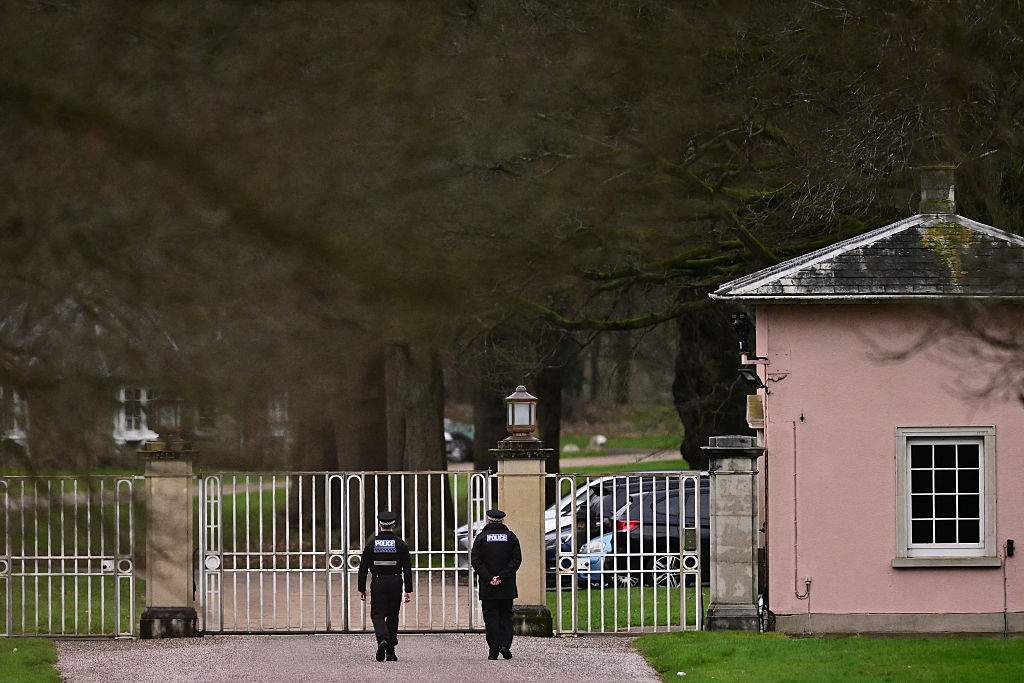
The rain over Windsor has a way of turning centuries into sediment. It falls on the slate, runs down the leaded mullions, and pools in the gravel paths where royal feet have trod for generations. For years, the story of Royal Lodge was told in acres and iron gates. It was a 30-room sanctuary of brick and history, rented for a pittance under a 75-year lease signed back when the world moved at the speed of a telegram.
Then came the ledger.
When the news broke that Andrew had been granted a sum reported at $570,000—or roughly 450,000 pounds—to walk away from a contract that still had decades to run, the reaction was not one of shock. It was exhaustion. Because in the strange arithmetic of modern power, even expulsion comes with a severance package. You do not simply leave the crown's shadow; you are bought out of it.
Consider the mechanics of such an exit. Most of us know the friction of a broken lease. We know the sting of a security deposit withheld, the anxiety of packing boxes into the back of a tired hatchback while a landlord taps a clipboard and checks off scuffs on the baseboards. We understand the small, grinding gravity of housing insecurity.
This was different. This was the dissolution of an arrangement designed in an entirely different century, involving a property that requires millions simply to keep the dry rot at bay. The official narrative handed to the public was one of financial restructuring, of an estate streamlining its footprint, of tidy sums balancing complex equations. But numbers on a screen rarely capture the weight of a heavy oak door closing for the last time.
Money, in these circles, does not merely buy things. It buys silence. It buys speed. It buys the quiet vanishing of a problem that has grown too loud for the drawing room.
For months, the rumors had circled the perimeter like crows. There were whispers of structural upkeep left undone, of heating bills that rivaled small municipal budgets, of an impasse between a disgraced former working royal and a monarch looking to project a leaner, sharper image. The King, navigating the delicate optics of a modern institution, needed the acreage cleared. The optics of a sprawling, under-occupied mansion resting in the Great Park while the rest of the country counted pennies at the grocery checkout were simply untenable.
So came the negotiation. Not a legal battle fought in the mud, but a quiet parley behind green baize doors.
Four hundred and fifty thousand pounds. To the average ear, it sounds like an astronomical fortune, enough to buy a comfortable suburban existence many times over. In the ecosystem of royal real estate, however, it is pocket change. It is the cost of making an inconvenient tenant pack his bags and surrender the keys to a grand estate. It is the price of a clean break.
Yet, as the checks cleared and the moving vans ostensibly lined up on the gravel, a deeper truth settled over the landscape. Castles do not belong to the people who sleep in them. They belong to the myth.
Think about what it means to hold a lease for seventy-five years. It is an act of defiance against mortality. It is a declaration that you intend to outlast the weather, the politics, and perhaps even the crown itself. When Andrew originally secured the tenancy in 2003, committing millions to restoration in exchange for a heavily discounted annual rent, the world was a different place. Titles still carried an unquestioned aura of permanence. Scandals were managed behind closed doors with a stiff upper lip and a nod to the editor.
That world is gone. The era of untouchable inertia has fractured under the weight of public scrutiny and shifting institutional survival strategies.
The money offered for the surrender of the lease functions less as a reward and more as a golden bridge. It allows dignity to be manufactured where none naturally exists. It permits the outgoing resident to retreat to a smaller, perhaps less exposed corner of the realm with his finances momentarily stabilized, while the institution washes its hands of the friction.
We have all experienced versions of this, stripped of the titles and the royal parkland. We know what it is to be bought out of a bad situation because the people with the power simply want us gone. We recognize the transaction that values peace over justice, speed over transparency.
The iron gates of Royal Lodge will remain. The chimneys will still smoke against the Berkshire sky. New custodians will eventually walk the long corridors, perhaps with different names and different scandals trailing behind them like autumn leaves.
What lingers, long after the financial settlements are filed away in some Whitehall cabinet, is the realization that power always protects its own architecture. It does not matter who occupies the bedroom or whose crest is carved above the fireplace. The stone is what survives. The money simply pays for the transition.
And as the rain continues to fall over Windsor, washing the slate and slicking the gravel, the great machine of the monarchy grinds forward, heavier, leaner, and entirely unchanged.