You think your due diligence process is foolproof. You hire top-tier international auditors, invest alongside heavyweights like SoftBank and Temasek, and verify every financial statement. Then, it turns out the entire operation was built on an aggressive, orchestrated fraud.
That is exactly the nightmare Malaysia's civil service pension fund, Kumpulan Wang Persaraan (Diperbadankan), known as KWAP, is dealing with.
The fund poured RM163.4 million (around $35 million to $47 million depending on the exchange timeline) into the Indonesian agritech startup eFishery back in July 2023. At the time, eFishery was the darling of Southeast Asian tech, celebrated as a newly minted tech unicorn valued at $1.4 billion. Fast forward to today, and the Malaysian Anti-Corruption Commission (MACC) has opened a full-scale probe into the massive investment loss.
Prime Minister Anwar Ibrahim explicitly confirmed in a parliamentary reply that the loss resulted from a highly coordinated fraud where eFishery management systematically manipulated financial statements to deceive its consortium of investors.
How a Tech Unicorn Faked a Financial Empire
The numbers behind the eFishery deception are staggering. A preliminary investigation commissioned by the startup's own board of directors revealed that the company inflated its revenue by a jaw-dropping $600 million in just the first nine months of 2024.
Even worse, while eFishery presented a rosy $16 million profit to its high-profile investors during that same nine-month window, it was actually bleeding money to the tune of a $35.4 million loss.
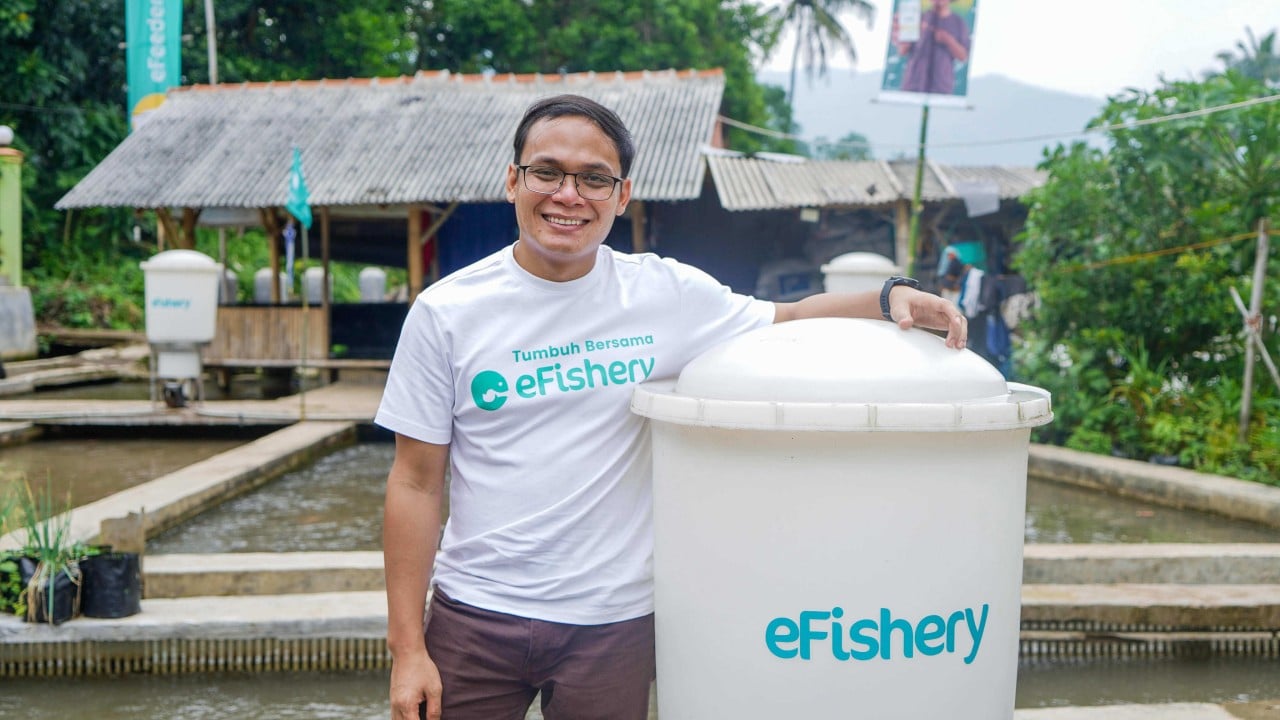
How did this happen? The startup, co-founded by Gibran Huzaifah and Chrisna Aditya in 2013, pitched itself as a tech savior for fish and shrimp farmers by automating feeding processes through IoT devices. On paper, it was a perfect ESG-friendly tech play. In reality, it was a massive house of cards.
The fallout has been swift. Indonesian authorities have already cracked down on the leadership. Former CEO Gibran Huzaifah was convicted by the Bandung District Court and sentenced to nine years in prison for embezzlement and money laundering. Both he and Chief Product Officer Chrisna Aditya have been stripped of executive duties as the legal and recovery mechanisms grind forward.
The Illusion of Safety in Numbers
The most alarming aspect of this case for institutional managers is that KWAP did not make a reckless, isolated bet. They didn't skip steps.
KWAP entered eFishery's Series D funding round as a minority stakeholder, holding roughly a 2.51% share of the company. They invested alongside some of the deepest pockets and most respected names in global venture capital. The investor consortium included:
- Temasek Holdings (Singapore's state investor)
- SoftBank Group Corp.
- 42XFund
- Northstar Group
- Aqua-Spark (eFishery's largest shareholder)
The Ministry of Finance clarified that the decision relied on audited financial statements verified by internationally accredited auditors. Every single fund in that consortium ran its own independent due diligence.
Honestly, it highlights a terrifying reality in private markets: when a fraud is planned meticulously enough at the founder level, traditional third-party audits and standard checklist due diligence can completely miss it. Symmetrical balance sheets mean nothing if the underlying data is fabricated out of thin air.
What Happens to the Pension Money Now
Naturally, public scrutiny in Malaysia is white-hot right now because public sector retirement funds are on the line. Lawmakers like Subang MP Wong Chen have demanded clear accountability regarding what the fund’s investment panel and senior management were doing during the monitoring phase.
To put things in perspective, KWAP is eager to emphasize that this loss, while painful, isn't going to break the fund. The RM163.4 million exposure represents a small fraction of their overall portfolio. KWAP manages a massive total fund under management of RM195.26 billion and brought in a gross investment income of RM8.33 billion based on their latest 2025 financial records.
Still, bad investments of public funds cannot just be brushed aside as "the cost of doing business" in venture capital.
The consortium of global investors has launched aggressive legal proceedings and fund recovery actions in Indonesia to claw back whatever assets remain. Simultaneously, the MACC's newly formed dedicated task force is going through KWAP's internal decision-making timeline to verify that no internal corruption or gross negligence smoothed the path for this investment.
Changing the Playbook for Private Equity
If you are managing institutional capital or building a private market portfolio, the eFishery disaster offers clear lessons that go way beyond simple diversification. Relying on the reputation of other co-investors is a trap. Just because a global giant is leading the round doesn't mean the books are clean.
KWAP is already shifting its approach to private markets by forcing several internal structural changes. First, they are implementing stricter post-investment monitoring that looks beyond standard quarterly updates provided by startup founders. They are also demanding deeper, independent oversight of operational developments on the ground rather than relying entirely on board-level presentations.
Relying on traditional international auditors to catch deliberate, top-level fraud during a minority investment is a losing strategy. True protection requires looking at the actual supply chain, verifying physical inventory or customer transactions independently, and keeping the investment tranches strictly tied to verifiable operational milestones.