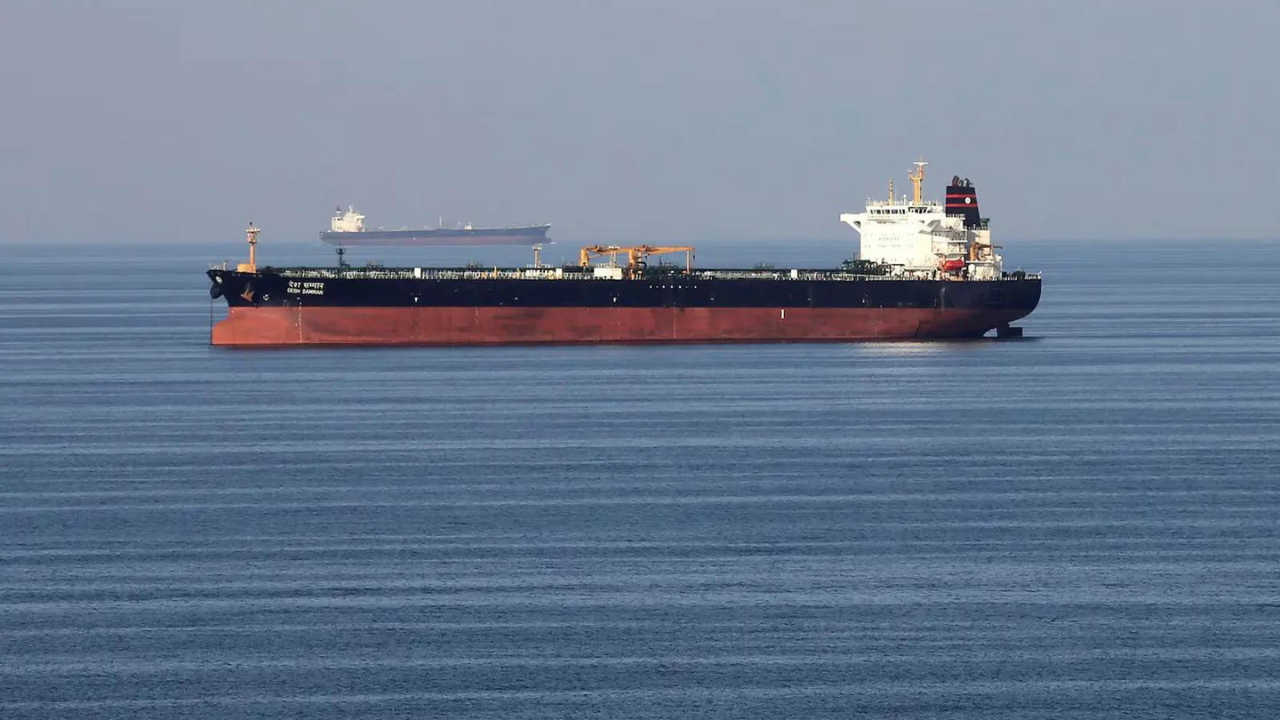
The headlines are screaming "piracy." Iran calls it "armed robbery." The international community wrings its hands over the "sanctity of the high seas." They are all lying to you.
The recent seizure of oil tankers by the United States isn't a violation of international law. It’s a sophisticated debt collection. When the Department of Justice moves on a vessel carrying Iranian crude, they aren't playing Jack Sparrow. They are executing a high-stakes asset forfeiture designed to disrupt a shadow economy that the mainstream media is too lazy to map out. Meanwhile, you can explore related developments here: The AUKUS Delay Panic is a Gift to the West.
Calling this "piracy" is a deliberate rhetorical trick used to distract from the reality: the global oil trade has become a massive, floating laundry mat for sanctioned capital.
The Myth of the Innocent Merchant Vessel
The standard narrative paints these tankers as humble commercial entities caught in the crossfire of geopolitical giants. That is a fantasy. To explore the full picture, we recommend the recent report by TIME.
If you track the AIS (Automatic Identification System) data of the vessels targeted in these operations, you see a pattern of "dark" activity that would make a drug cartel blush. We aren't talking about technical glitches. We are talking about ships vanishing off the map for weeks, engaging in ship-to-ship (STS) transfers in the middle of the night, and forging bills of lading.
When a ship turns off its transponder, it isn't "protecting its privacy." It’s hiding a crime. I have spent years analyzing maritime logistics; when a VLCC (Very Large Crude Carrier) goes dark near the Strait of Hormuz and reappears with a full belly of oil it "didn't have" before, that isn't a miracle. It's a breach of contract with the global financial system.
The Sanctions Gap: Why "Seizure" is a Misnomer
The U.S. doesn't just grab ships because it feels like it. These actions are backed by federal court orders linked to terrorism financing.
Here is the nuance the "Return of the Pirates" crowd misses: Under the International Emergency Economic Powers Act (IEEPA), the moment Iranian oil is sold to fund the IRGC (Islamic Revolutionary Guard Corps), that oil becomes a forfeitable asset under U.S. law.
Critics argue that U.S. domestic law shouldn't apply in international waters. They are half-right, but mostly irrelevant. The global oil trade runs on the U.S. dollar. If you use the SWIFT system, if you clear transactions through New York, or if your insurance is backed by Western reinsurers, you have already opted into the jurisdiction.
Iran wants the benefits of the global market without following its rules. You cannot play in the casino and then complain when the house enforces the table stakes.
The Mechanics of the "Ghost Fleet"
To understand why these seizures are necessary, you have to understand the Ghost Fleet. This is a collection of aging, sub-standard vessels—often past their scrap date—operated by shell companies in jurisdictions like Panama or the Marshall Islands.
- Flag Hopping: A ship will change its flag of convenience three times in a month to stay ahead of inspectors.
- Spoofing: Using electronic devices to broadcast a fake location while the ship is actually loading oil at an Iranian terminal.
- Identity Theft: Using the IMO number of a scrapped ship to give a "zombie vessel" a legitimate cover.
By the time the U.S. seizes the cargo, they aren't just taking oil; they are popping a blister on a global network of shell companies designed to bypass the very treaties Iran claims to uphold.
The Economic Reality: It’s Not About the Oil
Stop looking at the barrels. Start looking at the ledger.
The U.S. doesn't need Iranian oil. We are a net exporter. The seizure of this crude is a direct hit to the liquidity of the IRGC. When the DOJ sells that seized oil, the proceeds don't go into a "war chest"—they are legally mandated to go to the United States Victims of State Sponsored Terrorism Fund.
This is a massive redistribution of wealth from a sanctioned regime to the victims of its proxy wars. Iran calls it "robbery" because it is the only way they can explain to their domestic audience why millions of dollars in revenue just evaporated.
The Environmental Time Bomb Nobody Talks About
The "status quo" defenders cry about maritime law but ignore the catastrophic environmental risk. The ships Iran uses for these "clandestine" runs are rust buckets. They are uninsured and unmaintained.
If one of these ghost tankers has a hull failure in the Singapore Strait, there is no insurance company to pay for the cleanup. There is no corporate entity to sue. You are looking at an ecological disaster with a $0 recovery plan.
The U.S. seizing these vessels and bringing them into a controlled port for offloading is, ironically, the most "pro-environment" move any navy is making right now. We are taking ticking time bombs out of the water.
Addressing the "Provocation" Argument
The most common pushback is that these seizures "provoke" Iran to retaliate by seizing Western tankers (like the Stena Impero or the Advantage Sweet).
This is the logic of the playground bully's victim. "If we just let them break the rules, maybe they won't hit us."
False. Iran seizes tankers as a form of state-level hostage-taking. There is no legal parity between a U.S. court-ordered forfeiture of sanctioned goods and the IRGC masked-men rappelling from helicopters onto a legitimate merchant ship to settle a political grudge.
Equating the two is a moral failure. One is the enforcement of a transparent legal framework; the other is a desperate grab for leverage by a regime that has run out of chips at the table.
The Hidden Cost of "Diplomatic" Solutions
I have watched administrations try to "negotiate" maritime security. It usually ends with a "soft touch" approach where we look the other way while a few tankers slip through.
What does that achieve? It inflates the black market. It makes it more profitable to be a criminal than a legitimate trader. When you allow a "leak" in the sanctions, you aren't being a diplomat; you are subsidizing a shadow economy that undermines every legitimate shipping company in the world.
If you own a legitimate fleet and you have to pay for insurance, safety inspections, and legal fuel, you cannot compete with a ghost ship that ignores every rule in the book. The U.S. Navy and the DOJ are effectively the only entities protecting the competitive integrity of the shipping industry.
Why the "Piracy" Label Fails the Logic Test
Pirates act for private gain. They are non-state actors operating outside the law.
The U.S. actions are:
- Publicly announced.
- Legally adjudicated.
- State-sanctioned.
Whether you agree with the policy or not, calling it piracy is a linguistic surrender. It's what people say when they don't have a legal argument to stand on.
Imagine a scenario where a bank repossesses a car because the owner used it to transport stolen goods. The owner doesn't get to call the tow-truck driver a "highwayman." The owner broke the terms of the social and financial contract.
The Failure of International Oversight
The IMO (International Maritime Organization) is toothless here. They lack the enforcement arm to stop flag-hopping or to inspect dark vessels in international waters. This creates a vacuum.
In the absence of a global maritime police force, the U.S. has stepped in as the de facto enforcer. It is a thankless, expensive, and legally complex role. If the U.S. stopped tomorrow, the Strait of Hormuz wouldn't become a "free trade zone." It would become a Wild West dominated by whoever has the most RPGs.
Follow the Money, Not the Outrage
The next time you see a headline about the U.S. "stealing" Iranian oil, ask yourself:
- Who owned the ship? (Usually a shelf company in Liberia).
- Where was the transponder? (Usually off).
- Where was the money going? (Usually a sanctioned entity).
If you can't answer those three questions, you aren't reading news; you're reading a press release for a smuggling ring.
The global energy market is a brutal, cold-blooded machine. It doesn't care about "piracy" labels. It cares about risk, liquidity, and law. The U.S. isn't disrupting the market; it's the only thing keeping the black-market rot from collapsing the whole system.
Stop mourning the "robbed" tankers. They were never part of the legitimate world to begin with. They were ghosts, and the U.S. just decided to stop pretending they didn't exist.
The only "armed robbery" happening on the high seas is the theft of global stability by regimes that think they can bypass the financial grid without consequences. The seizure of these ships isn't the problem—it's the long-overdue solution.
Get used to it. The shell game is over.