If you feel like summer is lasting forever, you aren't imagining things. A groundbreaking climate study shows that global heat stress has expanded drastically over the last few decades. Countries like Mexico and Italy are now dealing with up to two additional months of dangerous heat per year compared to the 1970s. That isn't just a minor shift in the weather. It's a massive transformation of our daily environment that affects health, labor, and basic survival.
We aren't talking about a distant future problem. This is happening right now in 2026. The data tracks how accumulated thermal strain alters entire regions, forcing millions of people to endure suffocating conditions that their parents simply didn't face. You might also find this related story interesting: Why the Keir Starmer Resignation Was Entirely Predictable.
The numbers behind the extra two months of heat
Data analysts compared recent climate patterns against baselines from fifty years ago. The results are stark. Mexico has seen some of the most aggressive increases, with localized data points showing roughly sixty extra days of hazardous conditions annually. Italy follows a similar trajectory across the Mediterranean basin, where the climate is rapidly shifting toward semi-arid intensity.
It gets worse when you look at the geography. This trend isn't isolated to equatorial bands. The sub-tropical zones are expanding outward, pushing prolonged thermal anomalies into parts of Europe and North America that used to enjoy mild summers. As reported in detailed reports by Reuters, the implications are notable.
People think climate change means a uniform tick upward on the thermometer. It doesn't. It means extended blocks of time where the human body cannot efficiently cool itself down. Fifty years ago, a severe heatwave lasted a few days. Today, those waves merge into seasons.
Why simple temperature numbers don't tell the whole story
To understand this shift, you have to look at the wet-bulb temperature. Air temperature alone is a deceptive metric. When high humidity combines with intense heat, sweat stops evaporating from your skin.
That evaporation is your body's primary cooling mechanism. Without it, your internal temperature climbs. This state is exactly what meteorologists mean when they quantify global heat stress.
- Humidity spikes: Warmer air holds more moisture, making coastal regions in Italy and Mexico highly vulnerable.
- Nighttime warming: Thermometers aren't dropping after dark, depriving communities of recovery time.
- Urban heat islands: Concrete and asphalt trap daytime energy, magnifying the baseline atmospheric stress.
When nights stay hot, the physiological toll accumulates. Your heart pumps faster to try to cool you down, which strains your cardiovascular system over weeks rather than hours. This continuous pressure explains why emergency room visits skyrocket even during non-record-breaking weeks.
Local economies are taking a massive beating
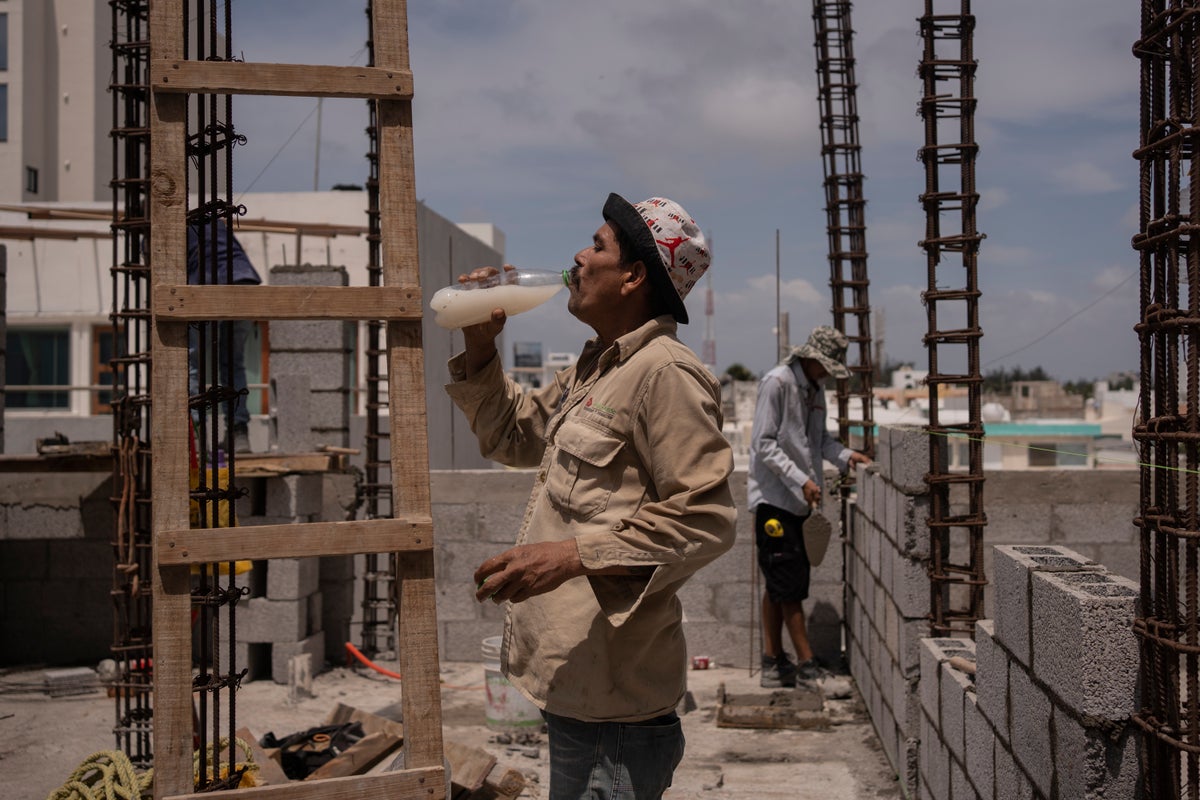
This environmental shift creates massive economic friction. Think about outdoor labor. Agriculture and construction sectors in Mexico are losing billions in potential productivity because workers literally cannot safely stand in open fields during peak hours.
Shifting work shifts to the middle of the night helps somewhat, but it introduces major logistical headaches and safety risks. It changes how cities function.
Power grids are buckling under the strain too. Air conditioning is no longer a luxury in southern Europe; it's basic survival infrastructure. The massive demand for electricity during these extra two months of stress strains old utility networks, leading to blackouts right when people need cooling the most.
Insurance companies are quietly rewriting their policies to account for this reality. They know that extended thermal events degrade infrastructure, rot asphalt, and warp rail lines. The cost of maintaining basic services is ticking upward everywhere.
Practical steps to protect yourself from rising environmental strain
Waiting for global policy to solve this isn't a viable strategy for individuals. You have to adapt your immediate surroundings to handle this extended season of strain.
Start by auditing your living space. Retrofitting windows with heat-blocking films makes a massive difference in how hard your cooling systems have to work. Focus on creating at least one heavily insulated room in your house that can stay cool even if the grid fails.
Change how you hydrate. Gulping plain water during prolonged thermal events can dilute your body's electrolyte balance, leading to hyponatremia. Mix in mineral supplements or targeted hydration packets if you spend more than an hour outdoors.
Keep a close eye on wet-bulb metrics rather than just checking the standard daily high on your phone app. When local humidity climbs past seventy percent on a hot day, cancel strenuous outdoor activities regardless of what the standard forecast says. Your safety depends on recognizing that the environment has fundamentally changed.