Silence.
That is the first thing you notice about a city that has been promised absolute safety, right up until the exact millisecond the promise breaks.
In the early hours following a political coronation—the kind of stage-managed, overwhelming electoral victory designed to project permanence—the streets of a capital are supposed to hum with a specific, predictable frequency. For decades, the unspoken social contract in Moscow rested on a simple trade. Citizens surrendered political agency, independent media, and the right to protest, and in exchange, the state provided stability, rising living standards, and an impenetrable shield against the chaos of the outside world. The conflict raging hundreds of miles away was meant to remain a curated broadcast on evening television, distant and abstract, something that happened somewhere else to someone else.
Then came the hum of low-flying engines in the dark, followed by the concussive thud of air defense interceptors and the sharp, unmistakable crack of shattered glass against asphalt.
When Ukrainian drone strikes reached the Russian capital in the immediate wake of Vladimir Putin’s March 2024 election win, the physical damage to concrete and steel was measured in broken windows, scorched facades, and temporarily diverted flights. Yet the psychological damage was far harder to quantify. According to reporting from international news agencies and local Russian outlets documenting the aftermath, air traffic at major hubs like Vnukovo and Domodedovo experienced sudden disruptions, emergency crews cordoned off residential and commercial blocks, and residents stood in bathrobes on chilly sidewalks staring up at a sky they believed was untouchable.
To understand why a handful of unmanned aerial vehicles could trigger panic in a metropolis of over thirteen million people, you have to look past the military hardware and examine the architecture of fear.
The Illusion Of The Fortress
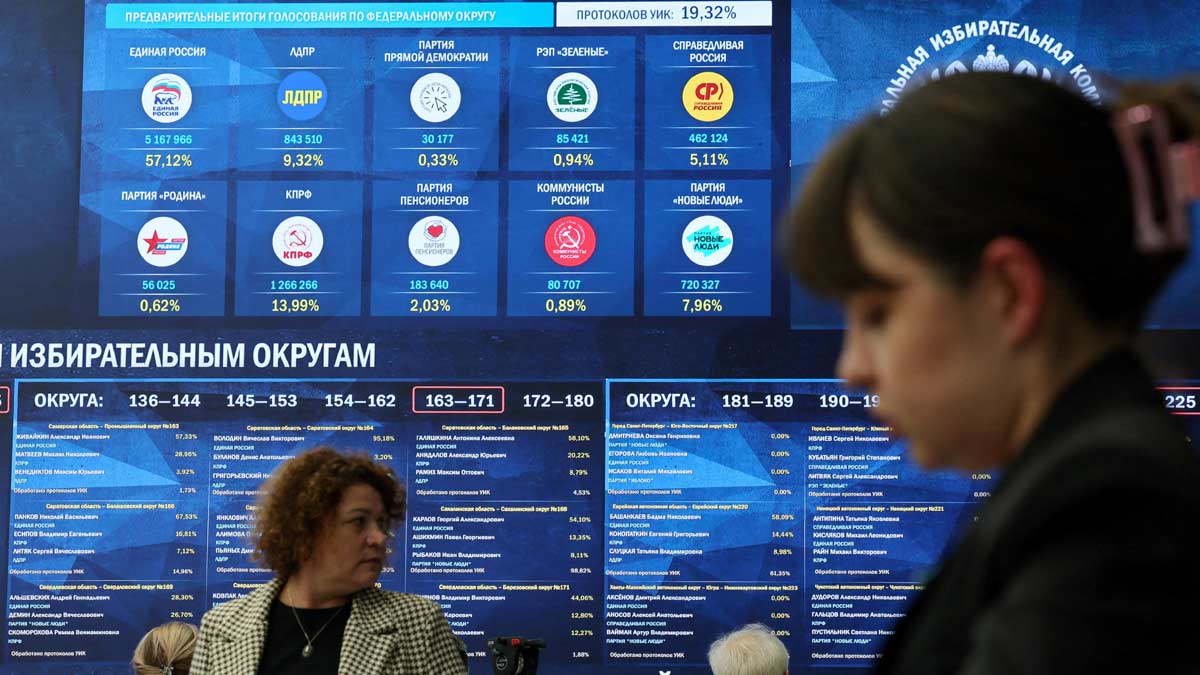
Imagine a hypothetical Moscow resident—let us call her Elena, a composite drawn from the countless accounts of urban professionals who spent the last several years trying to keep their heads down and their lives intact. Elena works in logistics, drinks takeaway flat whites near the Garden Ring, and carefully avoids political conversations at dinner parties. On Sunday evening, the state television channels told her that over eighty-seven percent of voters had endorsed the current leadership, a figure reported by Russia’s Central Election Commission and widely dismissed by independent election monitors and Western governments as neither free nor fair. The message from the Kremlin was clear: the nation was united, the leadership was unassailable, and the trajectory was set.
By Monday and Tuesday, Elena is standing in her hallway with a packed overnight bag, checking Telegram channels with trembling thumbs because an explosion just rattled the frames off her living room wall.
This is the core vulnerability of an information-controlled society. When official channels insist that everything is proceeding according to plan, any sudden intrusion of reality carries double the shock. Without trusted institutional voices to explain the scope of a threat, rumors rush into the vacuum. A single intercepted drone becomes an imminent invasion; a localized airport closure becomes a frantic rush for train tickets out of the city or a sudden spike in searches for flights to Yerevan, Tbilisi, and Istanbul.
Military analysts and historians have long observed this phenomenon in wartime capitals. Think of a luxury cruise ship built with thick steel bulkheads, where the captain assures the passengers that the vessel is unsinkable and forbids anyone from looking at the weather radar. When water suddenly seeps under the cabin door, the passengers do not calmly walk to the lifeboats. They panic, because they were never given a framework for danger.
Why Air Defense Cannot Protect A Narrative
From a purely technical standpoint, modern air defense systems—like the Pantsir-S1 batteries famously hoisted onto the rooftops of Moscow administrative buildings in early 2023—are designed to intercept incoming threats. Yet even the most sophisticated radar network operates on probabilities, not absolutes.
- Low-altitude flight paths: Long-range drones often hug the terrain, flying beneath traditional radar horizons until they are already inside urban perimeters.
- Swarm saturation: Launching multiple inexpensive drones simultaneously forces defenders to expend high-cost interceptor missiles, creating gaps through which even one or two airframes can slip.
- Debris physics: Even a successful interception over a densely populated city means gravity still applies; falling shrapnel and warhead fragments still smash into apartment blocks and parked cars.
Ukrainian officials, including President Volodymyr Zelenskyy and representatives of Ukraine’s military intelligence, have repeatedly stated that bringing the consequences of the war closer to Russian territory is a deliberate strategic choice aimed at eroding the sense of impunity inside Russia. Meanwhile, the Russian Ministry of Defense routinely characterizes these incursions as intercepted "terrorist attacks," emphasizing that air defenses neutralized the targets while downplaying civilian disruption.
Both narratives collide in the living rooms of ordinary people who suddenly realize that geopolitical borders do not stop objects moving at a hundred miles per hour through the night sky.
The Quiet Exodus And The Weight Of A Suitcase
When fear takes hold in a major city, fleeing rarely looks like a Hollywood disaster movie. There are no endless columns of cars burning on highways. Instead, it is quiet, bureaucratic, and deeply personal.
It looks like a mother booking a spontaneous three-week stay at a dacha outside the Moscow Oblast, telling her neighbors she just wants the kids to get some fresh air before spring arrives. It looks like an IT specialist quietly checking the expiration date on his international passport, transferring savings into cryptocurrency or foreign accounts, and booking a one-way ticket to Central Asia under the guise of a business trip.
Following earlier waves of mobilization in 2022 and subsequent drone incidents in the Moscow City business district in 2023, sociologists and independent journalists tracking Russian emigration noted a distinct pattern: departure happens in pulses. Each pulse is triggered not necessarily by the statistical likelihood of being harmed—which, in a city of millions, remains statistically small—but by the sudden collapse of predictability.
People can adapt to high prices. They can adapt to vanished Western brands, restricted internet access, and quiet self-censorship. What human beings struggle to tolerate is the sensation that the ground beneath their feet has no solid foundation.
Consider what happens when a society loses its ability to plan six months ahead:
- Economic paralysis: Families delay major purchases, renovations, and investments, hoarding liquid cash in case they need to leave at dawn.
- Social atomization: Neighbors stop trusting one another, unsure who is genuinely loyal to the state narrative and who is quietly packing their bags.
- Emotional exhaustion: Living in a constant state of low-grade hypervigilance erodes mental health long before a siren ever sounds.
The Invisible Stakes Behind The Headlines
It is easy, from thousands of miles away, to read a headline about panicked residents fleeing Moscow after an election and treat it as simple poetic justice—a scoreboard update in a brutal geopolitical conflict. That framing misses the deeper, more unsettling truth about how modern warfare reshapes civilian psychology.
The drone strikes near Moscow were never meant to conquer territory. You cannot hold a city block with a propeller-driven aircraft carrying fifty kilograms of explosives. Their true target was psychological: the carefully constructed wall separating the Russian home front from the front lines in Ukraine.
For over two years, the Kremlin’s primary domestic achievement was insulation. By relying heavily on recruits from impoverished regions, offering substantial financial bonuses, and keeping the economic life of Moscow and St. Petersburg largely intact, the state ensured that the most politically influential segments of Russian society felt minimal daily friction. The election results were intended to be the ultimate ratification of that arrangement—a theatrical display of consensus proving that the state could wage a massive war abroad while maintaining tranquility at home.
Yet tranquility cannot be decreed by an electoral commission.
When emergency alerts flash on smartphone screens and the smell of burning fuel drifts across suburban neighborhoods, the gap between official rhetoric and lived reality becomes impossible to ignore. Even those who support the government begin asking uncomfortable questions in hushed voices. If the borders are secure, how did these aircraft fly hundreds of miles across Russian airspace? If the operation is going smoothly, why are air defense batteries parked next to residential neighborhoods?
Living Under A Fragile Sky
There is a specific kind of vulnerability that comes with admitting how little control any ordinary person holds when states collide. Whether you are sitting in a basement shelter in Kyiv listening to incoming ballistic missiles or standing in a Moscow stairwell listening to anti-aircraft fire, the political abstractions vanish instantly. All that remains is the primal instinct to protect the people standing next to you and get somewhere safe.
The difference lies in honesty. In a society where danger is acknowledged openly, fear can be shared, processed, and met with collective resilience. In a society where fear is officially denied—where panic itself is treated as a form of disloyalty—people are forced to carry their terror entirely alone.
Picture that hypothetical apartment building in Moscow at four in the morning, thirty minutes after the all-clear is given. The sirens have stopped. State television has already returned to its scheduled programming, reassuring viewers that every threat was neutralized and life is proceeding normally. Down on the street, a municipal worker sweeps tiny shards of window glass into a dustpan, scraping the bristles rhythmically against the cold pavement. Upstairs, behind darkened curtains, a suitcase sits zipped by the front door, waiting for the next sound in the dark.