The marble of the General Assembly hall absorbs sound the way an empty cathedral absorbs prayer. It is a heavy, ancient quiet, punctuated only by the translated drone of a delegate speaking about water rights or border disputes or the slow starvation of a city three thousand miles away.
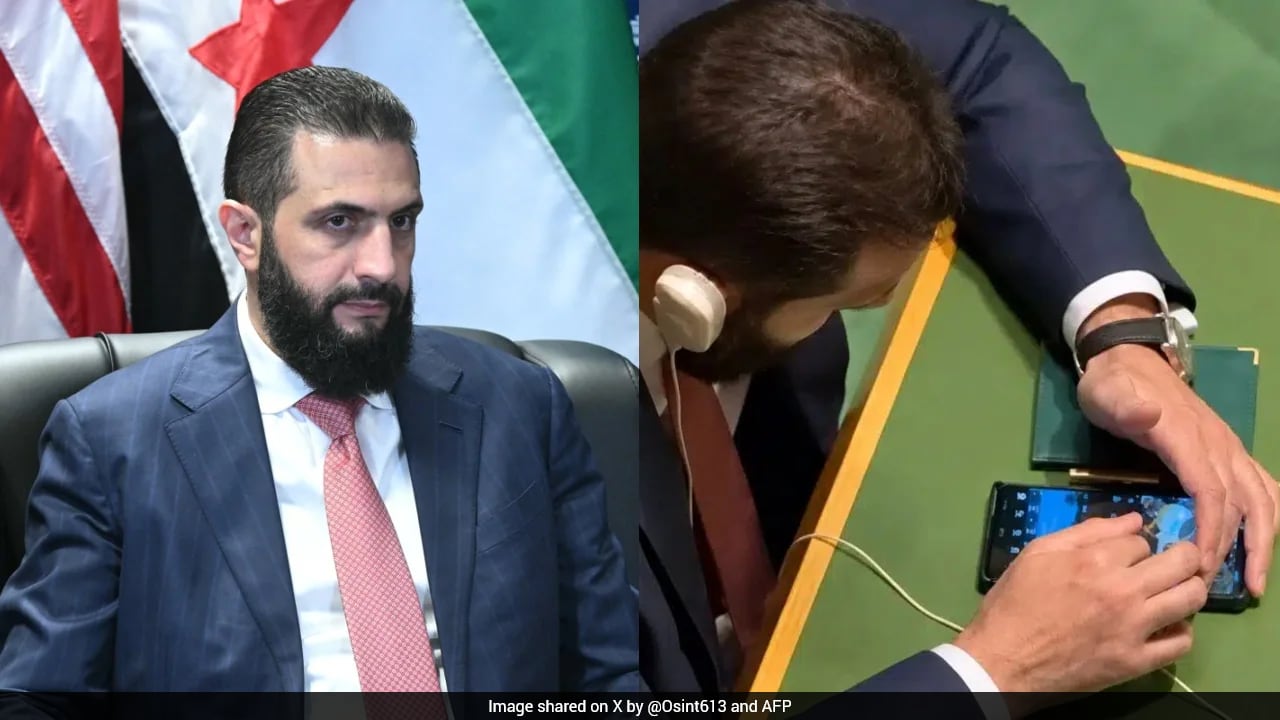
In seat 14, row four, a phone lights up.
It is a familiar blue glow. The kind that turns the most powerful faces in the world into pale, blank masks. Ahmad al-Sharaa does not look up when the speaker from the podium mentions a ceasefire violation. His thumb moves in a practiced, rhythmic flick. Up. Up. Up. Another thirty seconds of someone else’s life, compressed into a seven-second loop of comedy sketches, cooking tutorials, and viral soundbites, washes across his retina.
Outside, a country waits. Inside, an algorithm decides what happens next.
We have built a civilization that lets leaders carry the entire weight of human misery in their pockets, right next to a button that summons infinite entertainment.
Consider the paradox. The United Nations is the grandest theater of consequence ever devised by mortal hands. It was born from the ash of total war, designed so that men and women could look each other in the eye and negotiate the survival of nations. Every speech is a historical artifact. Every posture is scrutinized by intelligence agencies, journalists, and citizens who have traded everything for safety.
And yet, boredom is a terrifying tyrant.
When you spend your life surrounded by advisors who nod, bodyguards who flinch at shadows, and speeches that have been sanitized by eight layers of diplomats, the sterile air of international diplomacy starts to feel like a holding cell. The brain rebels. It seeks the cheap dopamine hit. It crawls toward the glowing rectangle like a moth to a streetlamp, desperate for something—anything—that feels real, even if it is entirely fake.
We have all been there.
You are sitting in a room where someone is explaining something vital. A quarterly review. A family meeting. A lecture on cellular biology. The voice drones on. Your eyes glaze over. Without your conscious permission, your hand dips into your pocket, your thumb betrays you, and suddenly you are watching a man in Ohio try to fix his lawnmower with duct tape.
The mechanism is identical. Only the stakes are different.
When an ordinary teenager gets caught scrolling TikTok during a history test, the penalty is a confiscated phone and a note home. When a transitional leader gets caught scrolling Reels while a global body discusses the fate of millions, the penalty is something far more corrosive. It is a puncture in the illusion of authority.
It tells us something uncomfortable about how power actually feels from the inside. We imagine that being important means being endlessly engaged, that the people running our world are consumed by a fiery, relentless passion for governance every second of the day.
They are not.
They are just as tired as we are. Just as distracted. Just as addicted to the endless, glittering distraction machine that silicon valley engineers spent the last fifteen years perfecting.
The camera angle was cruel. A live broadcast beam, meant to capture the solemn dignity of statecraft, instead caught the pixelated reflection of a silly dance trend in the iris of a head of state. The internet did what the internet does. It screengrabbed, it mocked, it memed. Within an hour, the image was shared across borders that armies cannot cross.
A quiet humiliation, delivered via 5G.
There is a temptation here to moralize. We want to point fingers and scream about professionalism and duty. How dare he? How can a man entrusted with steering a nation through a brutal post-conflict era look away while the world talks?
Yet, pointing fingers requires a certain amount of moral blindness.
Look at your own screen time report for last week. Look at the moments you checked your notifications while your friend was telling you about a breakup. Look at the red dots nagging at the edge of your vision, demanding your attention like stray cats whining at a back door. We have outsourced our attention spans to the highest bidder, and then we act shocked when the contagion reaches the high table.
The camera caught al-Sharaa, but it caught all of us.
It captured the fundamental tragedy of the modern era: the inability to simply be where we are. We are perpetually haunted by the ghosts of a thousand other places we could be looking at instead. The physical world is slow, heavy, and demanding. The digital world is fast, light, and endlessly forgiving.
When the speeches ended and the delegates packed their leather folios, the marble hall emptied out. The interpreters closed their booths. The cleaning crews moved in with heavy vacuums, sucking up the crumbs of diplomacy from the red carpets.
Nothing changed in that room. The crises remained. The borders stayed drawn. The algorithms kept spinning their invisible webs in the dark, feeding us what we want, while slowly starving us of what we need.