The air in Colleton County usually tastes of salt marsh and old money. For a century, the name Murdaugh was the law. It was a dynasty built on the thrum of cicadas and the heavy, humid weight of undisputed power. But today, the South Carolina breeze carries a different scent. Uncertainty. The legal equivalent of a structural failure.
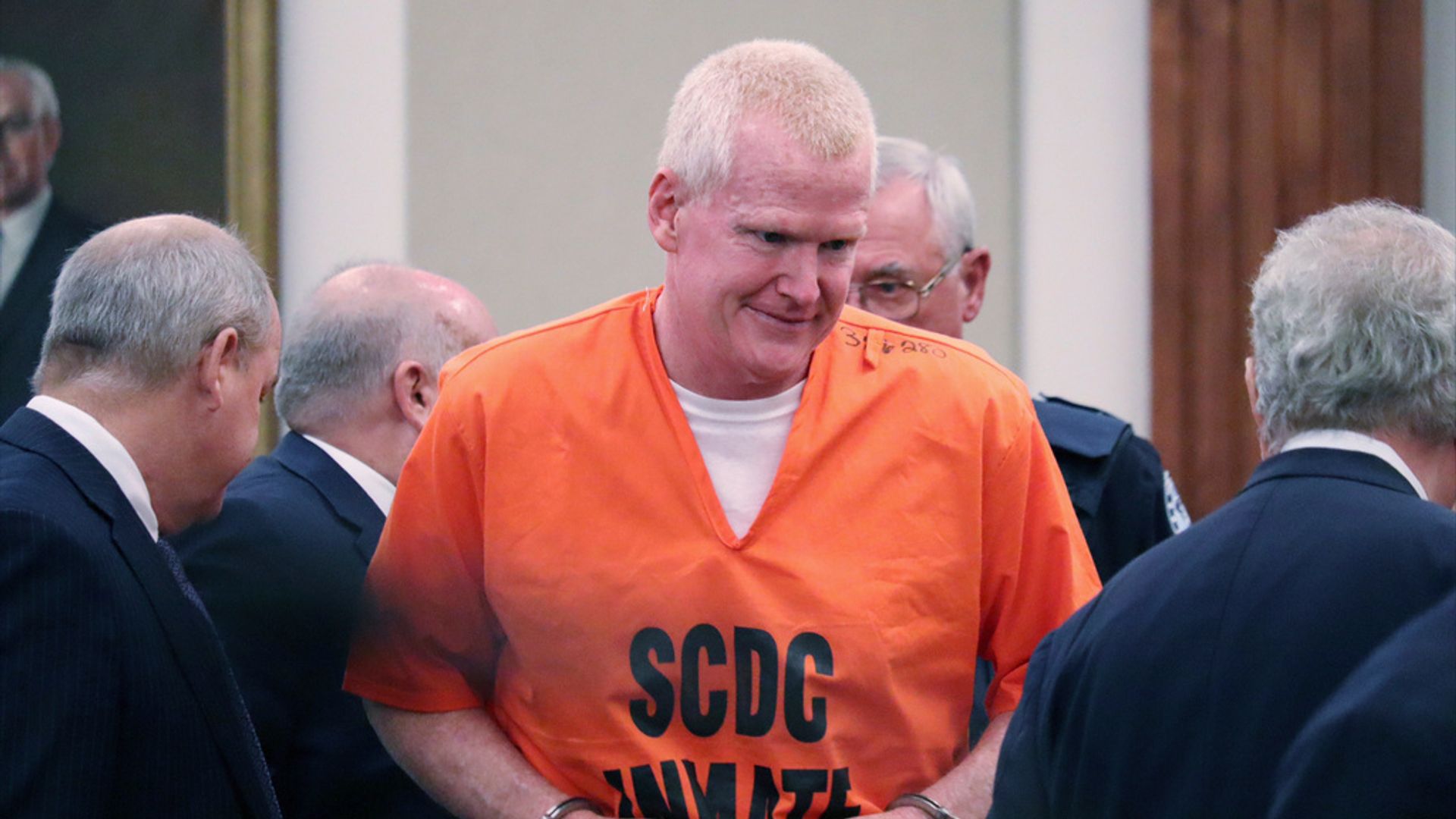
Alex Murdaugh, the disheveled scion who once commanded every room he entered, has seen his murder convictions vanish. Not because of a sudden discovery of innocence, but because the very machinery of justice—the one his family operated for generations—was found to be rusted and compromised from within. If you enjoyed this post, you should check out: this related article.
To understand why this matters, you have to look past the orange jumpsuit. You have to look at Becky Hill.
The Whisper in the Hallway
Imagine you are a juror. You have been pulled from your life to sit in a wood-paneled room for six weeks. You are tired. You are haunted by photos of a mother and son, Maggie and Paul, slumped in the mud near the dog kennels at Moselle. You are looking for a moral compass. For another angle on this event, see the recent coverage from NPR.
Naturally, you look to the Clerk of Court.
Becky Hill wasn't just a bureaucrat; she was the mother hen of the courthouse. But according to the South Carolina Supreme Court, she wasn't just tending the nest. She was poisoning the well. The allegations weren't subtle. She was accused of telling jurors not to be "fooled" by Murdaugh’s testimony. She supposedly warned them to watch his body language closely. She whispered. She nudged.
In a trial of this magnitude, a whisper is a landslide.
The law is a fragile thing. It relies on the absolute vacuum of the jury room—a space where only evidence is allowed to breathe. When a court official pumps their own narrative into that vacuum, the trial ceases to be a search for truth. It becomes a performance with a rigged ending. The state’s highest court looked at this interference and reached a singular, jarring decision: the verdict was tainted.
The convictions are gone. The slate is wiped.
The Weight of a Name
For the people of Hampton County, this isn't a true-crime podcast. It’s their history. For decades, if you were in a car wreck or a legal bind, you went to the Murdaughs. They were the protectors. They were the predators.
When the news of the overturned conviction broke, the reaction wasn't a simple cheer or a groan. It was a collective intake of breath. There is a specific kind of exhaustion that comes from watching a local titan fall, only to see them catch a branch on the way down.
Consider the "invisible stakes" here. This isn't just about whether Alex Murdaugh pulled the trigger on a warm June night in 2021. It’s about whether the system can actually hold someone like him accountable without breaking its own rules. If the state has to cheat to convict a killer, then the state has already lost.
Murdaugh himself remains a hollowed-out version of the man who used to hunt deer on his 1,700-acre estate. He is still a convicted thief, having admitted to stealing millions from the vulnerable clients who trusted him. He is still a man whose life is a mosaic of betrayal. But for a brief moment, the shadow of the double-murder sentence has been lifted, replaced by the grueling prospect of doing it all over again.
The Second Act of a Tragedy
A retrial is a brutal thing. It forces the survivors to walk through the blood again. It forces a community to relive the trauma of seeing its internal rot exposed to the world's cameras.
The evidence remains the same. The high-velocity blood spatter. The cell phone videos that placed Alex at the scene minutes before the shots rang out. The frantic, possibly staged 911 call. All of it will be wheeled back into the courtroom, dusted off, and presented to twelve new people who have spent the last few years hearing nothing but this story.
Can a fair jury even be found in the Lowcountry anymore?
It's a legitimate question. We live in an era where "neutrality" is a disappearing resource. Everyone has an opinion on the "pills and power" defense. Everyone has seen the Netflix documentaries. The challenge for the defense and the prosecution now isn't just arguing the facts; it’s fighting the ghost of the first trial.
The prosecution faces a terrifying reality: the "slam dunk" has bounced off the rim. They now have to prove their case without the benefit of a helpful clerk nudging the jury toward a "guilty" button. They have to rely on the cold, hard science and the timeline.
The Cost of a Shortcut
The overturning of these convictions is a stinging rebuke to anyone who thinks the ends justify the means in a courtroom. Becky Hill, who eventually resigned amidst a flurry of ethics investigations and allegations of book-deal greed, has become a cautionary tale.
She wanted to be a part of the story. Instead, she became the reason the story has no ending.
Her alleged desire to "fast-track" a conviction for the sake of a more compelling book narrative is the ultimate irony. In trying to ensure Murdaugh never walked free, she provided him with his only path out of a life sentence. It is a Shakespearean level of incompetence.
The victims in this—not just Maggie and Paul, but the integrity of the South Carolina legal system—are left waiting. Justice delayed is often described as justice denied, but here, it feels more like justice distorted.
The Long Walk Back to Moselle
Tonight, the dog kennels at Moselle are quiet. The property has been sold, the weeds are likely reclaiming the edges of the gravel drive where the bodies once lay. The physical space is moving on, but the legal reality is stuck in a loop.
Alex Murdaugh will return to a courtroom. He will wear a suit instead of a jumpsuit for a few weeks. He will look at a new set of faces. He will try to project the image of a grieving father and husband, while the state tries to paint him as a desperate man whose world was caving in.
The stakes have shifted. The first trial was about a man. The second trial will be about the law itself.
There is no comfort in this update. There is no closure for the families involved, and there is no sense of "victory" for the public. There is only the realization that even when a monster is put in a cage, the door only stays shut if the lock is forged with total honesty.
The lock broke. Now, we all have to watch as they try to forge a new one, hoping this time it holds against the weight of a name that refuses to fade into the dark.
The gavel will fall again. But until then, the Lowcountry remains haunted by the whispers of a clerk and the silence of a grave that refuses to stay closed.