The floorboards of the Louvre do not just creak; they groan under the weight of ten million visitors a year. Most of those visitors are sprinting toward the Mona Lisa, their phones held aloft like digital offerings. They pass by thousands of masterpieces with barely a glance, unaware that some of the canvases staring back at them are not merely art. They are evidence.
For decades, a specific category of paintings has hung in a sort of legal and moral purgatory. They are known by the chillingly bureaucratic label MNR—Musées Nationaux Récupération. These are the orphans of the Third Reich.
When the Nazi occupation of France ended, the chaos of the recovery was as vast as the theft that preceded it. Thousands of works of art were found in salt mines, tucked away in Bavarian castles, or sitting in the crates of high-ranking Nazi officials like Hermann Göring. Most were returned to their rightful owners. But more than 2,000 pieces remained unclaimed, their histories scrubbed clean by the fires of war or the extermination of entire family lines.
Paris has finally decided that hiding these ghosts in the open is no longer enough.
The Room Where Time Stopped
Imagine a woman named Sarah. She is hypothetical, but her story is the composite of a thousand scattered genealogies. In 1942, Sarah’s grandfather stood in a Parisian apartment, watching as men in grey uniforms hammered crates shut. He wasn't crying for the money. He was watching his identity be dismantled. That small landscape by a minor Dutch master wasn't just oil on wood; it was the backdrop of every Shabbat dinner he’d ever known.
When he was taken, the painting was taken too. If he survived the camps, he likely spent his remaining years too broken or too poor to sue a national museum system for its return. If he didn't survive, the memory of that painting died with him.
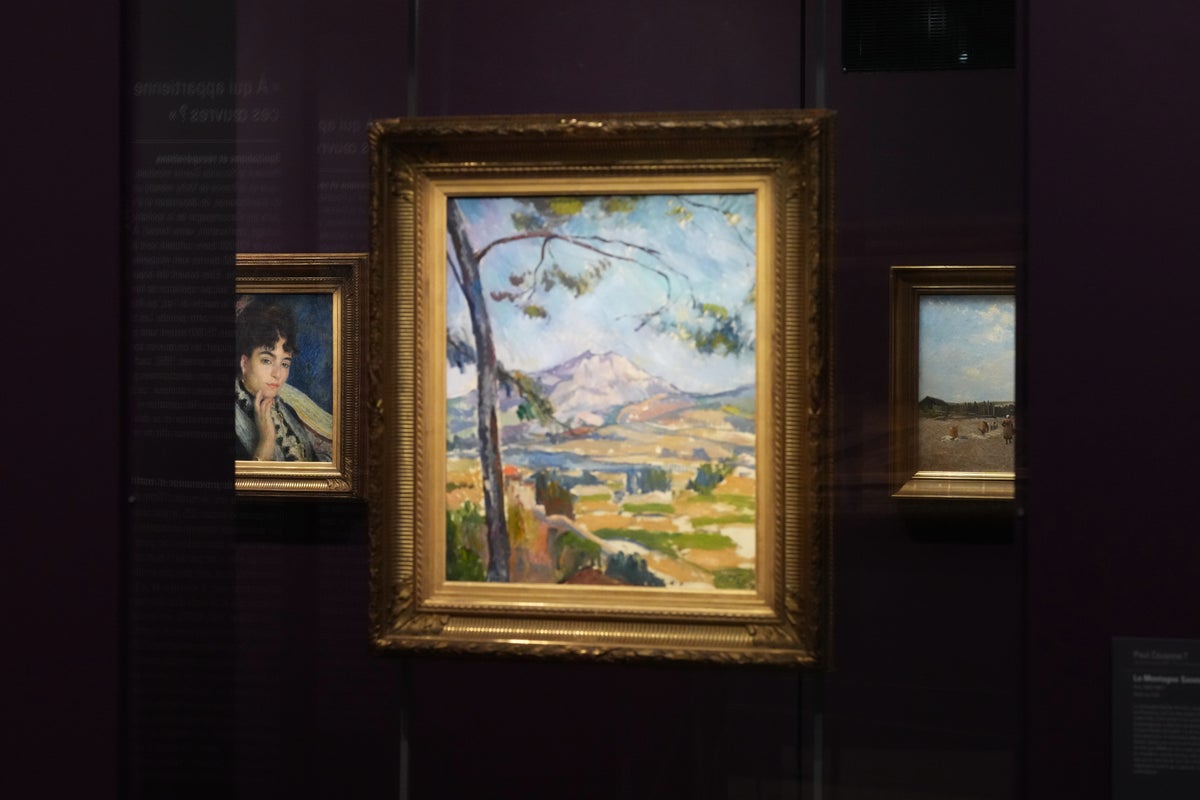
Until now, the Louvre and other French institutions scattered these MNR works throughout their galleries, marked only by tiny, discreet labels that required a magnifying glass and a law degree to decipher. They blended in. They became part of the furniture of the state.
The new initiative changes the geography of memory. By dedicating specific, permanent galleries to these "orphaned" works, the museum is doing something radical: it is admitting it doesn't own them. It is merely holding them in trust for a ghost.
The Burden of Proof
The problem with justice is that it requires paperwork. To reclaim a painting, a descendant must prove a direct line of ownership. But how do you provide a receipt for a purchase made in 1920 when your family home was leveled by a mortar shell? How do you prove a painting belonged to your Great-Aunt Rose when the only person who saw it hanging in her parlor died in Sobibor?
The French Ministry of Culture is essentially turning the museum into a forensic lab. By pulling these works out of the general collection and placing them in a spotlight of scrutiny, they are inviting the public to look closer. They are betting on the "crowdsourcing" of history.
It is a grueling process.
A single investigation into a painting's provenance—the trail of its owners through time—can take years. Researchers must haunt archives, flip through dusty ledgers of auction houses that burned down eighty years ago, and squint at the back of canvases for the faint, purple stamp of a Nazi looting agency.
Sometimes, the breakthrough comes from a photograph. A grainy, black-and-white family snapshot shows a toddler sitting on a rug, and there, in the blurry background, is the corner of a frame. That corner is enough to start a claim.
The Aesthetics of Guilt
Walking into this new gallery space feels different from the rest of the museum. The lighting is the same, the temperature is controlled to the same precise degree, but the air feels heavier.
There is a 17th-century still life of fruit and flowers. It is beautiful, but once you know it was snatched from a home while the owners were being marched toward a train station, the grapes look bruised. The flowers look like they’re rotting. The beauty of the work becomes inseparable from the violence of its transit.
Critics used to argue that "art belongs to everyone" and that these works should remain in the Louvre because they are "saved" for the public. This logic is a polite form of theft. It suggests that the cultural enrichment of a tourist from Ohio or a student from Tokyo is more important than the property rights of a family that was nearly erased from the earth.
By grouping these works together, the museum strips away the comfort of the "art lover." You cannot simply admire the brushwork. You are forced to confront the void where the rightful owner should be.
The Empty Chair
Consider the logistics of the "orphaned" masterpiece. If a family is found, the painting is returned. There is often a ceremony—quiet, somber, and filled with a strange mix of grief and relief. The museum wall is left with a blank space.
That blank space is the ultimate goal of this project.
A museum's traditional purpose is to acquire, to hoard, to protect. Success is measured by the size of the collection. But in the MNR galleries, success is measured by loss. Every time a painting leaves the room to be returned to a granddaughter in Tel Aviv or a nephew in New York, the museum has fulfilled its highest calling. It has stopped being a warehouse and started being a bridge.
But for many of these canvases, no one will ever come.
There are families who were so thoroughly destroyed that not a single person is left to remember the art they once loved. In those cases, the painting hangs as a headstone. It is a physical manifestation of a life interrupted.
Beyond the Gilded Frame
This isn't just about the Louvre. It’s a ripple effect across the European cultural landscape. For decades, there was a collective amnesia, a hope that if we waited long enough, the generation that remembered the thefts would pass away and the questions would stop.
The opposite happened.
The grandchildren and great-grandchildren are more determined than ever. They have access to digitized records and global databases. They are not asking for the "value" of the art; they are asking for the truth.
The truth is that the history of Europe is written in the movement of its treasures. When we look at these paintings, we are looking at the spoils of a catastrophe. The new gallery is an attempt to decontaminate the collection. It is an acknowledgment that a national museum cannot be a "temple of civilization" if its foundations are built on stolen goods.
The Final Witness
Next time you find yourself in Paris, skip the line for the Mona Lisa for twenty minutes. Find the MNR labels. Look at the faces in the portraits. They are silent, but they aren't empty.
They are waiting.
They aren't waiting for more admirers or more analysis of their chiaroscuro. They are waiting for a name. They are waiting for someone to walk through the door, look at the wall, and recognize the ghost of their own history.
Until that happens, they remain the most expensive reminders in the world that while art is long, life is short, and justice is longer still.
The museum is no longer just a place to see what we have. It has become a place to remember what we took. It is a house of beauty, yes, but it is also a house of accountability, where every gilded frame holds a question that the twenty-first century is finally brave enough to answer.
The painting on the wall isn't looking at you. It’s looking past you, toward the door, watching for someone who isn't there yet.