Saltwater rusts everything eventually. Ask any mechanic who has spent six months on an amphibious assault ship off the coast of Okinawa, and he will tell you that the Pacific Ocean is not a scenic blue highway. It is a corrosive, relentless machine that eats through marine-grade steel, gums up hydraulic lines, and turns a state-of-the-art diesel engine into a multi-million-dollar paperweight if you miss a single maintenance cycle.
Now imagine trying to fix that engine while hiding in the mangrove swamps of a tiny Philippine atoll, with no replacement parts, no internet, and an enemy satellite passing overhead every forty-five minutes. Meanwhile, you can read other developments here: The Anatomy of Joint Military-Civilian Oversight in PLA Weapons Procurement.
That is the reality staring down the United States Marine Corps.
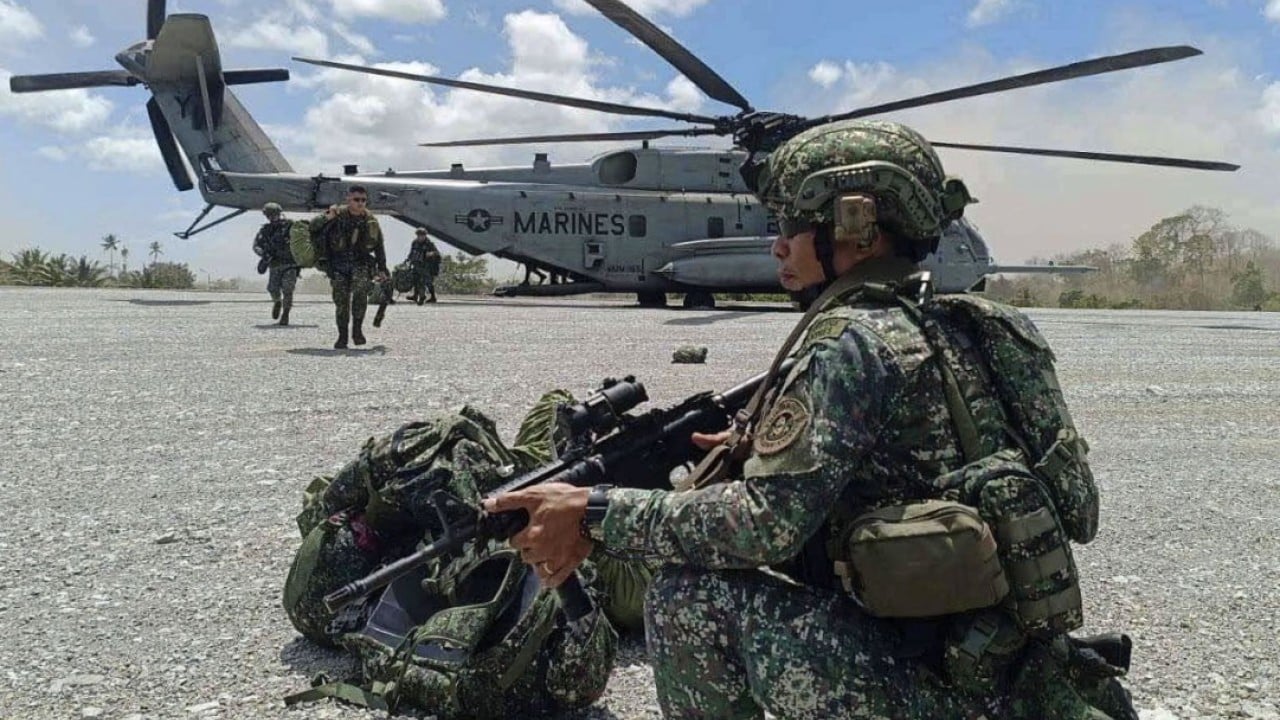
For the past several years, the Pentagon has been betting the house on a radical transformation called Force Design. The Marines got rid of their heavy tanks. They slashed their artillery battalions. They reorganized themselves into small, nimble, lightweight units meant to hop from island to island across the Western Pacific, hiding in the brush and firing long-range anti-ship missiles at an invading fleet. On paper, in the air-conditioned briefing rooms of Arlington, Virginia, it looks brilliant. It is agile. It is modern. It turns the Marines into the ultimate ambush predators. To understand the bigger picture, we recommend the detailed report by NBC News.
Out in the Pacific, however, a quiet chorus of Marine officers, logisticians, and planners has started sounding an alarm that smells distinctly of diesel fumes and warm ration packs. Their warning is simple, brutal, and stripped of all Pentagon jargon: you can put a Marine on an island, and you can give him a missile, but if you cannot feed him, fuel his generators, or replace his broken radio, he is not an ambush predator. He is a hostage.
The Tyranny of the Spreadsheet
To understand why senior officers are losing sleep over a potential conflict with China, you have to stop looking at maps of missile ranges and start looking at grocery lists.
Consider a hypothetical scenario—let us call him Corporal Miller. Miller is twenty-two years old, from Ohio, and he is part of a newly minted Marine Littoral Regiment. In the opening days of a war over Taiwan, Miller and forty other Marines are dropped onto a rocky, uninhabited speck of land in the Luzon Strait. Their job is to stay invisible, track Chinese warships, and pass targeting data back to American bombers.
For the first seventy-two hours, the plan works like clockwork. Miller’s team is hidden under thermal-camouflaged netting. Their sensors are humming. They are ghosting the world’s largest navy.
Then day four arrives.
In the tropical heat of the South China Sea, a working Marine drinks up to three gallons of water a day just to keep his kidneys from shutting down. Forty Marines need one hundred and twenty gallons of fresh water every twenty-four hours. That is nearly a thousand pounds of weight—every single day—just in water. Add batteries for their encrypted radios, diesel fuel for the generators that cool their radar systems, medical supplies for the inevitable skin infections that bloom in 95-percent humidity, and basic calories.
Now ask yourself the question that is keeping Pacific commanders awake at 3:00 AM: How does the water get to Corporal Miller?
During the wars in Iraq and Afghanistan, the United States military enjoyed an almost divine luxury. We owned the sky. When a forward operating base in Helmand Province ran low on ammunition or hot meals, a massive C-130 transport plane or a Chinook helicopter simply flew in and dropped pallets from the heavens. Logistics was an afterthought, a background hum handled by contractors while the infantry focused on the fight.
The Western Pacific is not Afghanistan. The People's Liberation Army Rocket Force has spent two decades building what military analysts call an anti-access/area denial bubble—a dense, overlapping web of radar, drones, and precision ballistic missiles specifically designed to kill big, slow targets. A lumbering C-130 cargo plane flying toward Miller’s island would be spotted hundreds of miles away and blown out of the sky before the crew even saw the coastline. A massive Navy supply ship would fare no better, turning into a floating bullseye for hypersonic anti-ship missiles.
"We spent twenty years fighting wars where logistics was guaranteed," one veteran Marine logistics officer told colleagues during a recent wargame debrief, capturing the quiet dread circulating through the ranks. "In the Pacific, logistics isn't the tail of the dragon. It is the fight. And right now, our tail is exposed."
Ghosts Without Gasoline
When you strip away the classified briefings, the debate over whether the Marines can sustain a war with China comes down to a brutal collision between two competing realities: concealment and consumption.
Modern warfare has a harsh rule of physics: if you emit a signal, you die. If you turn on a radar, an enemy satellite sees you. If you transmit on a radio, an electronic warfare plane triangulates your position. If you run a generator, the heat signature lights up an infrared sensor like a flare in a dark room.
To survive inside the First Island Chain—the string of archipelagos running from Japan through Taiwan down to the Philippines—Marines have to behave like ghosts. They have to stay silent, stay cold, and stay small.
Yet the very weapons they are supposed to use require massive amounts of energy and constant resupply. A single Naval Strike Missile launcher weighs several tons. The trucks that carry them guzzle fuel. If a Marine unit fires a volley of missiles at a Chinese destroyer, they have roughly fifteen minutes to pack up their gear and move before retaliatory rockets rain down on their exact coordinates.
Move where?
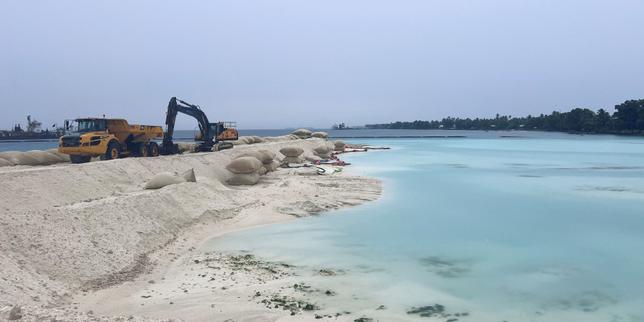
If you are on an island that is only three miles wide, there is nowhere to run. You cannot blend into rush-hour traffic. You are trapped on a volcanic rock surrounded by deep ocean, burning through fuel you cannot replace, waiting for a supply boat that might never arrive.
I remember standing on the pier at Subic Bay years ago, watching a single amphibious ship unload supplies during a routine training exercise. Even in peacetime, with zero bullets flying and full access to a deep-water port, the sheer choreography required to move pallets of rations, spare tires, and ammunition from ship to shore was staggering. Forklifts broke down. Manifests got scrambled. Salt spray ruined cardboard packaging. It took thirty-six hours of sweating, swearing, and heavy machinery just to sustain a few hundred Marines for a week.
Now shrink that operation down to a clandestine night landing on a reef with no pier, under the watchful eye of Chinese reconnaissance drones, using small, experimental unmanned boats that haven't even been built in large numbers yet. The math stops working very quickly.
The Missing Ships
The officers sounding the alarm are not defeatists. They are pragmatists looking at the numbers in the Navy’s shipbuilding budget and realizing that the math does not add up.
To move Marines around the Pacific and keep them supplied, the Marine Corps relies on the United States Navy’s amphibious fleet—specifically, large ships that carry helicopters, landing craft, and hundreds of troops, alongside smaller vessels designed to slip quietly onto shallow beaches.
For years, the Pentagon has mandated that the Navy maintain at least thirty-one of these major amphibious warships to meet global crisis requirements. In reality, that number has repeatedly dipped below the threshold, stalled by shipyard delays, budget battles, and maintenance backlogs that leave existing ships rusting in dry dock for months longer than scheduled.
To bridge the gap, the Marines pushed hard for a new class of smaller, cheaper cargo vessels—originally called Light Amphibious Warships, later rebranded as Medium Landing Ships. Think of them as the pickup trucks of the Pacific: small enough to hide in coves, shallow enough to run right up onto a sandy beach, and cheap enough that losing one wouldn't be a national tragedy.
There is just one problem. As of today, almost none of them exist in the water. Program delays, design changes, and spiraling cost estimates have pushed the delivery of these vital vessels years into the future.
This leaves the Marine Corps caught in an uncomfortable limbo—a strategic purgatory where they have already dismantled their old, heavy way of fighting, while the tools required for their new, lightweight way of fighting remain stuck on drawing boards and in congressional budget hearings.
The Myth of Living Off the Land
Whenever military planners hit a logistical wall, someone inevitably suggests that troops will simply adapt. They invoke the legendary grit of the World War II island-hopping campaigns—Guadalcanal, Tarawa, Iwo Jima—where Marines survived on captured Japanese rice, rainwater, and sheer stubbornness.
That comparison is comforting, and it is dangerously wrong.
In 1943, a Marine needed bullets, beans, and bandages. His rifle was mechanical. His radio weighed forty pounds and ran on simple batteries. If his boots rotted off, he took a pair from a supply crate.
A twenty-first-century Marine Littoral Regiment is essentially a floating tech startup with rifles. Their lethal edge depends entirely on an invisible digital nervous system—satellite uplinks, encrypted data links, drone feeds, and precision-guided munitions that require proprietary microchips and climate-controlled storage. You cannot forage for lithium-ion batteries in a jungle. You cannot filter saltwater through a palm frond to cool a phased-array radar array. When the power dies, a modern Marine unit doesn't just revert to 1943; it goes blind, deaf, and mute in an environment where the enemy can still see in the dark.
Worse still is the human toll of isolation. History shows us what happens to soldiers who are cut off from supply lines and medical evacuation. During the siege of Dien Bien Phu, or the brutal winter at the Chosin Reservoir, the hardest battle was rarely the enemy across the wire; it was the creeping psychological paralysis that sets in when wounded men cannot be evacuated.
In a high-end Pacific war, medevac helicopters will not be swooping in within the "golden hour" to whisk a wounded Marine to a gleaming hospital ship. The skies will be too lethal. A young Marine with a shattered femur or a severe burn might have to wait days—or weeks—in a damp, camouflaged bunker, kept alive by a twenty-year-old Navy corpsman with whatever antibiotics fit inside a backpack.
Officers who have led troops in combat know what that reality does to unit cohesion. Bravery is a renewable resource when troops believe someone is coming for them. When they realize they are expendable pawns left on an island with no exit strategy, a different, colder calculation takes over.
Rethinking the Lifeline
Does this mean a war with China is unwinnable for the United States Marine Corps? Hardly. History is littered with militaries that underestimated American ingenuity once the shooting actually started.
Inside the Corps, a fierce, urgent scramble is underway to solve the tyranny of distance before a crisis erupts. Planners are experimenting with 3D-printed spare parts that can be manufactured right on the beach. They are testing autonomous, semi-submersible drones—essentially robotic mini-submarines—that can glide beneath the waves, invisible to radar, and drop crates of ammunition and medical supplies onto a shoreline at night. They are pre-positioning massive caches of fuel, water purification systems, and ammunition in hardened bunkers across allied nations like the Philippines, Japan, and Australia, hoping to scatter their supplies so widely that China cannot destroy them all in an opening strike.
But pre-positioning supplies requires diplomatic permission, and allies in the Pacific have their own domestic politics, their own fears of provoking Beijing, and their own limits on how many American munitions they want buried in their soil. You cannot build a supply chain out of diplomatic wishful thinking.
Until those robotic supply boats are built in the thousands, until the shipyards clear their backlogs, and until the Pentagon funds the unglamorous, invisible machinery of sustainment with the same enthusiasm it funds stealth fighters, the warning from Marine officers stands as a sobering corrective to military hubris.
Victory in the Pacific will not be decided by the sharpest bayonet or the most clever tactical doctrine. It will be decided by the unglamorous, grueling grind of getting fuel, water, and spare parts across six thousand miles of hostile ocean without getting blown out of the water.
Back on our hypothetical island in the Luzon Strait, the sun is dropping into the South China Sea, turning the water the color of bruised plums. Corporal Miller checks the fuel gauge on his generator. The needle is hovering just above the red line. Overhead, a faint, high-pitched whine cuts through the sound of the surf—a reconnaissance drone, circling high in the dusk, looking for a heat signature, a radio chirp, a single mistake. Miller reaches down, flips the switch, and kills the engine. The radar screen goes black. The island falls silent, and in the dark, forty Marines wait for a boat that has to cross an ocean just to keep them breathing.