Power in Pyongyang does not announce itself with trumpets. It arrives in the dead of winter, carried on the bite of a Siberian wind that sweeps across the Taedong River, frosting the concrete monoliths of a city frozen in ideological amber. Here, survival is an art form, and lineage is the only currency that matters.
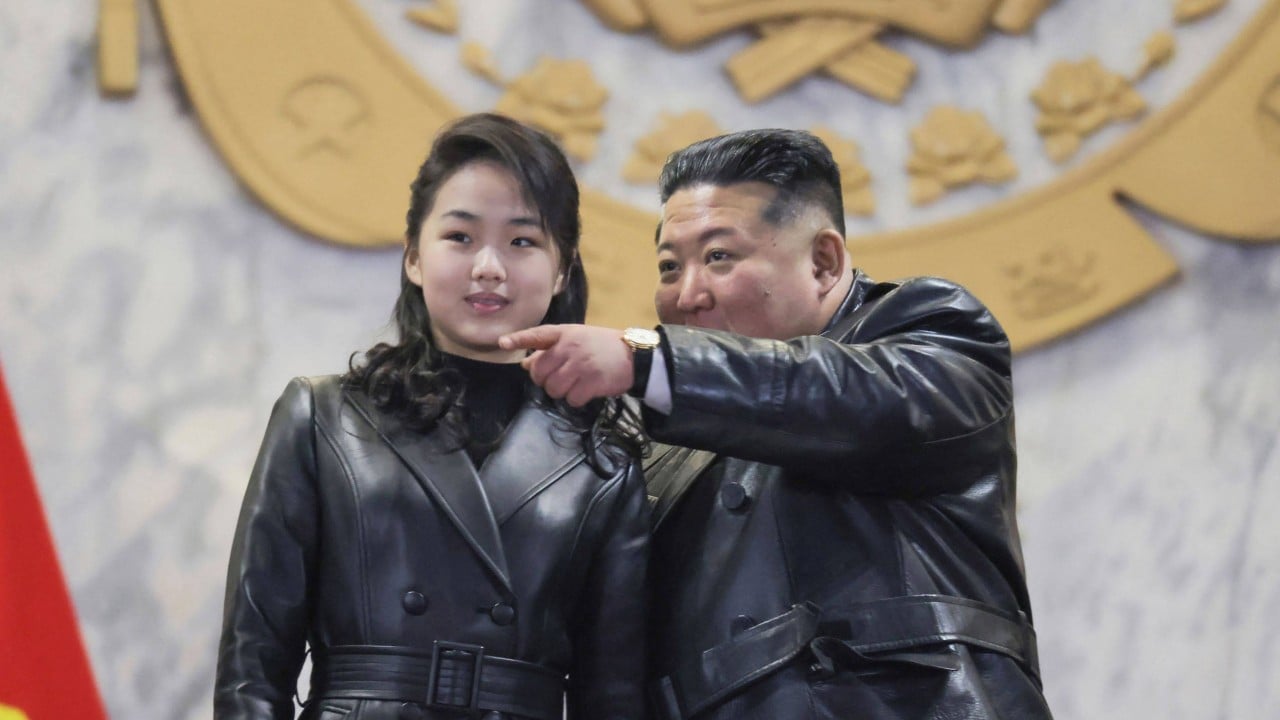
For years, the world watched through long-range lenses as Kim Jong Un paraded his daughter, Kim Ju-ae, before the brass-buttoned chests of generals. She wore white coats and fur-trimmed collars, standing beside intercontinental ballistic missiles that stretched toward the gray sky like steel ribs. Analysts squinted at grainy photographs. Intelligence agencies ran facial recognition algorithms. The message was clear: look at the heir. Recently making news lately: The Anatomy of Catastrophe: Quantifying the Himalayan Glacial Surge and Systemic Recovery Limits.
Except power in the Kim dynasty is rarely a straight line. It is a labyrinth built of shadows, paranoia, and calculated omissions.
South Korea’s National Intelligence Service, working from intercepted whispers, defector debriefings, and satellite imagery that maps the private compounds of the elite, has pieced together a stranger truth. Kim Ju-ae is not an only child. Behind the carefully curated theater of succession lies a phantom. Seoul believes there is a younger sibling, an invisible sibling whose very existence is shrouded in a secrecy so absolute it makes the regime's nuclear program look transparent. Additional insights regarding the matter are detailed by The Guardian.
Consider the sheer weight of this silence.
In an ordinary country, a child’s birth is marked by registries, pediatrician visits, and the noisy, chaotic joy of extended family. In the secretive core of North Korea’s ruling family, a child can be erased or conjured to suit the paranoid geometry of survival. When Dennis Rodman returned from a bizarre basketball diplomacy trip to Pyongyang years ago and casually mentioned holding Kim Jong Un’s baby daughter, Ju-ae, the world laughed it off as celebrity eccentricities. Yet Rodman had stumbled onto a truth the regime guards with artillery: the private life of the Supreme Leader is a state secret punishable by hard labor or worse.
If Ju-ae is the visible shield, tested before the public eye to test the waters of a fourth-generation hereditary succession, the younger sibling is the insurance policy.
To understand why this matters, you have to look backward into the blood-soaked history of the Kim family. This is a dynasty built on the brutal elimination of rivals, even within the bloodline. Kim Jong Un himself learned the lethal rules of succession early. He watched his uncle, Jang Song Thaek, dragged from a party meeting and executed as "human scum." He likely authorized the nerve-agent assassination of his older half-brother, Kim Jong Nam, in a crowded Malaysian airport terminal. In the House of Kim, a spare heir is either a vital continuation or an immediate threat.
Intelligence officials in Seoul suggest the gender and exact birth order of this younger child remain fiercely debated even among those whose entire careers are spent deciphering North Korean telemetry. Some reports indicate the child may be a boy, whose birth would instantly complicate the unprecedented elevation of a female heir in a strictly patriarchal military dictatorship. Others whisper of health issues or deliberate concealment designed to protect the child from factional plotting.
Imagine standing inside the sprawling walled compounds of Wonsan, where private beaches meet subterranean bunkers filled with imported cognac and widescreen televisions. Children grow up here insulated from the famine and economic despair that claw at the ordinary citizens of North Korea. They play on designer swing sets while miles away, children their age scavenge for scrap metal in freezing mud. Yet even behind electrified fences and anti-aircraft batteries, safety is an illusion.
When intelligence analysts track the movements of Kim Jong Un’s wife, Ri Sol Ju, they are not just tracking fashion choices or diplomatic appearances. They are watching for the subtle expansion of a retinue, the unexplained disappearance of a high-ranking nanny, or the sudden construction of a new wing in a guarded compound. Every physical trace is a clue in a high-stakes puzzle where the prize is the control over nuclear launch codes and millions of lives.
The debate over this younger sibling goes beyond idle gossip for intelligence nerds. It exposes the fragile architecture of a regime that tries to project eternal, unbreakable permanence while living in terror of internal collapse. A monarchy requires an heir and a spare. But in a nuclear-armed dictatorship, two potential heirs can easily become two centers of gravity, drawing ambitious generals into dangerous webs of conspiracy.
By keeping the younger child in total obscurity, Pyongyang plays a psychological game with Washington, Seoul, and Tokyo. The uncertainty forces foreign intelligence agencies to guess, to miscalculate, to prepare for a future that has multiple branching timelines. Is Ju-ae truly being groomed to take the throne, or is she a brilliantly executed distraction while a true male heir is kept safely out of the crosshairs of geopolitical ambition?
The snow falls thickly over Kim Il Sung Square. Statues of bronze look down with stern, unblinking authority over empty plazas designed to swallow individual human identity whole. Somewhere inside those heavily guarded walls, a child laughs, completely unaware of the strategic calculations, the satellite cameras, and the paranoid dreams of an empire built on blood and silence. That child remains a question mark wrapped in an enigma, waiting for the day when the music stops and the throne demands its next sacrifice.