Saltwater does not care about your billion-dollar dreams.
It is an ancient, indifferent chemist, a slow-acting solvent that eats through high-grade aerospace aluminum and eats the pride of engineers in the dark. For thirty days, a mechanical leviathan rested on the abyssal floor of the Indian Ocean, battered by currents that had never felt the shadow of a human hand, let alone the heat signature of a towering stainless steel rocket falling from the edge of the sky.
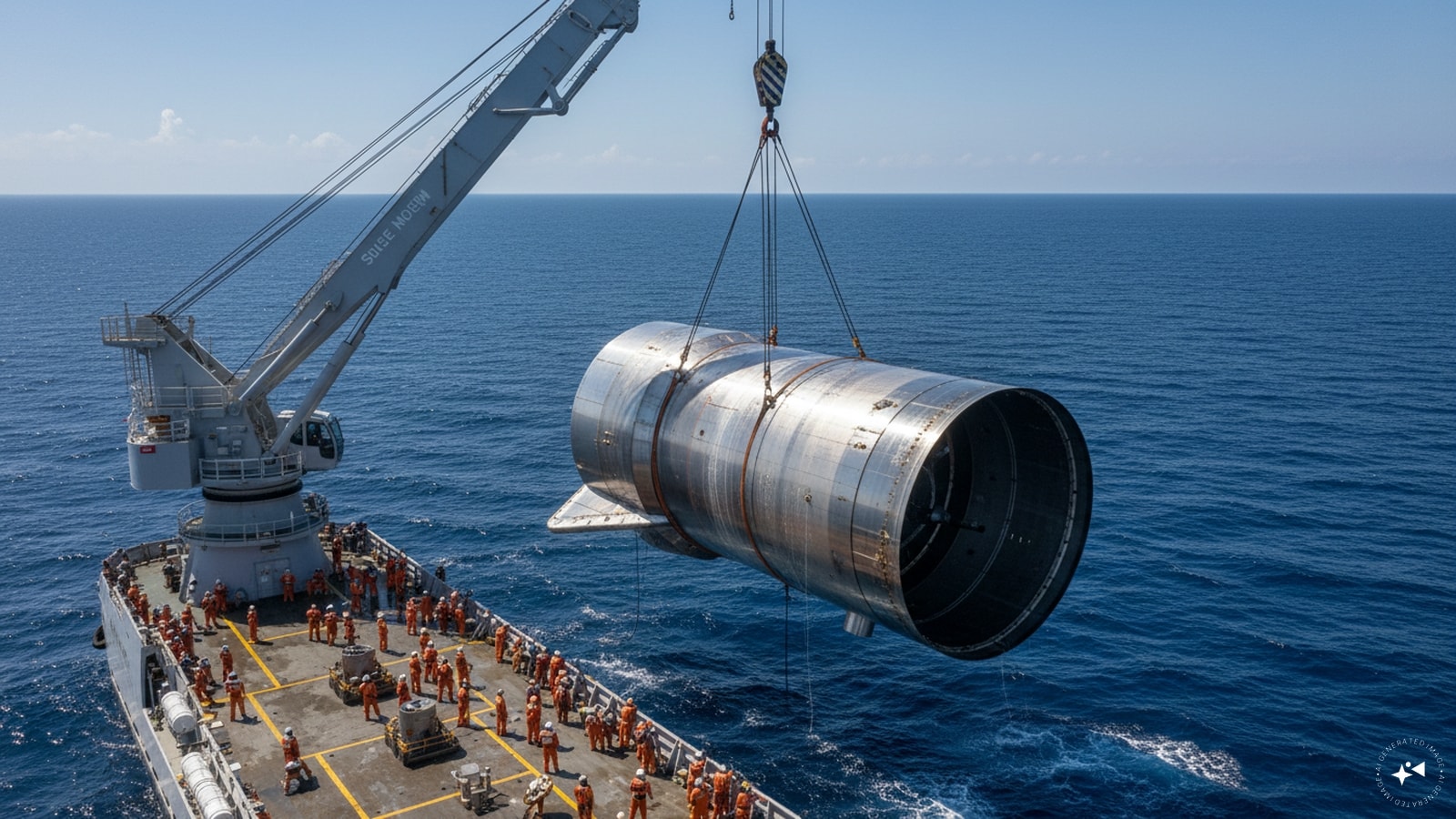
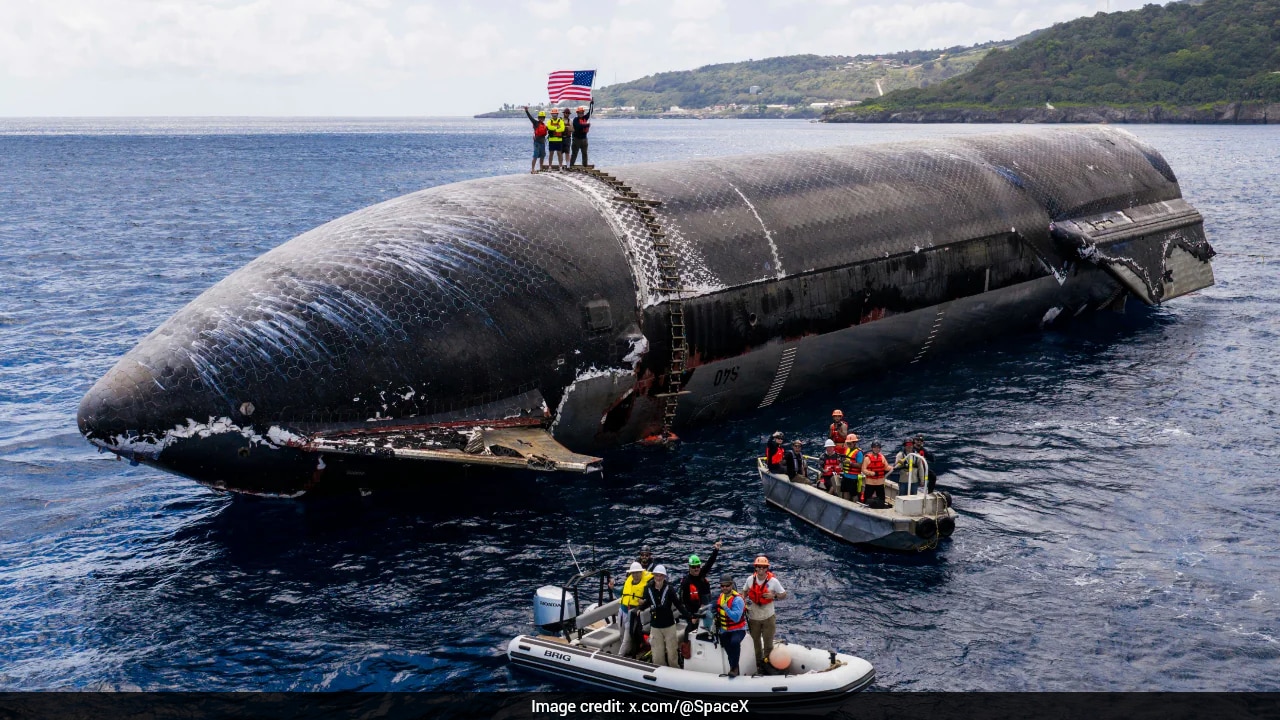
Imagine standing on a recovery vessel weeks later. To clarify, this is a hypothetical vantage point to capture the raw scale of the operation, but the physical reality is exact: the smell of diesel exhaust, the constant, sickening roll of the swells, and the low-frequency hum of sonar operators staring at green phosphorescent screens. They were looking for a ghost. A month after Starship plunged into the water in a controlled, data-gathering descent, SpaceX engineers pulled its battered remnants from the deep.
To understand why this matters, you have to abandon the sanitized aesthetics of computer-rendered promotional videos. Space flight is not clean. It is violent, messy, and terrifyingly expensive. For decades, the architecture of space exploration was built on the theology of the disposable. You built a marvel, you launched it once, and you let it burn up in the atmosphere or sink to the bottom of the ocean like an expensive stone. That model works if you only want to visit the stars on special occasions. It fails entirely if you want to live there.
The holy grail of modern rocketry is not just reaching orbit. It is coming back whole.
When SpaceX recovered those structural fragments from the Indian Ocean, they were not just salvaging scrap metal. They were unearthing physical evidence. Every scorched tile, every twisted bulkhead, and every fractured joint tells a story about the violent boundary where the atmosphere turns into a wall of fire. Data beamed back via satellite telemetry is vital, but telemetry can lie, or at least omit the subtle nuances of material fatigue. Steel tells no lies. When you hold a piece of metal that survived Mach 25 and then took a brutal impact with the ocean surface, you can read the scars.
Consider what happens next in an engineer's workshop. They take that saltwater-soaked steel, wash away the brine, and place it under microscopes. They look at grain boundaries. They measure micro-fractures. They ask a singular, unforgiving question: Where did the math fail the reality?
The recovery of Starship a month after its fiery descent marks a subtle shift in the psychology of engineering. We are moving from a culture of trial and catastrophic loss to a culture of forensic recovery and iterative rebirth. It is the difference between a medieval blacksmith throwing away a cracked sword and a modern metallurgist studying the flaw to forge a weapon ten times stronger.
Critics often look at these experimental flights and see chaos. They see explosions, broken heat shields, and ships tumbling into the sea, and they call it failure. That is a fundamental misunderstanding of how complex systems evolve. Nature does not design a bird in a single afternoon; it spends millions of years carving forms through survival and extinction. SpaceX is compressing that evolutionary timeline into months. Every time a ship goes down—whether it explodes over the Gulf of Mexico or sinks into the Indian Ocean—it leaves behind a breadcrumb trail of physical truth.
The ocean gave this one back.
And in that recovery lies the quiet proof that humanity is finally learning how to build a bridge to the stars that does not collapse under its own weight. The salt will wash off. The data will be decoded. And somewhere in a massive, fluorescent-lit hangar, a team of tired engineers is already welding the next iteration, shaped by the ghost that came up from the deep.