The sea off northwestern Japan does not forgive mistakes. In winter, the water is a heavy, bruised lead, flat and freezing under skies the color of wet slate. Waves roll in from the Sea of Japan with an unrelenting, bone-chilling weight, crashing against a jagged coastlines of volcanic rock and gray stone. It is a lonely place. A place where fishermen stay close to the harbors, and where the horizon dissolves into a uniform gray haze that blurs the boundary between air and ocean.
On a quiet afternoon, out over that unforgiving stretch of water, a mechanical eye went blind.
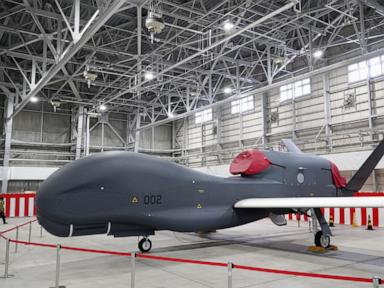
Japan’s Self-Defense Forces lost contact with a surveillance drone. Just like that. A blip on a tactical display screen flickered, stuttered, and vanished. No distress call. No grand explosion lighting up the overcast sky. Just the sudden, deafening silence of an empty channel. Somewhere hundreds of feet above the white-capped swells, a multi-million-dollar piece of carbon fiber, titanium, and sophisticated optics simply ceased to exist to the men and women monitoring its flight path.
We live in an age of absolute surveillance. We are told that nothing escapes the lens. Satellites count the shipping containers on cargo vessels from four hundred miles up; thermal sensors trace the heat of a single fox in a dark forest; radar nets blanket coastlines with overlapping webs of radio frequencies. We imagine modern defense as an omniscient god, watching every movement with unblinking digital clarity.
Then a drone goes dark.
And the illusion cracks.
Consider what happens inside a control station when a connection snaps. The room is usually quiet, smelling of stale coffee and the low, constant hum of server racks. Screens glow with cascading green and blue telemetry data. Operators sit in ergonomic chairs, their eyes fixed on high-definition monitors that stitch together real-time video feeds from the edge of the nation's maritime border.
When the telemetry flatlines, time compresses. For a few agonizing seconds, everyone assumes a glitch. A software hiccup. A momentary drop in satellite bandwidth. Operators tap keys, rerun ping sequences, and switch to redundant frequencies. Come in, bird.
Nothing.
The screen remains blank. The anxiety shifts from mild irritation to a cold, sharp dread. Because in a region where geopolitical tensions hum like a live wire under the surface, a lost drone is not merely a mechanical failure. It is a blind spot. And in defense, a blind spot is an invitation.
To understand why this matters, you have to look at the map. Japan’s northwestern flank is a sensitive corridor. Across the dark waters lie neighbors with massive naval capabilities, active submarine fleets, and a constant, probing interest in maritime boundaries. Every square mile of that gray sea is heavily contested intelligence territory.
For years, unmanned aerial vehicles have taken the weight of the most dangerous patrols off human shoulders. These are the modern workhorses of reconnaissance. They fly long endurance missions over freezing waters so that human pilots do not have to risk icing wings or hostile encounters. They stare downward hour after hour, tracking wakes, identifying hull numbers, and cataloging every vessel that moves across the shipping lanes.
They are supposed to be resilient. They are supposed to be reliable.
Yet machines break. Weather turns. Electronics fail in environments where salt spray eats through gaskets and sub-zero winds tax lithium batteries to their absolute limit.
Or something else happens.
That is the question hanging heavily in the operations rooms right now. Did the drone succumb to the brutal physical reality of the Sea of Japan—an engine seizure, an icing event, a sudden catastrophic structural failure that sent it plunging into the icy depths? Or did it encounter interference? In modern electronic warfare, an invisible war is constantly being fought just above the radio spectrum. Signals are jammed, spoofed, intercepted, or drowned out by high-powered interference.
The Japanese Ministry of Defense launched an immediate search and recovery operation. Patrol vessels cut through the heavy swells. Maritime aircraft swept low over the gray waves, looking for floating debris, an oil slick, a patch of orange wreckage bobbing in the troughs of the waves.
Imagine standing on the deck of one of those patrol ships. The wind is howling off the Asian mainland, cutting straight through heavy wool and Gore-Tex. Spray freezes the moment it hits the metal railing. The crew scans the horizon with binoculars, their eyes stinging from salt and cold. They are looking for a needle in a haystack made of moving water.
Every piece of wreckage recovered from the sea floor will tell a story. Metal stress fractures point to mechanical failure. Burn marks point to internal electrical fire. Clean cuts point to structural overload from extreme turbulence. And the absence of physical damage, combined with a total blackout of the signal transmission, points toward something far more complex and unsettling.
This incident is a sobering reminder of the fragility of our technological shield. We build these complex systems—artificial intelligence, autonomous flight paths, satellite links—and we trust them implicitly to guard our borders. We forget that underneath the sleek interfaces and high-tech jargon, we are still dealing with machines operating in a violently indifferent physical world.
The sea does not care about your flight plan. It does not respect your classification levels. It takes what it wants, crushes it in its icy fist, and drags it down to the silent, dark mud of the continental shelf.
As the search continues into the gathering dusk, the radar screens in the command centers remain altered. A phantom space exists where a guardian used to circle. Somewhere out there in the freezing dark, beneath the slate-colored sky, a piece of advanced human ingenuity rests quietly on the ocean floor, keeping secrets that the surface world is desperately trying to pull back into the light.


