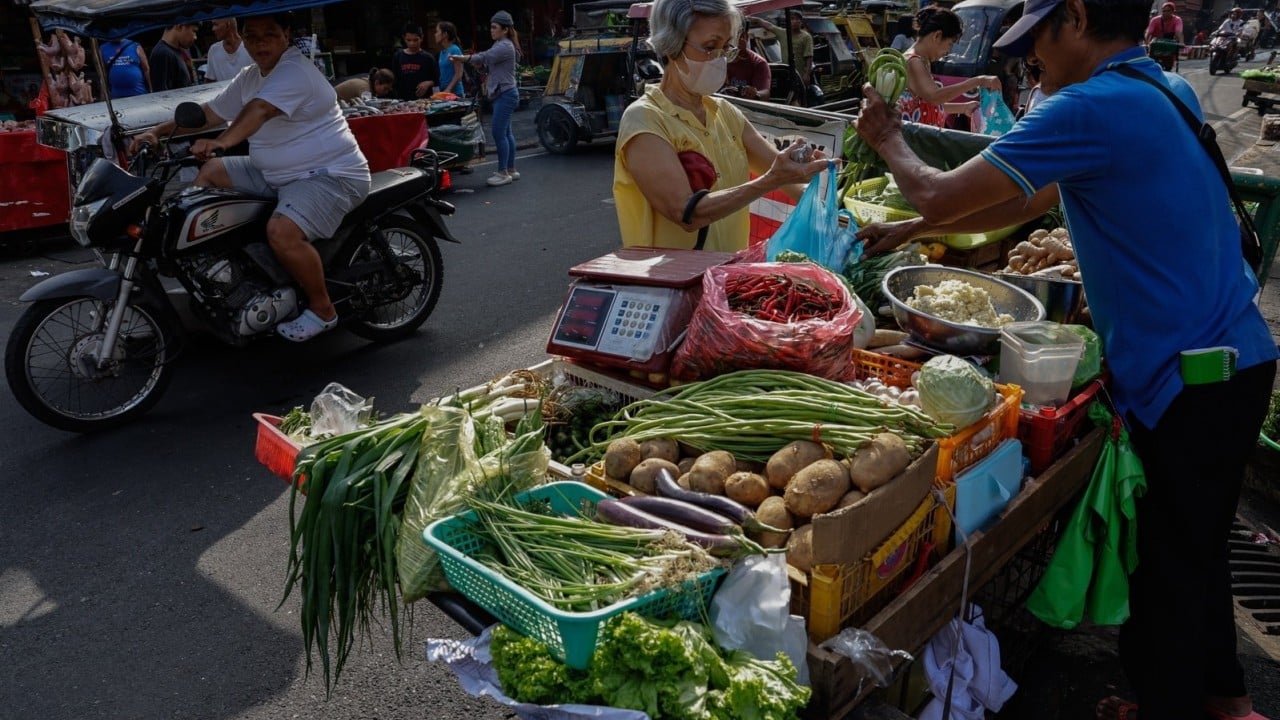
At 5:45 in the morning, before the jeepneys begin their diesel roar down EDSA and before the sun turns the concrete of Quezon City into a radiator, Aling Rosa stands over a plastic basin in a wet market. She is forty-eight years old. Her fingers, stained faint purple from sorting red onions, move with the practiced speed of a woman who has calculated margins in her head for twenty-two years.
She is a composite, of course—a hypothetical stand-in for millions of Filipino micro-entrepreneurs—yet everything in her basin is painfully real. Look at the price tags she writes on scraps of cardboard. Look at the size of the plastic bags she hands to commuters rushing to catch the MRT. The bags are smaller this year. The pesos inside her apron pocket feel lighter, even when the stack is thicker.
Three miles away, inside air-conditioned glass towers in Bonifacio Global City and along Roxas Boulevard, men and women in tailored blazers look at the exact same morning through glowing spreadsheets. They see the Consumer Price Index. They see Gross Domestic Product growth hovering near the lower edge of official targets. They see a central bank walking a tightrope over a canyon of debt and imported oil.
And they see a word they dare not say out loud.
Stagflation.
It is an ugly, Frankensteined syllable—part stagnation, part inflation—born in the grim 1970s when Western economies choked on oil shocks while their factories went quiet. In the Philippines, a nation addicted to the adrenaline of perpetual growth, uttering that word feels like cursing at a christening. Official statements prefer softer melodies. They speak of "headwinds," "temporary supply-side pressures," and "resilient domestic consumption."
Why is the Philippine establishment so stubbornly reluctant to acknowledge the flashing red lights on the dashboard? The answer is not mere bureaucratic vanity. It is a tangle of political survival, structural blindness, and a deep, historical terror of what happens when hope stops paying the bills.
The Architecture of Denial
To understand why Manila flinches at the S-word, you have to understand the religion of Philippine economic reporting. For more than a decade, the country wore a gleaming badge: one of Asia's fastest-growing economies. Six percent GDP growth was not an aspiration; it was treated as a birthright, a statistical security blanket that excused bad traffic, creaking power grids, and wide income gaps. As long as the big number at the top of the quarterly report stayed green, everything else was framed as growing pains.
When inflation began chewing through household budgets—driven by rice prices that refused to obey tariff cuts, erratic weather battering farms in Central Luzon, and a peso frequently bruised by a muscular US dollar—the playbook was simple. Raise interest rates. Cool the engine. Wait for prices to settle.
That is the textbook cure for a fever. You apply an ice pack, the temperature drops, and the patient recovers.
Stagflation is different. Stagflation is having a raging fever while suffering from hypothermia. If the Bangko Sentral ng Pilipinas keeps interest rates high to crush inflation, businesses stop borrowing, factories delay expansion, and hiring freezes. Growth stalls. If the central bank slashes rates to rescue flagging growth, the peso weakens further, imports grow costlier, and prices surge all over again.
Admitting you have stagflation is admitting that your medicine is poison.
Policymakers hate that admission because modern central banking runs on psychology almost as much as it runs on liquidity. Economists call it "anchoring expectations." If business owners believe the government has the wheel, they keep investing. If consumers believe prices will stabilize by Christmas, they keep spending. Say the word stagflation from a podium in Manila, and you risk turning a statistical slowdown into a self-fulfilling panic. Investors pull capital. Banks hoard cash. Companies lay off contractual workers before the ledger even turns red.
So the language gets sanitized. A sharp deceleration becomes a "moderation." Stubborn food inflation becomes a "transitory bottleneck." The alarm bells are ringing, loud enough to rattle the windows, yet the official stance remains that someone simply left the kitchen timer on.
The Illusion of the Full Mall
Walk through SM Megamall or Ayala Center on a Sunday afternoon, and you might think the technocrats are right. The air conditioning blasts against the tropical humidity. Families crowd around fast-food counters. Milk tea stalls have lines ten people deep. Cinema lobbies hum with chatter.
This visual is the single greatest sedative in Philippine economic policy.
Because private consumption accounts for roughly seventy percent of the Philippine economy, officials look at crowded malls and see an unbreakable engine. They point to Overseas Filipino Workers sending billions of dollars home from Dubai, Singapore, Milan, and California. They point to the Business Process Outsourcing sector, where twenty-something graduates work graveyard shifts answering calls for American insurance firms, earning salaries that keep urban condos occupied.
Look closer at the receipts, though.
Take a hypothetical call center agent named Marco, twenty-six, sharing a cramped two-bedroom apartment in Mandaluyong with three roommates. Two years ago, Marco bought sneakers on installment, ordered food delivery four nights a week, and booked budget flights to Siargao. Today, Marco is still at the mall on Sunday. He is still buying an iced coffee.
What changed is invisible to a macroeconomic snapshot. Marco stopped saving. His credit card balance—part of a quiet, nationwide surge in unsecured consumer debt—rolls over month after month at punishing interest rates. He downgraded from brand-name groceries to unbranded bulk packs. He skipped his annual dental checkup. His spending still registers as "resilient consumption" in the national accounts, yet underneath the surface, the floor is hollowing out.
Economists who rely purely on aggregate numbers miss this rot because distress in the Philippines rarely announces itself through mass bankruptcies or dramatic factory closures. It hides inside the informal economy. It shows up when a tricycle driver skips dinner so his daughter can buy mobile data for school. It appears in the sudden proliferation of tingi-tingi—the sachet economy—where families buy a single spoonful of shampoo, one clove of garlic, or two sticks of cigarettes because they cannot afford the upfront cost of a whole bottle or pack.
When consumption is fueled by debt, depleted savings, and shrinking unit sizes rather than rising real wages, it is not resilience. It is fumes.
Rice, Politics, and the Memory of 2008
There is another reason the word stagflation triggers an allergic reaction in the halls of power: history.
In the Philippines, inflation is never merely a monetary phenomenon. It is political dynamite, and its fuse is made of rice.
Every administration in Malacañang remembers the ghosts of past food crises—the long queues for subsidized grain in 2008, the sudden public fury when rice breached fifty pesos a kilo, the way kitchen-table anger can evaporate a president's approval ratings overnight. Unlike Western economies, where food and energy make up a modest slice of the average household's monthly outlay, food alone consumes nearly forty percent of a typical Filipino family's budget. For the poorest thirty percent of the population, that number climbs past half.
When rice, fish, onions, and transport fares climb simultaneously while wage growth crawls, poor families do not read monetary policy briefs. They feel betrayed.
Recognizing stagflation would force the government to confront uncomfortable structural failures that go far beyond interest rates. It would mean admitting that decades of underinvestment in irrigation, farm-to-market roads, cold storage, and agricultural modernization have left the country dangerously exposed to every typhoon that sweeps in from the Pacific. It would mean acknowledging that cartels, smuggling, and broken supply chains distort prices far more than excess consumer demand ever could.
Blaming "global headwinds" is politically safe. Nobody in Manila can vote out a war in Eastern Europe or a shipping bottleneck in the Red Sea. Admitting to domestic stagflation, however, places the blame squarely on local stewardship. It demands painful, unglamorous reforms—breaking agricultural monopolies, overhauling public transport logistics, fixing chronically delayed infrastructure budgets—none of which produce ribbon-cutting ceremonies before the next election cycle.
The Trap of the Delayed Pivot
I remember sitting in a small, fluorescent-lit café in Makati during an earlier economic squeeze, watching a mid-sized logistics owner stare at two pieces of paper. On his left was a notice from his bank: the interest rate on his fleet loan had adjusted upward again. On his right was an email from his largest retail client, asking for a ten percent rate cut because their own warehouse shelves were moving slower than expected.
"If I raise my prices, I lose the contract," he told me, stirring cold coffee until the spoon clinked rhythmically against the ceramic. "If I keep my prices, every kilometer my trucks drive loses money. Tell me which button I am supposed to press."
There is no good button in that scenario, and that is the precise agony of the Philippine business landscape right now.
Small and medium enterprises—the backbone that employs over sixty percent of the Filipino workforce—are caught in a vise. High borrowing costs have choked off their ability to upgrade equipment or expand into new provinces. Meanwhile, stubbornly high electricity rates, among the steepest in Southeast Asia, eat into manufacturing and retail margins before a single item is sold.
When policymakers wait too long to name a disease, they inevitably wait too long to change the treatment.
If the government and the central bank cling to the narrative of effortless growth, fiscal spending remains slow to pivot toward targeted relief and productivity-boosting investments. Monetary policy stays overly rigid, terrified of a weaker peso while domestic businesses quietly suffocate under expensive credit. By the time the official data indisputably confirms that growth has stalled while prices remain sticky, the window for a gentle course correction has already slammed shut.
What Happens When the Silence Breaks
Deny a reality long enough, and reality eventually sends a bill with compound interest.
Consider what happens next if the reluctance continues. First comes the quiet retreat of private investment. Foreign manufacturers looking to diversify supply chains away from China glance at the Philippines, tally the high power costs, the regulatory friction, the sluggish domestic demand, and quietly sign leases in Vietnam or Malaysia instead. Local conglomerates, flush with cash yet cautious about consumer purchasing power, sit on their reserves rather than breaking ground on new projects.
Second comes the brain drain—not a dramatic exodus, but a steady, heartbreaking leak. Nurses, engineers, teachers, and skilled technicians look at local salaries that buy less every quarter and decide that leaving their children behind for a contract in Riyadh, Toronto, or Berlin is no longer a choice, but a math equation. The remittances they send back keep the economy breathing, yet every departing worker strips the country of the very human capital needed to build high-value industries at home.
Third, and most dangerous of all, is the erosion of trust.
Ordinary Filipinos are not economists, yet they possess an acute, street-level radar for nonsense. When television news broadcasts celebrate five-point-something percent GDP growth while a mother at the neighborhood sari-sari store counts coins for three eggs and a sachet of soy sauce, a chasm opens between the governors and the governed. People stop believing official statistics. Cynicism hardens. And in a young, volatile democracy, prolonged economic cynicism rarely stays quiet forever.
Facing the Storm Without Blinking
Naming the monster does not make it bigger. In fact, it is the only way to start fighting it.
If Manila wants to outrun stagflation, it has to abandon the comfort of rosy press releases and attack both sides of the equation with brutal honesty. You cannot fight supply-driven inflation purely by starving the economy of credit, just as you cannot manufacture sustainable growth by pretending households aren't drowning in debt.
The real work lies in clearing the arteries of the domestic economy. It means aggressively modernizing agriculture so a single tropical storm does not send vegetable prices into the stratosphere. It means cutting the red tape and power bottlenecks that punish every factory and cold-storage facility from Pangasinan to Davao. It means shifting public spending away from ceremonial bloat and directly into logistics, irrigation, and technical education that actually raise what a Filipino worker can produce in an hour.
Most of all, it requires telling the truth to the people carrying the weight of the economy on their backs.
Back in Quezon City, the sun is fully up now. The heat bounces off the asphalt, thick and unforgiving. Aling Rosa wipes sweat from her forehead with the back of her wrist, counting the crumpled twenty- and fifty-peso bills folded tightly inside her apron. She does not know the textbook definition of stagflation. She has never read a central bank monetary board statement, and she does not care whether quarterly growth missed consensus forecasts by forty basis points.
She only knows that at the end of a twelve-hour shift, the money in her hand buys half the rice it did three years ago—and tomorrow morning, she will have to wake up even earlier just to stand still.