Concrete remembers.
It holds the pressure of the mixer truck's drum, the sweat of the pourer at three in the morning, and the heavy, silent weight of every single promise made to the people who will eventually walk across its surface. When you stand inside a luxury high-rise, looking out over a glittering coastline through floor-to-ceiling glass, you are not merely occupying space. You are trusting an invisible skeleton. You are betting your safety on a cage of ribbed steel ribs buried deep within the gray stone, clenched tight in a subterranean grip that defies gravity.
Then comes the whisper.
A probe. An inspection. A missing piece of the puzzle.
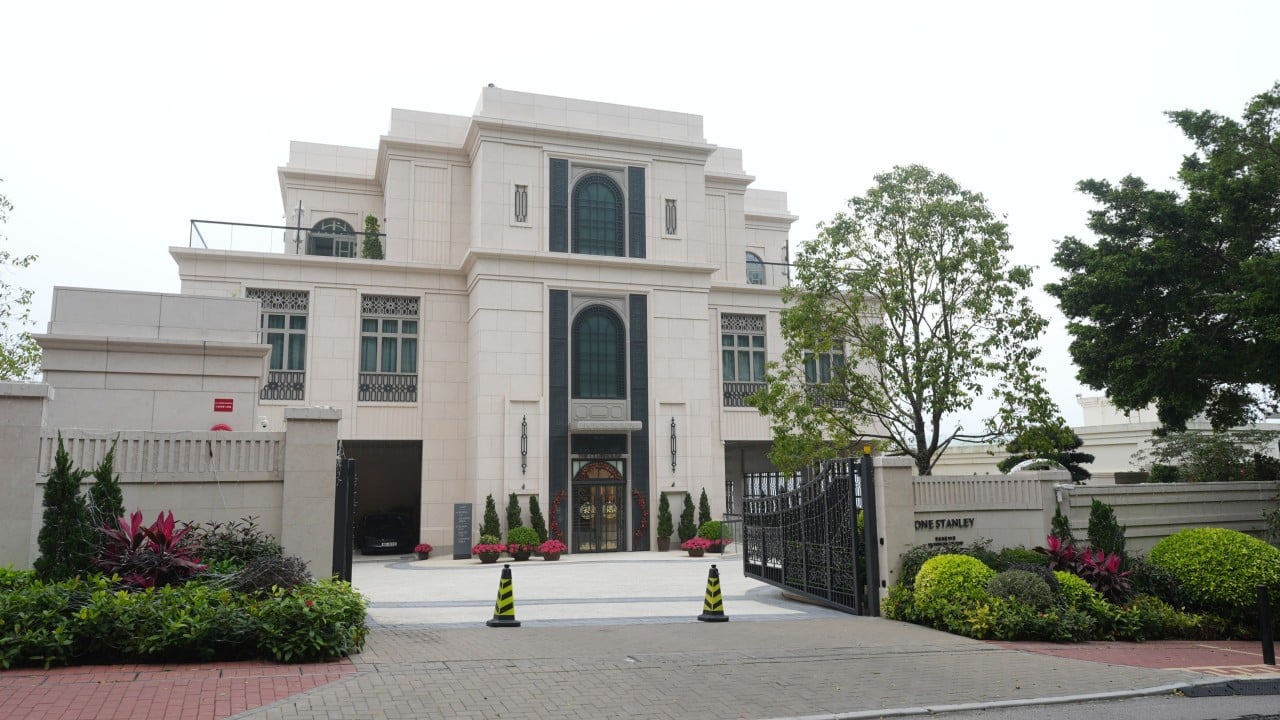
In the exclusive enclave of One Stanley, perched along the quiet, verdant shores of Hong Kong's Stanley peninsula, the luxury is supposed to be absolute. These are homes built for people who have conquered the market, who demand perfection, who measure their lives in uncompromised standards. Yet, beneath the polished marble and the hushed whispers of sea breezes, a different kind of quiet has settled. Investigators are circling. The core question is stark, mechanical, and deeply unsettling: Where are the steel bars?
Consider what happens when a blueprint meets reality.
In the architect's mind, a reinforced concrete beam is a symphony of tension and compression. Concrete loves to be squeezed, but it hates to be pulled apart. Steel is the opposite; it bears the stretch, fighting the invisible forces that try to snap a building in half. Take away that steel—or even a fraction of it—and the symphony turns to static.
Imagine, for a moment, walking through an unfinished floor plate during construction. The air smells of damp dust and curing cement. Hard-hatted workers move with practiced rhythm, their welding torches casting short-lived blue stars against the gray gloom. To an untrained eye, it is pure chaos. To an engineer, it is a holy text written in rebar and spacing. Every bar has a number. Every lap splice has a specific length. Every centimeter of clearance is a calculated pact with physics.
Now, subtract the steel.
Not all at once. Not in a way that causes an immediate, catastrophic collapse that makes the evening news. That is the Hollywood version. The reality is far more insidious. It looks like corrosion creeping in decades ahead of schedule. It looks like hairline cracks spiderwebbing across a ceiling long after the developers have moved on to their next project. It looks like a structural margin of safety shrinking from a comfortable cushion to a razor's edge.
This is why regulatory probes matter. They are not merely bureaucratic wrist-slaps. They are society's way of demanding accountability from the invisible architecture of our lives.
When news broke of the investigation into the One Stanley project over alleged steel bar shortages, the initial reaction in financial circles was a sharp intake of breath. Millions of dollars. High-end property values. Prestigious developers. But numbers on a balance sheet fail to capture the human core of the issue.
Let us be honest about why this terrifies us. We buy homes—or rent them, or simply walk beneath them on our daily commutes—with an implicit, almost desperate faith. We trust that the people who built the walls did not cut corners when nobody was looking. We trust that the profit margin of a corporation was never weighed against the structural integrity of a ceiling.
When that trust fractures, the damage spreads wider than any physical crack.
Let us walk back through the history of modern construction oversight. For decades, the industry operated on a high degree of self-regulation, relying on the professional ethics of contractors and site supervisors. But human nature being what it is—tempted by tight deadlines, soaring material costs, and the relentless pressure to turn a profit—paper trails sometimes diverge from physical reality. A shipment of rebar delayed at the port. A supplier substitution. A supervisor who signed off on a section because the schedule demanded a pour by sundown.
These are the microscopic friction points where disasters are born. Not from mustache-twirling villains plotting catastrophe, but from a thousand small compromises compounding in the dark.
The developer behind One Stanley, like any major player in the high-stakes world of luxury real estate, faces an uphill battle to restore confidence. Investigations by government departments and independent engineering bodies are methodical. They drill cores. They use electromagnetic scanners to peer through meters of solid concrete without breaking it. They read the silent language left behind by the builders.
If the allegations hold weight, the remediation process is an engineering nightmare. Strengthening an already erected structure is like performing open-heart surgery while the patient is running a marathon. It involves adding external steel plating, injecting epoxy resins into microscopic voids, or building internal load-bearing frames that eat away at precious square footage.
If the allegations prove unfounded, the developer still carries the stain of suspicion, a reminder of how fragile reputation is in the age of instant information.
Either way, the lesson reverberates far beyond the shores of Stanley.
We live in a built world that we treat as permanent, forgetting that it is maintained entirely by human vigilance. Every bridge, every tunnel, every luxury townhouse complex is a temporary truce with the earth, won through meticulous attention to detail.
When you next enter a towering structure, pause for a second. Listen to the hum of the air conditioning, the muffled steps of neighbors above, the deep, heavy silence of the walls around you. Beneath the paint, behind the drywall, encased in stone, thousands of tons of steel are holding up the sky.
We had better hope they remembered every single bar.