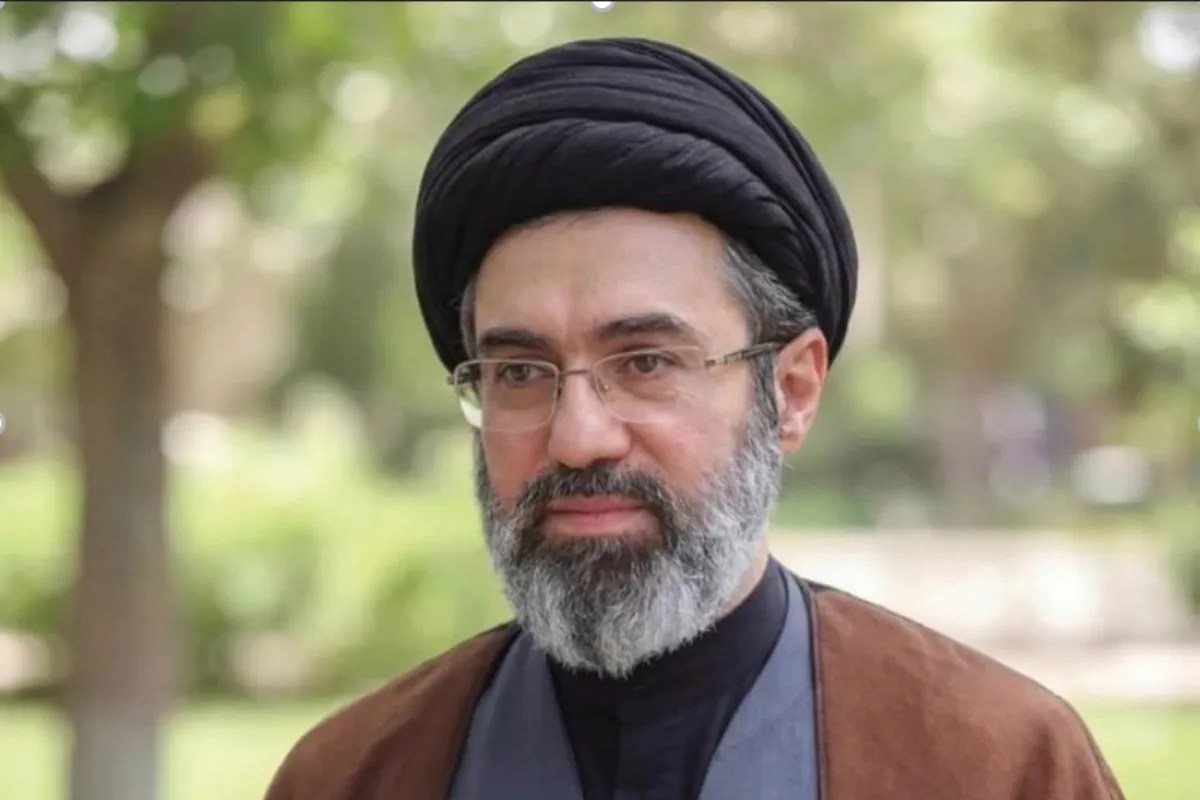
The whispers began in the narrow, wind-swept alleys of Tehran long before they reached the polished mahogany desks of the Pentagon. In the high-stakes theater of Middle Eastern succession, silence is rarely just an absence of noise. It is a presence. It is a weight. When Mojtaba Khamenei, the second son of Iran’s Supreme Leader and the man long groomed to inherit the mantle of the Islamic Republic, vanished from the public eye, the vacuum was filled by a single, terrifying question: Is the heir apparent already a ghost?
For decades, Mojtaba has been the phantom operator of the Iranian state. He is the shadow behind the Basij, the voice in his father’s ear, and the architect of a crackdown that broke the back of the 2009 Green Movement. To some, he is the only hope for institutional continuity. To others, he is the symbol of a hereditary monarchy disguised as a theocracy. But recently, that shadow has grown thin.
The silence was shattered not by an official bulletin from the state-run IRNA news agency, but by a declaration from halfway across the world. Pete Hegseth, the American Secretary of Defense, dropped a bombshell that sent shockwaves through the geopolitical landscape. Mojtaba Khamenei is alive, Hegseth claimed, but he is "badly injured."
Words have a physical weight in international diplomacy. When a figure of Hegseth’s stature makes such a claim, it isn't just a news update. It is a signal. It is an invitation for the world to look closer at the fractures within a regime that prides itself on an image of unshakable iron.
The Anatomy of an Invisible Crisis
Imagine a room where the air is thick with the scent of rosewater and the unspoken tension of a dying era. Ayatollah Ali Khamenei is eighty-six years old. In the biology of power, eighty-six is a precarious number. For years, the survival of the system has rested on the assumption of a smooth handoff to Mojtaba. He was the bridge between the old guard of the 1979 revolution and the modern security apparatus that keeps the streets quiet.
If Mojtaba is indeed "badly injured," as Hegseth asserts, the bridge isn't just cracked. It might be falling into the abyss.
We have seen this play out before in the cold rooms of history. When a designated successor is incapacitated, the vultures don't just circle; they move into the living room. The Iranian political structure is a delicate ecosystem of competing interests: the Revolutionary Guard (IRGC), the clerical establishment in Qom, and the pragmatic bureaucrats. Mojtaba was the glue. Without him, or with a version of him that is physically broken and politically weakened, that glue turns to water.
Consider the physical reality of a "badly injured" leader in a culture that prizes strength. In the high-walled compounds of North Tehran, rumors of an assassination attempt or a catastrophic health failure act like blood in the water. If the IRGC generals believe the heir is no longer fit to rule, their loyalty will shift. It won't be a loud shift. It will happen in whispers, in shifted budget allocations, and in the sudden, inexplicable absence of key officials from state functions.
The Hegseth Factor and the Fog of Intelligence
Why would the American Defense Secretary choose this moment to speak? Intelligence is a weapon, and its most effective use is often public disclosure. By naming the state of Mojtaba’s health, Hegseth isn't just informing the public; he is destabilizing the Iranian internal narrative.
He is forcing the regime to prove a negative.
If they show Mojtaba on camera, they risk revealing his frailty. If they keep him hidden, they confirm the American narrative. It is a classic checkmate in the game of psychological warfare. Hegseth’s background—a veteran who views the Iranian regime through the lens of a long, bruising conflict—suggests that this wasn't a slip of the tongue. It was a calculated strike at the heart of the regime's legitimacy.
But we must tread carefully through this fog. In the world of high-level intelligence, "badly injured" can mean many things. It could be the result of a coordinated strike, an internal coup attempt, or a degenerative illness that the state has spent millions to hide. The truth is often buried under layers of propaganda and counter-intelligence. Yet, the reaction of the markets and the subtle movements of the IRGC suggest that something, somewhere, has gone fundamentally wrong.
The Human Cost of a Succession Void
Away from the maps and the satellite imagery, there is a human element that is often ignored. For the average citizen in Isfahan or Shiraz, the health of Mojtaba Khamenei isn't just a political trivia point. It is a forecast of the weather to come. A power vacuum in Iran doesn't lead to a peaceful debate. It leads to the "Night of the Long Knives."
When a regime's future is uncertain, its present becomes more violent. The security forces, fearing a loss of control, tend to tighten their grip. The price of bread stays high, but the price of dissent becomes even higher. The "badly injured" heir creates a ripple effect of anxiety that reaches every kitchen table in the country. If the center cannot hold, the periphery burns.
Metaphorically, the Iranian state is currently an ancient oak tree. On the outside, the bark is thick and imposing. But inside, the heartwood—Mojtaba—is being eaten away. You don't see the collapse until the day the wind blows just a little too hard. Hegseth’s claim is that wind.
The Invisible Stakes
The stakes are higher than a simple change of names on a letterhead. We are talking about the control of a nuclear program, the direction of proxy forces across Lebanon, Yemen, and Iraq, and the stability of the global energy market. If Mojtaba is out of the picture, the IRGC may decide that a clerical leader is no longer necessary. They might move toward a direct military dictatorship, shedding the religious veneer that has defined Iran since 1979.
This is the nightmare scenario for regional stability. A wounded heir leads to a desperate father, and a desperate father often looks for external enemies to distract from internal decay.
The silence from Tehran following Hegseth’s claim has been deafening. Usually, the propaganda machine is quick to debunk "Western lies" with grainy footage of the subject drinking tea or visiting a factory. This time, the rebuttal has been slow, clumsy, and unconvincing. It feels like a house of cards where the inhabitants are holding their breath, terrified that even a small sigh will bring the ceiling down.
The Weight of the Crown
To be Mojtaba Khamenei is to be a man who has never truly belonged to himself. He has been a project of his father’s ambition and a target for his father’s enemies. If he is lying in a hospital bed today, surrounded by the best doctors the Revolutionary Guard can buy, he is perhaps the loneliest man in the Middle East. His life is no longer a human life; it is a state asset. And if that asset is depreciating, the people around him will not grieve. They will recalculate.
The real story isn't just about a man who might be injured. It is about the fragility of absolute power. It is about how a single phrase from an American official can peel back the curtain on a decade of secrets. It is about the fact that in the end, no matter how many militias you command or how much gold you hoard, your grip on the world is only as strong as your next heartbeat.
Somewhere in a secure facility, perhaps the lights are flickering over a monitor tracking a pulse. Outside, the world waits for the pulse to skip. The transition from "badly injured" to "gone" is a short distance in the physical world, but it is a canyon in the world of geopolitics. Once you cross it, there is no going back. The Iranian people know this. The American Defense Department knows this. And in the quiet of his private quarters, Ayatollah Khamenei undoubtedly knows it too.
The ghost is no longer just in the machine. The ghost is in the hallway, waiting for the door to open.