The tea in the porcelain cup has gone cold, but neither man notices.
Outside the window of the Parisian café, a late-afternoon drizzle blurs the lights of the Boulevard Saint-Germain. Inside, Pierre, a retired European diplomat who spent three decades navigating the quiet corridors of Brussels, stares across the table at his longtime friend, Chang. Chang is a historian from Beijing, a man whose life has been spent cataloging the rise and fall of dynasties.
They are arguing about the end of the world. Or, more accurately, the end of a world.
Pierre argues that Europe is merely transforming, adapting its old bones to a digital age. Chang disagrees. He looks at Pierre’s elegant, slightly frayed wool coat and sees something else entirely. He sees 1793. He sees the Qianlong Emperor turning away a British ambassador because the Middle Kingdom already possessed everything it could ever desire.
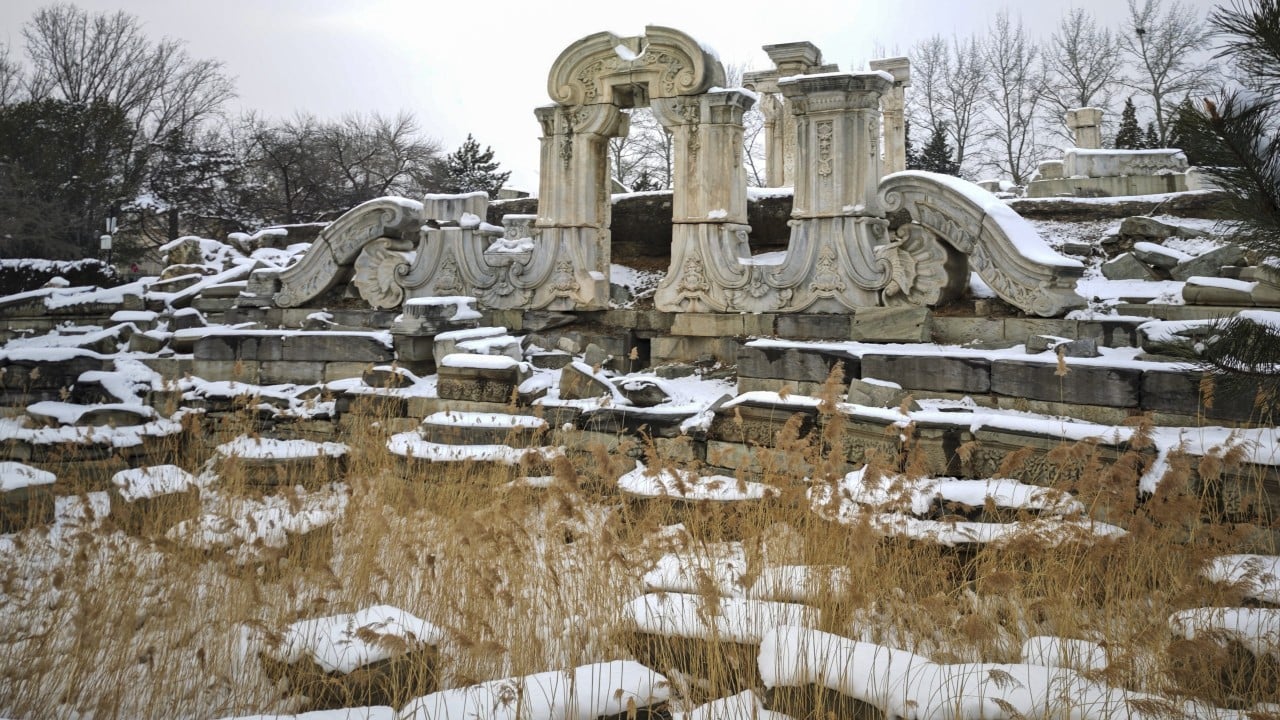
"You think you are modern," Chang says, his voice dropping below the hum of the espresso machine. "But you are living in the Summer Palace. And you cannot hear the horses gathering at the gates."
This is not just a polite debate between two aging intellectuals over a pastry. It is the central, terrifying question of our era. For the past decade, a quiet whisper has grown into a roar across global think tanks and university lecture halls: Is Europe declining faster than Qing Dynasty China did before its spectacular collapse?
To understand why this comparison makes European leaders break out in a cold sweat, we have to look past the spreadsheets and GDP charts. We have to look at the human cost of complacency.
The Illusion of Permanent Sunlight
To understand the comparison, we must first look at what Qing China actually was at its peak. It was not a primitive backwater. In the late 18th century, China was the undisputed economic heavyweight of the planet. It generated nearly a third of global economic output. Its bureaucracy was the most sophisticated on earth. Its people lived in a highly commercialized, literate, and deeply artistic society.
From the inside, the system felt immortal. It felt like permanent sunlight.
Consider a hypothetical merchant in Suzhou in the year 1780. Let us call him Master Lin. Lin deals in silk and high-grade tea. His life is comfortable. The canals outside his shop are bustling with wealth. If you told Lin that within a century, foreign gunboats would steam up the Yangtze and dictate terms to his emperor, he would have laughed you out of the room. Westerners? The people who didn't even know how to manufacture high-quality porcelain? They were irrelevant.
Now, look at Europe today.
Walk through Frankfurt, Milan, or Paris. The infrastructure is magnificent. The healthcare systems, despite their strain, are luxuries the rest of the world envies. The cafes are full. It feels like a continent that has solved the fundamental problems of human existence.
But beneath the surface, the numbers tell a story that Master Lin would find hauntingly familiar.
In 1980, the European Union accounted for roughly a quarter of the world's economy. Today, that share has shrunken significantly, sliding toward the low teens. Europe’s tech sector is largely a landscape of consumers, not creators. The continent boasts breathtaking museums, beautiful walkable cities, and a magnificent past, but its present is increasingly funded by tourism and luxury goods. It is selling its inheritance to buy its groceries.
The parallel is not about poverty; it is about a specific kind of blindness. It is the belief that because you were the center of the world yesterday, the world will still care about you tomorrow.
The Bureaucracy of Stagnation
Pierre taps his spoon against his saucer, defensive now. "We have the single market," he says. "We have institutional stability. The Qing Dynasty was an absolute monarchy rotted by court corruption. You cannot compare Brussels to the Forbidden City."
He is right, technically. Brussels does not execute dissidents or demand kowtows. But Chang’s point is more subtle. It is about the weight of institutions.
In the final century of the Qing Dynasty, the imperial bureaucracy became obsessed with precedent. The civil service exams, which had once produced the most brilliant administrative minds in history, had ossified into the "eight-legged essay." This was a rigid, highly stylized poetic format that tested a candidate’s ability to memorize ancient Confucian texts. It rewarded conformity and punished original thought. If a flash of technological brilliance or a new economic reality threatened the established order, the bureaucracy simply choked it out with red tape.
Now look at how Europe handles the future.
When a groundbreaking technology emerges—whether it is artificial intelligence, biotechnology, or new financial platforms—the immediate instinct of the European regulatory apparatus is not to build, but to restrict. It is a culture terrified of risk.
Think of a young software engineer in Berlin. She has a brilliant idea for a decentralized energy grid. But before she can write her first line of commercial code, she faces a mountain of compliance measures, privacy mandates, and bureaucratic hurdles that require a legal team to navigate. Across the ocean, her competitor in California or Shenzhen is already shipping a flawed, chaotic, but functional product to millions of users.
By the time the European engineer gets her permits, the world has moved on.
The eight-legged essay has returned. It is written in legalese now, drafted in the sterile offices of regulatory committees, but its effect is identical. It protects the existing structure at the absolute expense of the future. It values process over outcomes.
The Broken Demographic Engine
The most visceral connection between the two eras, however, is not found in government buildings. It is found in empty bedrooms.
History books often attribute the fall of the Qing to British opium and Western gunboats. But the internal rot had already begun with a massive, unmanageable demographic crisis. Throughout the 18th century, a long period of internal peace caused China’s population to explode, jumping from roughly 150 million to over 300 million. The land could no longer support the people. The empire ran out of space, resources, and opportunities for its youth. The result was a desperate, disenfranchised generation that eventually fueled the cataclysmic Taiping Rebellion—a civil war that claimed twenty million lives.
Europe faces the exact opposite problem, but with the same devastating result: a profound imbalance between the state and its youth.
Europe is aging faster than almost any region in human history. In countries like Italy and Spain, the birth rate has dropped so low that schools are closing, and villages are turning into beautiful, quiet ghost towns.
Picture an ordinary European worker. Let us call him Thomas. He is thirty-five, lives in Lyon, and works in logistics. Every month, a massive chunk of his paycheck vanishes before it hits his bank account. Where does it go? It goes to sustain the pensions and healthcare of a massive, retired generation that lives longer than any generation before it.
Thomas wants to buy an apartment. He wants to start a family. But real estate prices are inflated, taxes are sky-high to support the elderly, and economic growth is flat. He feels trapped. The social contract is broken. He is working to fund the past, not to build his own future.
When a society stops reproducing, it is not just a statistical quirk. It is a profound psychological symptom. It means the people, on some deep, subconscious level, have lost faith in the story they are telling themselves. They no longer believe the future will be better than the present.
The Speed of the Descent
The core of the Chinese-French debate—the question that kept Pierre and Chang talking until the café staff began stacking chairs around them—is the velocity of the decline.
The collapse of Qing China was spectacular and violent. It took roughly a century from the first cracks to the final abdication of the last emperor in 1912. It was a tragedy of epic proportions, characterized by foreign invasion, massive starvation, and widespread chaos.
Europe’s decline looks entirely different. It is comfortable. It smells of espresso, expensive perfume, and freshly cut grass in well-maintained public parks. There are no foreign armies marching down the Champs-Élysées. There are no famines.
But that comfort is precisely why some historians argue Europe’s decline is actually more insidious, and potentially harder to reverse, than the fall of the Qing.
When a system is hit by an external shock—like China was during the Opium Wars—it receives a brutal, unmistakable wake-up call. The trauma forced Chinese intellectuals and leaders into a century of agonizing self-examination, eventually leading to the radical modernization that shaped the superpower we see today. Pain forced adaptation.
Europe feels no such pain. The decline is incremental, measured in fractions of a percentage point of global GDP lost each year. It is a slow, warm bath. It is the gradual irrelevance of a continent that becomes a giant living museum—a place where the rest of the world comes to vacation, look at old paintings, and admire how well people used to live.
The View from the Sidewalk
The drizzle has stopped. Pierre and Chang stand outside the café, saying their goodbyes. They embrace, two old friends who know they may not see each other many more times in this life.
Pierre walks toward the metro station. He passes a historic bookstore, its windows glowing with editions of Voltaire and Rousseau. He feels a surge of pride. This is Europe. This is the birthplace of the modern world, the cradle of human rights, the champion of a balanced, humane way of living. Surely, this cannot just vanish.
But as he descends into the tiled station, he notices the peeling paint on the ceiling. He looks at the faces of the young people waiting for the train. They aren’t reading Voltaire. They are staring at smartphones manufactured in Shenzhen, scrolling through applications designed in Silicon Valley, looking at a world that is being built somewhere else entirely.
They are citizens of a grand salon where the lights are still bright, the music is still beautiful, but the host has long since left the building.