History rarely knocks. Most often, it arrives in the dead of night, slipping through a poorly latched gate while the village sleeps. It carries the scent of damp earth, cheap tobacco, and a silence that feels heavier than lead.
Consider a cold winter morning in a small Serbian border town, years after the sirens finally fell silent. A low murmur moves through the coffeehouses. People do not look at each other across the formica tables. They stare into the amber oil of their rakija glasses, watching the distortion of their own reflections. Somewhere down the asphalt road, wrapped in black canvas and guarded by men who still wear the invisible shadows of old loyalties, a coffin is moving. Discover more on a connected topic: this related article.
It is the funeral of Ratko Mladić’s son, or rather, the symbolic reawakening of ghosts that Europe thought it had buried deep beneath the soil of The Hague. But ghosts do not care about international warrants. They do not care about European Union accession chapters, bureaucratic benchmarks, or press releases drafted in the gleaming, sterile glass towers of Brussels. Ghosts live in the marrow of the bone. They live in the unpaved memories of Srebrenica, in the charred skeletons of houses on distant hillsides, and in the stubborn refusal of a fractured nation to look squarely at its own mirror.
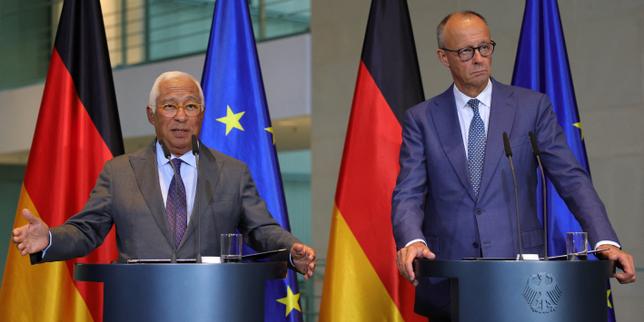
When the European Union chiefs slammed Serbia over the handling of this funeral, calling it a disgrace, the headlines flashed across terminal screens for precisely twelve hours before dissolving into the digital ether. Bureaucrats used words like "provocation," "unacceptable," and "undermining reconciliation." These are clean, antiseptic words. They are designed to fit neatly inside a diplomatic brief. Further reporting by NBC News delves into similar perspectives on the subject.
They miss the blood entirely.
To understand why a funeral can nearly shatter a continent's fragile diplomatic architecture, you have to step away from the podiums and walk down into the valley. You have to understand what it means to grow up in a place where the truth is treated like an inherited family debt—something everyone knows exists, but nobody wants to pay.
In the late autumn of 1995, the maps of the Balkans were redrawn with a butcher’s knife. More than eight thousand Muslim men and boys were systematically executed in the hills surrounding a sleepy eastern Bosnian town. It was the worst atrocity on European soil since the end of the Second World War. For over a decade, the man who orchestrated those killings, Ratko Mladić, moved through the shadows with the tacit protection of a network that stretched from local police precincts to the highest echelons of military intelligence. When he was finally captured in 2011, hiding in a modest, overgrown courtyard in Lazarevo, the world breathed a collective sigh of relief. Justice, we were told, had arrived. The ledger was balanced.
Except ledgers are kept by accountants, not by mothers who still search for jawbones in mass graves.
When domestic politics in the Western Balkans intersects with the worship of convicted war criminals, the illusion of closure shatters. The recent events surrounding memorial gatherings and funeral processions in Serbia laid bare a terrifying continuity. It revealed that the ideological machinery which manufactured the horrors of the 1990s has not rusted away; it has simply gone underground, waiting for a crisis, a flag, or a grieving family to give it permission to walk in the daylight once more.
European officials reacted with predictable outrage because diplomacy runs on the currency of optics. If Belgrade wishes to sit at the grand table of the European Union, it must fulfill certain criteria. It must align its foreign policy, reform its judiciary, and, most crucially, purge its political soul of the romanticized nationalism that turned neighbors into executioners.
Yet, demanding that a society excise its demons by decree is like telling a man with a shattered leg to simply run faster.
Imagine walking through a Belgrade neighborhood today. On a peeling concrete facade, painted in the sharp, defiant red and blue of the national flag, the face of a convicted war criminal stares down from a mural. He is depicted not as a perpetrator of mass murder, but as a tragic hero, a stoic defender of the faith against an uncomprehending world. Next to the mural, teenagers in oversized hoodies share a cigarette, laughing at a TikTok video. They were born long after the Dayton Accords were signed. They do not remember the air raid sirens or the hyperinflation that turned bank notes into wallpaper. But they have inherited the mythology. They have been fed the narrative of perpetual grievance.
This is the invisible stake of the entire conflict. It is not about a single funeral, nor is it merely about the diplomatic fallout between Brussels and Belgrade. It is a battle for the cognitive landscape of the next generation.
When state-adjacent media outlets and political elites either fan the flames of ethnic revanchism or look away with calculated indifference, they are trading the country's future for cheap, immediate political survival. Nationalism is an easy drug. It requires no effort to hate your neighbor; it requires immense, agonizing courage to forgive them and an even greater courage to admit that your own side committed atrocities in your name.
Germany underwent a generational reckoning after 1945, dragging its collective guilt into the harsh light of classrooms, courtrooms, and public squares. It was painful, ugly, and contested, but it created an immunological defense against the return of fascism. In parts of the Western Balkans, that reckoning has been perpetually deferred. Leaders play a double game: speaking the language of European integration in Brussels while winking at the nationalist fringe back home.
The European Union bears a share of this complexity, too. Enlargement fatigue has settled over the bloc like a damp fog. When countries in the region look toward Brussels and see a moving target—where membership requirements shift, timelines stretch into decades, and internal EU politics paralyze expansion—the incentive to undergo painful domestic reforms evaporates. Why dismantle your patronage networks and alienate powerful nationalist veterans if the prize at the end of the rainbow keeps receding?
So the cycle continues. A funeral becomes a political rally. Banners glorifying convicted butchers wave in the wind. Diplomats issue sternly worded communiqués that no one on the ground reads or respects. And the ordinary citizens—the teachers, the mechanics, the young programmers trying to build a life amidst a stagnant economy—are held hostage by a past that refuses to stay dead.
There is a profound tragedy in watching a country wander through a maze of its own making, convinced that the only way forward is to walk backward while staring at old battle flags.
The real danger is not that history will repeat itself verbatim. History rarely repeats; it rhymes with a cruel, mocking cadence. The danger is that a generation too young to remember the smell of cordite will inherit a country hollowed out by bitterness, convinced that peace is merely a temporary ceasefire between inevitable wars.
Until political courage becomes more lucrative than political cowardice, until leaders are willing to risk their careers to tell uncomfortable truths rather than comfortable lies, the ghosts will continue to roam the streets. They will gather at gravesides. They will whisper from the walls of faded housing blocks. And Europe will continue to watch from afar, wringing its hands over a disgrace that it lacks the moral clarity to heal, and that the region lacks the will to bury.