The floorboards remember.
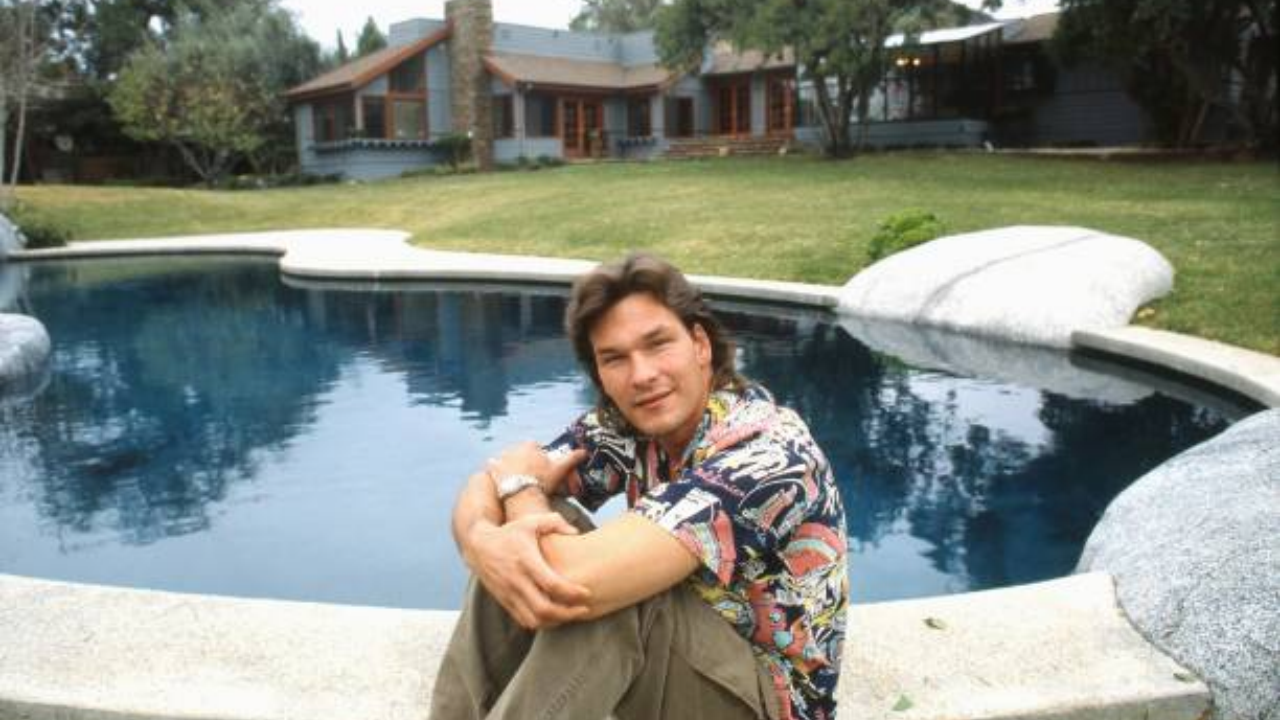
Long before the listing agent drafted the dry paragraphs about square footage, acreage, and asking prices, this California sanctuary held the weight of a dying man’s final desperate choreography. Patrick Swayze didn't just live in the sprawling equestrian estate nestled in Los Angeles County's Tujunga area; he anchored himself to it. When the wind howls down through the canyon, rattling the dry chaparral and stirring the dust of the surrounding hills, anyone with half an imagination can almost hear the low thrum of a stereo, the scuff of leather on wood, and the heavy, ragged breathing of a man trying to outrun time.
Now, the property is back in the spotlight. Following a $2.9 million sale not long ago, the estate has surfaced once more with a $4.5 million price tag. Real estate portfolios call it an asset. Tabloids call it a celebrity relic. But for those who remember the raw, electric vulnerability of Dirty Dancing or the haunting sorrow of Ghost, this place is something altogether different. It is a monument to endurance.
Step inside the structure of the narrative, and the numbers tell a stark story. Four and a half million dollars buys you roughly four and a half acres of land, a main residence steeped in rustic charm, panoramic canyon views, and—most importantly—the preserved dance studio. That studio is the beating heart of the real estate listing. It was built as a private haven where Swayze could refine his craft, where his mother, a legendary choreographer, instilled in him the discipline that would eventually conquer Hollywood.
Imagine standing in that room today. The afternoon sun cuts sharp diagonal slashes across the hardwood floor, illuminating floating motes of dust. The mirrors, once smudged with the breath and sweat of intense rehearsal sessions, now reflect empty space. It is quiet. Too quiet. Yet, the ghost of creative obsession lingers in the corners.
To understand why this place commands millions, we have to look past the gated entrance and the manicured equestrian facilities. We have to look at the man who walked these paths while battling stage 4 pancreatic cancer.
In his final months, when doctors offered grim prognostications and the cameras stopped rolling, Swayze retreated here. He didn't lock himself away in a sterile, metropolitan penthouse. He came to the dirt, the trees, and the horses. He filmed his final television series, The Beast, while commuting from this very ranch, often refusing pain medication because he wanted to feel every ounce of his performance, refusing to let the disease rob him of his clarity.
Real estate transactions are inherently transactional, stripped of sentimentality by design. Appraisers look at comparable sales. Brokers talk about market corrections, square-foot valuations, and capitalization rates. They measure value in granite countertops and remodeled kitchens. But homes like this resist sterile arithmetic. They absorb the human drama that unfolds within their walls.
When Patrick passed away in September 2009, his widow, Lisa Niemi, held onto the ranch for several years, trying to keep the spirit of their life together alive in the canyon breeze. Letting go is a slow kind of torture. Every tree planted, every stall mucked, every echo in that dance studio carries the crushing weight of absence. When the property finally sold for $2.9 million, it marked the end of an era—a quiet closing of a chapter that millions of fans had read along with tear-stained pages.
Now, with the property cycling back onto the market at a steeper valuation, speculators and luxury hunters are circling. They see a premier equestrian setup. They see proximity to Los Angeles without the claustrophobia of the city. They see an investment vehicle.
They are missing the point.
Consider what happens when a sanctuary of art changes hands. The new owners will likely paint over scuffs, update fixtures, and perhaps modernize the kitchen to fit contemporary tastes. They will bring their own furniture, their own furniture choices, their own laughter, and their own arguments. Layer by layer, the physical traces of the past get buried under fresh drywall and modern aesthetics.
Yet, some spaces refuse to be entirely rewritten.
The dance studio remains the ultimate anchor. In the ecosystem of Hollywood real estate, homes of famous actors routinely hit the market. Some are architectural marvels of glass and steel in the Hollywood Hills; others are sprawling Mediterranean compounds in Malibu. They are status symbols. Tujunga is different. It has grit. It feels grounded, rough around the edges, far enough removed from the velvet rope culture to allow a person to actually breathe.
Swayze chose this place because it allowed him to be real. He wasn't just a heartthrob poster on a teenager's bedroom wall; he was a trained ballet dancer who had busted his knees to ribbons, an equestrian who loved the heavy smell of horse sweat and leather, a man who built a life out of physical expression and lost it to a microscopic cellular betrayal.
As the listing agents field inquiries and schedule private viewings for prospective buyers with deep pockets, the property stands as a silent witness to the transient nature of fame. You can buy the acreage. You can own the deed. You can renovate the kitchen and install smart-home automation. But you cannot buy the history. You cannot manufacture the specific brand of magic that happens when a generational talent pours his soul into the floorboards of a rehearsal room tucked away in the California hills.
The market will decide what the property is worth on paper. But as twilight settles over the canyon, turning the jagged ridge lines into dark silhouettes against an bruised orange sky, the real value of the ranch hangs in the air. It is measured in heartbeats, in remembered lines of dialogue, and in the enduring rhythm of a dancer who refused to stop moving, even when the music finally started to fade.