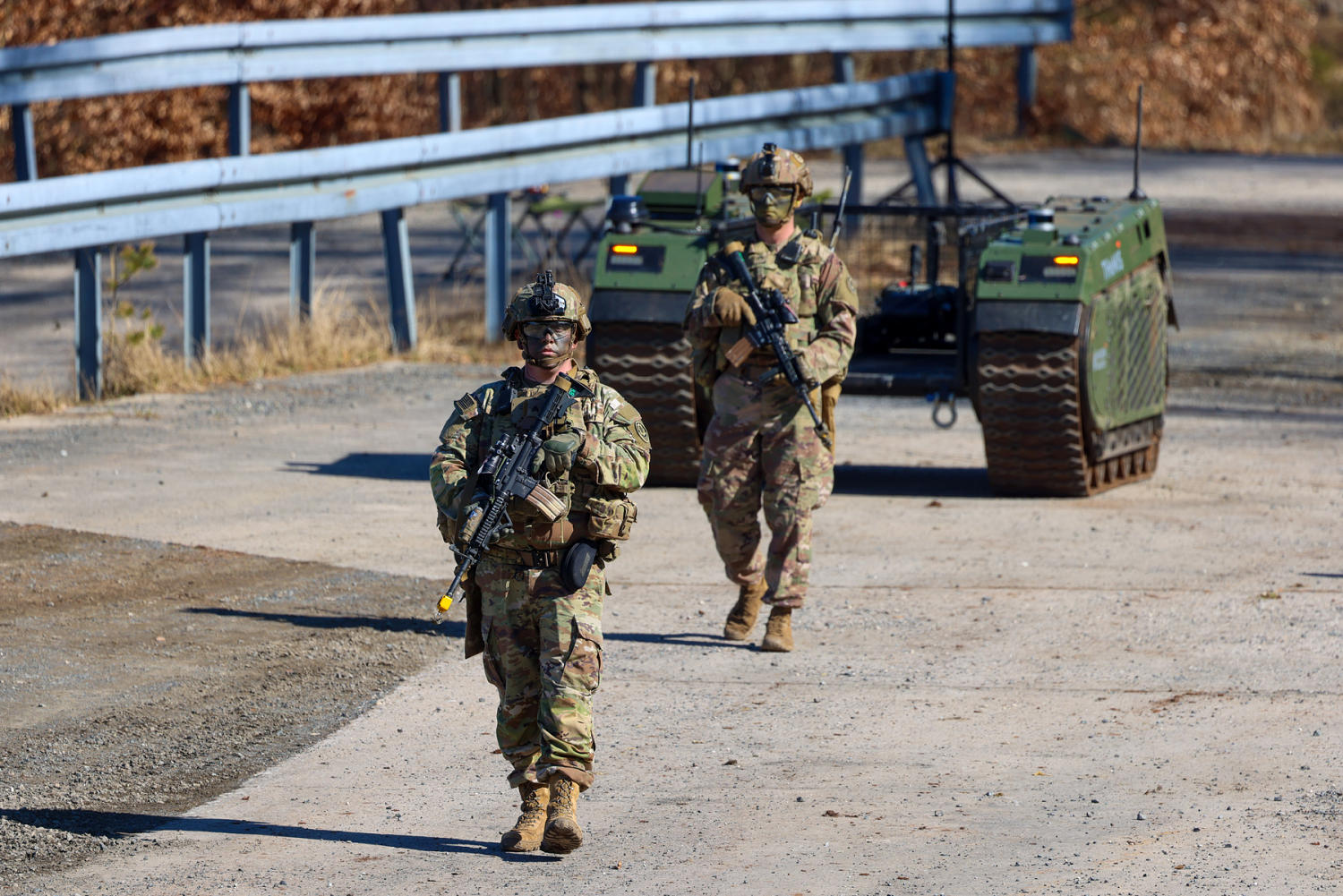
The decision to pull thousands of American troops out of Germany was never just about base closures or logistical shifts. It was a hand grenade tossed into the center of the transatlantic alliance. While the move was framed as a necessary redistribution of forces, the immediate and fierce pushback from senior Republican lawmakers revealed a deep, tectonic shift within the party itself. This was not a standard policy disagreement. It was an alarm bell rung by the GOP’s national security wing, who saw the withdrawal as a direct invitation for Russian expansionism.
By removing a permanent deterrent from the heart of Europe, the United States signaled a retreat from the post-War order. The critics were not just Democrats or European bureaucrats; they were the very hawks who usually define Republican strength. They understood that in the world of high-stakes geopolitics, presence is power. When you leave a vacuum, someone else fills it. Usually, that someone is Vladimir Putin. If you enjoyed this post, you might want to read: this related article.
The Strategic Vacuum in Central Europe
For decades, the American presence in Germany served as the logistical backbone for every major operation in the Middle East and Africa. Ramstein Air Base and Landstuhl Regional Medical Center are not just dots on a map. They are the nervous system of the U.S. military’s global reach. Moving 12,000 troops out of this theater was sold as a way to "enhance" flexibility, but military planners knew the truth was far more complicated.
A withdrawal of this magnitude requires years of planning and billions in infrastructure costs. You do not just pack up a division and move it to Poland or Italy overnight. The sheer friction of the move creates a window of vulnerability. Republican leaders like Mitt Romney and Liz Cheney recognized this immediately. They argued that the move was "a gift to Russia" because it fundamentally weakened the NATO shield at a time when the Kremlin was actively testing borders in Ukraine and the Baltics. For another perspective on this event, refer to the latest update from NBC News.
The logistical nightmare is real. Every tank moved and every battalion reassigned costs money that Congress had not yet authorized. This created a standoff between the White House and the Capitol. The Pentagon was forced to scramble for a rationale that fit a political directive, rather than a military necessity.
A Party Divided Against Itself
The backlash highlighted a widening chasm in the Republican Party between the traditional "Peace Through Strength" internationalists and the rising "America First" isolationist wing. This is the most significant internal struggle the GOP has faced since the 1950s. On one side, you have the veterans of the Cold War era who believe that American safety depends on overseas stability. On the other, you have a populist movement that views foreign bases as a drain on national resources and a burden on the taxpayer.
This isn't just about Germany. It’s about the fundamental definition of American interests. The critics pointed out that Germany pays billions into the maintenance of these bases and provides a stable, democratic platform for U.S. influence. To walk away because of a dispute over defense spending targets—specifically the 2% of GDP benchmark—felt like a disproportionate response. It was using a sledgehammer to fix a flickering lightbulb.
The Putin Factor
Moscow does not need to fire a shot to win a geopolitical victory. They only need to see the alliance fray. Every time a high-ranking Republican speaks out against a troop withdrawal, they are acknowledging that the perception of American commitment is just as important as the actual hardware on the ground. When the U.S. looks like it is packing its bags, the nations on the "front line," such as Estonia, Latvia, and Lithuania, begin to wonder if the Article 5 guarantee of mutual defense still holds weight.
Vladimir Putin views NATO as a relic of a time he wishes to erase. A smaller American footprint in Germany is a validation of his long-term strategy to decouple the United States from European security. This is why the warnings from the Senate Armed Services Committee were so sharp. They weren't just worried about the 12,000 troops; they were worried about the 75 years of trust that those troops represented.
The High Cost of Moving House
The financial argument for the withdrawal often ignored the "sunk costs" of current installations. The United States has spent decades building sophisticated command centers and housing in Germany. Moving these assets to other parts of Europe—or bringing them back to the U.S.—is an incredibly expensive endeavor.
- Infrastructure: Rebuilding the equivalent of Ramstein elsewhere would take a decade and tens of billions of dollars.
- Command and Control: The European Command (EUCOM) is deeply integrated into the German landscape. Severing those ties creates a temporary blindness in intelligence and coordination.
- Deterrence Value: A troop in Germany is a signal. A troop in South Carolina is a training exercise.
The plan to move some forces to Poland was touted as a way to get closer to the Russian threat. However, Poland lacked the established infrastructure to support a massive surge in permanent American personnel. It was a trade-off that offered more symbolism than actual combat readiness.
The Message to the Rest of the World
Allies across the globe watched the Germany dispute with intense scrutiny. If the U.S. could unilaterally decide to gut its presence in a Tier 1 allied nation over a budgetary dispute, what does that mean for Japan? What does it mean for South Korea? The "wrong message" mentioned by Republican critics was a message of unreliability.
Foreign policy is built on the bedrock of predictability. When a superpower becomes unpredictable, its allies begin to hedge their bets. They start looking for other partners or, worse, they start making concessions to their more aggressive neighbors. This is the "Finlandization" of Europe that Cold War strategists feared, and it is the exact scenario that the GOP’s traditional wing was trying to prevent.
The irony is that the withdrawal was intended to punish Germany for lack of defense spending, but it ended up punishing the U.S. strategic position more. It was a classic case of cutting off the nose to spite the face.
The Congressional Firewall
In response to the move, Congress did something increasingly rare: it acted with a degree of bipartisanship to slow the process down. Through the National Defense Authorization Act (NDAA), lawmakers inserted language that restricted the use of funds for troop withdrawals until the Pentagon could prove that such moves would not harm national security. This was a direct check on executive power from a branch of government that is usually hesitant to interfere in military deployments.
This legislative maneuver showed that even within a polarized Washington, there is still a core consensus on the importance of the Atlantic alliance. The "Top Republicans" mentioned in news reports were not just voicing an opinion; they were leveraging the power of the purse to keep the tanks in place. They forced a pause, requiring detailed reports on how the move would affect the readiness of our forces and the security of our allies.
Logistics Over Politics
Military leaders are trained to look at the world through the lens of "lines of communication." Germany is the ultimate hub. If a soldier is wounded in a conflict in Africa, they go to Landstuhl. If a drone needs to be piloted in the Middle East, the signal often passes through German soil. To treat these bases as mere bargaining chips in a trade dispute ignores the brutal reality of modern warfare.
The Republican dissenters understood that you cannot run a global empire on a month-to-month lease. You need permanent, deep-rooted bases that allow for rapid deployment. The withdrawal plan threatened to turn the U.S. military into an expeditionary force that has to ask for permission every time it needs to cross a border, rather than a resident power that dictates the pace of events.
Why the Debate Still Matters
While administrations change, the geography of Europe does not. Russia remains a revisionist power seeking to reclaim its lost influence. The debate over the Germany withdrawal was a dress rehearsal for a much larger conversation about the future of the American century. If the U.S. continues to move toward a posture of "offshore balancing"—where we only intervene after a conflict has started—we lose the ability to prevent those conflicts from happening in the first place.
The warnings from the GOP elite were a plea for the maintenance of a forward-deployed presence. They argued that it is far cheaper to keep 30,000 troops in Germany than it is to liberate Europe a third time. This is the "brutal truth" of the situation: deterrence is expensive, but failure is catastrophic.
The focus shifted from the number of troops to the quality of the commitment. The critics weren't just counting heads; they were measuring the pulse of an alliance. They saw a weakening heartbeat and reached for the paddles.
Strategic Realignment or Strategic Retreat
There is a valid argument for modernizing our footprint. The world of 2026 is not the world of 1945. We face threats in the Indo-Pacific and in cyberspace that require a different kind of investment. However, the GOP critics argued that you don't build up in the East by burning your bridges in the West. You can't pivot to Asia if your European house is on fire.
The real reason the withdrawal was so dangerous was not the loss of the troops themselves, but the chaos it sowed. It created a period of uncertainty that our adversaries were all too happy to exploit. When the U.S. argues with its closest allies about where to park its humvees, it looks small. It looks distracted.
In the end, the pushback from the Republican establishment served as a necessary corrective. It reminded the world that the American commitment to Europe is not the whim of a single person or a single administration, but a core tenet of our national security that is backed by the full weight of the legislative branch.
The lesson for future policy is clear. Any major shift in troop levels must be grounded in a coherent strategic rationale that our allies understand and our enemies fear. Anything less is just noise, and in the world of global power, noise is often followed by disaster. Keep the bases, keep the alliances, and keep the deterrent credible, or prepare to pay a much higher price when the deterrent finally breaks.