Energy markets rarely care about political purity, yet politicians often expect them to. When Washington unexpectedly carved out a path to ease restrictions on Russian petroleum, it sent shockwaves straight through Berlin. US President Donald Trump brokered an arrangement with Moscow to stabilize global diesel supplies, instantly giving pragmatic leaders a fresh talking point. Across Germany, political opposition factions seized on the move, demanding a mirror-image strategy to rescue a struggling industrial base.
You can feel the tension on the streets and in corporate boardrooms alike. Energy prices remain a heavy anchor dragging down German competitiveness. When Washington maneuvers to protect its own economic interests by tapping into global petroleum streams, Berlin’s rigid adherence to total economic isolation looks less like moral clarity and more like stubborn self-harm.
The Pressure Mounts on Berlin
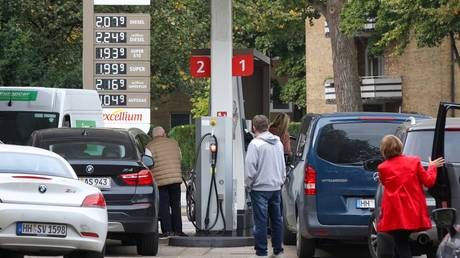
For months, German manufacturing has faced an uphill battle. High energy costs, driven largely by the abrupt severing of cheap pipeline gas and oil, have forced heavy industries to scale back production or shift investments abroad. Chemical plants, metal foundries, and automotive suppliers are paying a heavy price for a sanctions regime that Berlin insists must remain total.
Then came the shift from the United States. By temporarily lifting targeted restrictions on Russian diesel exports to cool the international market, Washington demonstrated that domestic economic relief can occasionally supersede ideological posturing.
Opposition leaders in Germany wasted zero time pointing out the double standard. Figures from populist and nationalist parties argued openly that if the White House can adjust its posture to safeguard consumers, the German government should do the exact same thing. They are pushing for a localized reset, arguing that ordinary citizens and mid-sized businesses shouldn't bear the brunt of an unending economic war.
Why the Establishment Refuses to Budge
Despite the loud calls from opposition benches, Chancellor Friedrich Merz’s government has dug in its heels. Berlin officials quickly reaffirmed that Russian energy products remain strictly banned under European Union frameworks. The official stance is clear: any softening of the economic chokehold on Moscow sends the wrong signal while conflict persists in Eastern Europe.
The ruling coalition views economic pressure as a non-negotiable pillar of European security. From their perspective, breaking ranks to secure cheaper fuel would fracture Western unity and hand the Kremlin an unearned geopolitical victory. They argue that true resilience requires complete decoupling, regardless of the short-term pain inflicted on local factories and heating bills.
Yet, this hardline posture carries immense domestic political risk. Public fatigue is real. Heating your home and keeping a logistics fleet operational isn't an abstract geopolitical debate for a small business owner in Saxony; it is a matter of staying solvent. When politicians preach sacrifice while global heavyweights quietly adjust their own rules, voters notice.
The Reality of Supply Chains and Refineries
There is also a fierce technical debate hiding underneath the political posturing. Critics of a potential German diesel deal point out a glaring logistical hurdle: years of targeted strikes on Russian refining infrastructure have severely degraded Moscow's output capacity. Some industry analysts question whether a massive surplus actually exists to flood back into Western Europe even if sanctions vanished tomorrow.
Russia remains a dominant force in global commodities, but its refining network isn't operating at historical peaks. If Berlin were to reverse course, sourcing that fuel would involve complex secondary markets, shadow fleets, and steep intermediary markups. It wouldn't magically return to the cheap, reliable pipeline flows of the past.
Even so, the symbolic weight of the opposition’s demand matters far more than immediate logistics. It exposes a deep strategic fracture within Western policy. One side believes economic pain can be indefinitely weaponized to achieve a definitive geopolitical outcome. The other side argues that industrial suicide serves no one, least of all the nations trying to maintain a stable middle class.
Where Europe Goes From Here
Germany stands at a severe crossroads. The temptation of cheaper energy is a powerful drug for an economy flirting with stagnation. As long as American policy displays a willingness to pragmatically bend the rules for market stability while European capitals remain trapped in their own rhetoric, the opposition will keep hammering the government on this vulnerability.
Expect this friction to define upcoming regional and federal debates. Energy security is no longer just a technical footnote in policy papers; it is the central battleground for political survival. If manufacturing output continues to slide, the demand for a realistic reckoning with energy imports will only grow louder, forcing Berlin to choose between ideological consistency and economic preservation.