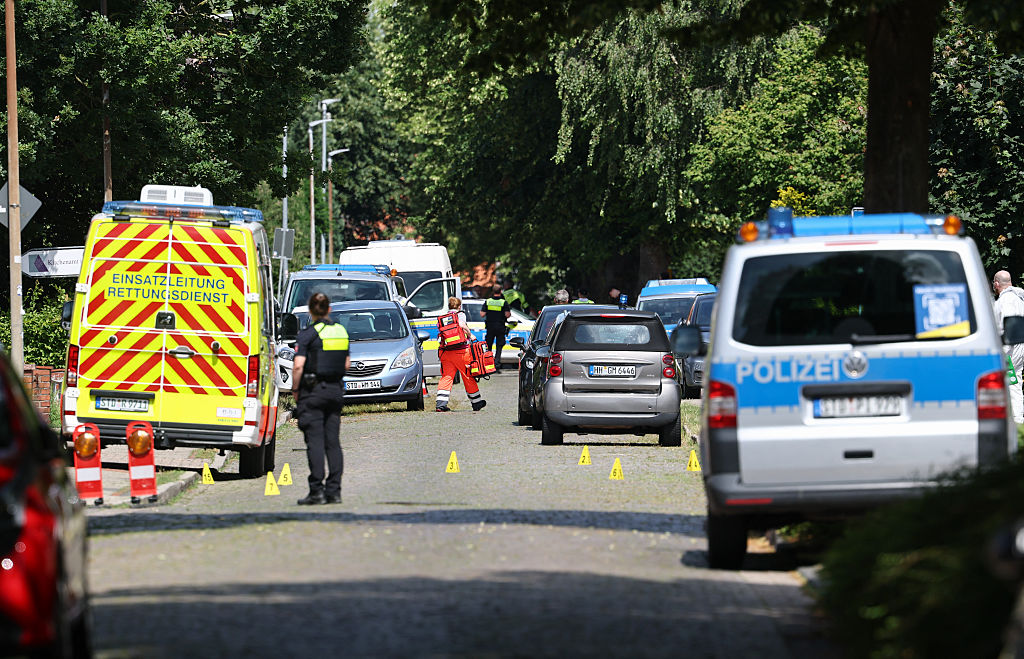
Mass media outlets follow a predictable, exhausting script whenever a high-profile violent crime occurs. They flood the zone with breaking news banners, tally the body count, and launch into immediate, superficial questioning about security guards and local police response times. We saw this exact pattern play out following the horrific shooting that claimed six lives at a mother-and-baby shelter in Germany.
The immediate consensus from talking heads was as loud as it was lazy: How did a weapon get inside? Why wasn't there more security? Discover more on a connected subject: this related article.
This reaction misses the entire point. It focuses on the final, tragic link in a long chain of systemic failure while completely ignoring the structural vulnerability of how we design, fund, and operate social safety net facilities. I have spent years analyzing operational risk and institutional security architectures. The hard truth that nobody wants to admit is that throwing a handful of underpaid security guards at a vulnerable facility is a band-aid on an open artery.
True safety is an engineering and operational problem, not a reactionary policing problem. Additional reporting by NPR delves into similar perspectives on this issue.
The Illusion of the Hardened Perimeter
The knee-jerk reaction to any tragedy at a social service facility is to demand immediate "hardening"—metal detectors, bulletproof glass, and armed guards. This is a comforting illusion sold by security contractors looking to cash in on panic.
In a mother-and-baby shelter, or any crisis center handling domestic displacement, heavy-handed physical security measures often create a counter-productive environment. These facilities are designed for psychological stabilization and rehabilitation, not incarceration. When you turn a sanctuary into a fortress, you alienate the exact population that needs help, driving them back into the dangerous environments they are fleeing.
More importantly, a static perimeter defense fails logistically. A single security guard making minimum wage cannot stop a determined, armed attacker intent on mass violence. It is an operational mismatch.
Instead of focusing on keeping danger out through brute force, institutions must focus on structural resilience and distributed risk.
Redefining Institutional Security
To actually protect vulnerable populations, we must dismantle the current framework of institutional safety and replace it with a model based on three core principles:
1. Spatial Decoupling
Concentrating dozens of high-risk individuals—such as victims of domestic abuse fleeing volatile partners—into a single, highly publicized, centralized facility creates a high-density target. The future of crisis housing lies in decentralized, anonymous, scattered-site housing networks. When an asset is distributed, its vulnerability drops exponentially.
2. Operational Anonymity
Traditional shelters often operate with public knowledge, sometimes even displaying prominent signage. In an era of digital tracking and open-source intelligence, this is an unacceptable operational failure. Facilities housing high-risk individuals must treat location data as a strict operational security element, utilizing commercial real estate fronts and strict digital privacy protocols for residents.
3. Rapid Escalation Architecture
If a facility must be centralized, the internal architecture must favor the defender, not the attacker. This means implementing automated, zoned lockdown systems that can compartmentalize a building within seconds of an alarm, effectively isolating a threat in a single corridor while creating clear egress paths for residents.
| Security Model | Traditional Hardening | Structural Resilience |
|---|---|---|
| Primary Focus | Visible deterrents (Guards, gates) | Operational obscurity and architecture |
| Psychological Impact | High anxiety, institutional feel | Low profile, normalized environment |
| Failure Point | Single point of failure at entry | Redundant, zoned containment |
| Cost Allocation | Ongoing, high-variance labor costs | One-time capital expenditure in design |
The Fatal Flaw in Public Safety Funding
The underlying driver of these tragic vulnerabilities is fiscal cowardice. Governments and non-profit boards love to fund visible, easily quantifiable assets. A new fence or a contracted security firm looks great on an annual budget report. It shows the public that "something is being done."
What they refuse to fund are the invisible, unglamorous necessities: advanced communication infrastructure, extensive staff training in behavioral de-escalation and crisis management, and the higher operational costs of decentralized housing.
We are paying for the illusion of safety because reality requires a fundamental overhaul of how municipal budgets allocate capital. We underfund the operational staff who manage these facilities daily, pay them subsistence wages, and then express shock when a system managed by overworked, undertrained personnel breaks down under maximum stress.
Dismantling the Myth of Predictability
The most dangerous lie told in the aftermath of a crisis is that it was entirely unpredictable. This is a shield used by administrators to avoid accountability.
In almost every instance of targeted institutional violence, the perpetrator leaves a clear trail of behavioral anomalies, explicit threats, or legal red flags. The failure is rarely a lack of data; it is a failure of communication between law enforcement, judicial systems, and social services.
[Threat Identified] -> [Siloed Police Data] -> (Communication Break) -> [Vulnerable Shelter Target]
When a court issues a restraining order or a police department logs a domestic threat, that data must automatically trigger a elevated risk status for any associated social service facility. Right now, these systems operate in silos. A shelter often has no idea a resident's abuser has recently purchased a firearm or violated probation until the individual shows up at the front door.
The Cost of the Truth
Shifting from a reactive, guard-at-the-door model to a proactive, structurally resilient model is not easy. It requires more capital upfront. It requires rewriting municipal zoning laws to allow for anonymous, scattered-site housing. It requires shattering the silos between law enforcement data and social service providers.
The downside to this contrarian approach is obvious: it strips away the immediate, performative comfort of a visible security presence. It forces communities to accept that absolute safety is a myth, and that true mitigation requires deep, systemic changes to how we house and protect the vulnerable.
But the alternative is to keep doing what we are doing. We can keep hiring more guards, installing more metal detectors, and writing the same shocked headlines every time the illusion fails.
Stop looking at the front door of the shelter. Look at the system that built it.