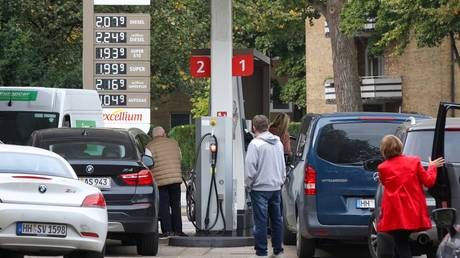
High pump prices have a funny way of turning foreign policy into a kitchen-table brawl. When U.S. President Donald Trump announced a fuel arrangement with Moscow in October 2026, two German opposition parties—Alternative for Germany (AfD) and Sahra Wagenknecht's BSW—jumped straight into the opening. Both parties demanded a Trump-style diesel deal with Russia, arguing that Berlin is punishing its own drivers and factories while Washington cuts pragmatic supply deals.
Chancellor Friedrich Merz shut that idea down flatly, calling a Russian diesel arrangement "out of the question" for Germany and the European Union. Yet the clash exposes something much bigger than fuel shipments. It shows how energy costs, electoral pressure, and deep transatlantic friction are straining Germany's post-2022 consensus on Russia.
What Sparked the Push for a Russian Diesel Deal
The trigger happened on October 9, 2026, when Trump spoke with Russian President Vladimir Putin and moved to ease global diesel tightness by temporarily lifting U.S. sanctions on Russian fuel exports. Washington issued a general license allowing Russian diesel onto international markets until April 7, 2027, while Moscow signaled plans to step up shipments over the final months of the year.
In Berlin, opposition leaders saw an immediate political weapon. AfD co-leader Alice Weidel praised Trump's move as "pragmatic" and argued that German consumers and businesses were being left behind while Americans got fuel relief. Wagenknecht went further, urging Berlin not to stop at a one-off diesel patch but to restart broader Russian oil and gas imports to ease pressure on German industry and households.
Honestly, if you watch German politics closely, the timing makes complete sense. Fuel costs have squeezed household budgets and freight logistics, and Merz's coalition has faced rough political headwinds—including painful state election setbacks such as failing to clear the threshold in Saxony-Anhalt and Mecklenburg-Vorpommern. When voters feel pinched at the pump, opposition politicians don't miss the chance to frame sanctions as self-harm.
Why Merz Refused to Follow Washington's Lead
Merz didn't hesitate. His government reiterated that Russian petroleum products remain barred under EU sanctions put in place back in 2023, and that Germany isn't bringing Russian diesel through the back door. Speaking in Berlin, Merz insisted that Moscow only takes real negotiations seriously under sustained pressure, and he backed pushing for tougher sanctions alongside continued support for Kyiv.
Defense Minister Boris Pistorius added another layer to Berlin's read on Washington. Speaking at an employers' conference in Berlin, Pistorius suggested that Trump's pivot toward a diesel arrangement reflected domestic political pressure ahead of the U.S. midterm elections—a classic case, in his view, of a leader seeking a foreign-policy lever for problems at home.
From a practical standpoint, the opposition's pitch runs straight into EU law. Even if the AfD and BSW draft joint motions in a state parliament like Saxony-Anhalt—where they hold combined seats after September's regional vote—a Landtag cannot unilaterally overturn European Union sanctions or rewrite federal trade rules. That detail gets glossed over a lot in campaign speeches, yet it's the central legal wall blocking any quick bilateral fuel deal.
The Real Economics Behind Diesel Prices
Anyone promising that a quick deal with Moscow will magically slash German diesel prices overnight is selling a simplified story. Global refined fuel markets depend on refinery capacity, shipping insurance, freight rates, and domestic taxes—not just whether barrels originate in Russia.
Even after Germany ended direct Russian oil and petroleum imports following EU restrictions, the country rebuilt its supply chains using alternative crude sources and refined imports. Meanwhile, German diesel prices at the pump include substantial energy and carbon taxes that no foreign supplier controls. Cutting domestic taxes or easing grid and electricity costs—something Merz has repeatedly pledged to address—has a far more direct effect on German bills than chasing sanctioned fuel.
Strategy vs. Relief in a Fractured Alliance
Here's where the debate gets genuinely messy. Supporters of a Trump-style diesel deal with Russia argue that prolonged high energy costs hollow out German manufacturing, particularly energy-intensive chemicals, metals, and transport. If the world's largest economy is willing to carve out fuel exceptions for its own consumers, they ask why Germany should bear steep economic pain.
Critics counter that going back to Russian energy hands the Kremlin fresh revenue right when Moscow is testing European resolve. Leaders from neighboring countries like Finland and Estonia voiced sharp alarm over Washington's fuel move, warning against relieving economic pressure on Russia while Ukraine is fighting for survival. And let's be real: in German politics, cooperation between the AfD and BSW also tests the long-standing "firewall" that mainstream parties built to keep the far right out of power.
Practical Ways to Track What Happens Next
If you're following this story because you care about European energy markets, German politics, or transatlantic unity, don't get lost in daily soundbites. Watch concrete signals instead.
- Check EU sanctions decisions first: Watch whether Brussels holds firm on existing petroleum restrictions or faces internal pressure from member states worried about fuel supply and industrial costs.
- Separate state motions from federal power: When regional parliaments like Saxony-Anhalt debate Russia resolutions, treat them as political signals rather than binding energy policy.
- Watch domestic tax and energy reforms: Track whether Berlin delivers promised cuts to electricity taxes and grid charges, which directly affect German households and businesses regardless of external fuel deals.
- Follow U.S.–Europe coordination: Pay attention to whether Washington and European capitals align on sanctions enforcement and Ukraine aid, or keep drifting onto separate tracks.
DW News segment on Merz rejecting the Russian diesel deal breaks down the core political and energy-security split between Berlin and Washington in a concise broadcast format.