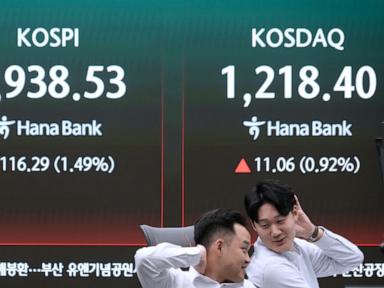
Capital markets are currently pricing a dual-threat volatility event rooted in the escalation of Middle Eastern hostilities. While broad indices reflect a surface-level retreat, the underlying mechanics involve a sophisticated repricing of the geopolitical risk premium and a direct shock to the global energy supply chain. The contraction in global shares is not a monolithic reaction to fear; it is a calculated adjustment to the increased probability of a high-oil-price environment that threatens to reignite inflationary pressures and delay central bank easing cycles.
The Triad of Market Contraction
To understand the current downward pressure on global equities, one must isolate the three distinct channels through which the Iran-Israel conflict manifests in portfolio valuations: You might also find this similar story interesting: Why Trump and Xi are letting CEOs play the long game in Beijing.
- The Discount Rate Channel: As oil prices surge, the risk of "sticky" inflation increases. This forces fixed-income markets to price in a "higher-for-longer" interest rate environment. When the risk-free rate rises, the present value of future corporate cash flows—the bedrock of equity valuation—drops across the board.
- The Margin Compression Framework: For non-energy sectors, particularly transport, manufacturing, and consumer discretionary, oil is a primary input cost. Rising crude prices act as a regressive tax on corporate margins. Unless companies possess significant pricing power, this results in an immediate reduction in earnings per share (EPS) estimates.
- The Safe-Haven Capital Flight: There is a structural rotation out of "risk-on" assets (equities, high-yield debt) and into "risk-off" instruments (U.S. Treasuries, Gold, and the Swiss Franc). This is a liquidity-driven event where institutional fund managers reduce gross exposure to mitigate potential "black swan" tail risks.
Analyzing the Energy Supply Chain Vulnerability
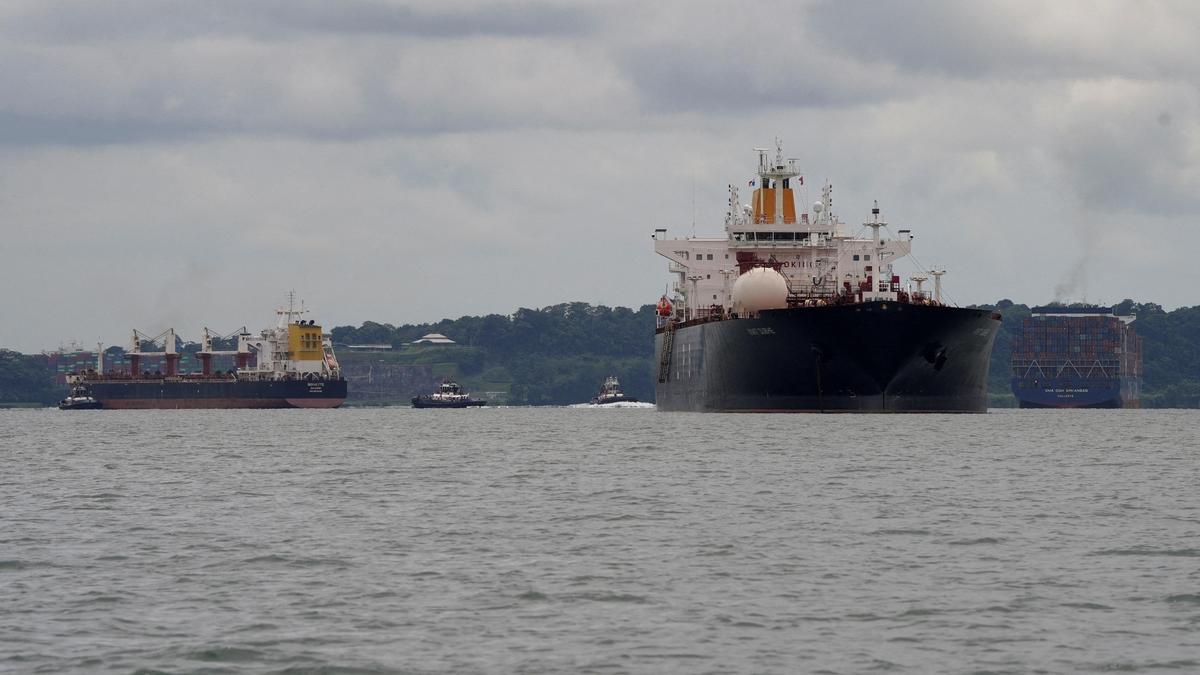
The sensitivity of global markets to Iranian involvement is predicated on the geography of energy transit. The Strait of Hormuz remains the single most critical chokepoint in the global oil trade. Data suggests approximately 20% of the world's liquid petroleum passes through this waterway.
The Hormuz Bottleneck
If the conflict escalates to a maritime blockade or significant disruption in the Persian Gulf, the market moves from a "geopolitical friction" phase into a "supply deficit" phase. In the friction phase, prices rise based on the probability of disruption. In the supply deficit phase, prices rise based on the physical absence of barrels. As extensively documented in detailed articles by The Wall Street Journal, the effects are significant.
The current market drop suggests that analysts are moving their probability weights toward the latter. This creates a feedback loop: higher oil prices increase the cost of shipping (bunker fuel), which increases the cost of global trade, further dampening the outlook for multinational corporations that rely on globalized supply chains.
Sector-Specific Beta to Geopolitical Conflict
Not all sectors respond to war worries with equal magnitude. The divergence in performance reveals the market's internal logic regarding risk distribution.
- Energy and Defense (Positive Correlation): These sectors act as a natural hedge. Aerospace and defense stocks see increased demand expectations as national security budgets are reassessed. Integrated oil majors benefit from higher spot prices for crude, expanding their upstream margins.
- Airlines and Logistics (Negative Correlation): These are the first casualties of surging oil. Fuel often accounts for 25% to 30% of an airline's operating costs. A sustained move in Brent crude toward $100 per barrel makes many current route structures unprofitable without significant fare hikes, which in turn reduces demand.
- Technology and Growth (Duration Sensitivity): Growth stocks are highly sensitive to interest rates. Because these companies often have valuations based on earnings far in the future, they are disproportionately punished when geopolitical instability pushes up the discount rate via inflation expectations.
The Inflationary Feedback Loop and Central Bank Paralysis
The primary concern for equity investors is how geopolitical shocks constrain the Federal Reserve and the European Central Bank. Prior to the escalation, the prevailing narrative was one of "disinflation," allowing for a transition to lower interest rates.
The surge in oil prices breaks this narrative. Energy is a volatile but foundational component of the Consumer Price Index (CPI). If energy costs remain elevated, headline inflation will stay above the 2% target, effectively "trapping" central banks. They cannot cut rates to support a flagging economy because doing so might further de-anchor inflation expectations. This "stagflationary" shadow—low growth combined with high prices—is exactly what the current drop in global shares is pricing in.
Quantitative Assessment of Risk Premia
Measuring the "Geopolitical Risk Premium" (GRP) requires looking at the spread between the actual price of oil and the price dictated by fundamental supply and demand models. Currently, estimates suggest a $5 to $10 GRP per barrel.
If the conflict remains contained to proxy warfare, this premium likely plateaus. However, if direct state-on-state kinetic action occurs involving Iranian infrastructure, the GRP could expand to $20 or $30. Equity markets are currently "front-running" this expansion. They are not waiting for the bombs to fall; they are pricing the implied volatility of such an event.
Structural Fragility in Emerging Markets
While major indices like the S&P 500 or the FTSE 100 dominate headlines, the real damage is often concentrated in emerging market (EM) equities. Many EM economies are net energy importers and have debt denominated in U.S. Dollars.
The mechanism of pain here is two-fold:
- Current Account Deficits: Higher oil prices widen the trade deficit of energy-importing nations (e.g., India, Turkey, several Southeast Asian nations).
- Currency Depreciation: As investors flee to the safety of the U.S. Dollar, EM currencies weaken. This makes their dollar-denominated debt more expensive to service and further fuels domestic inflation.
This creates a "contagion" effect where weakness in EM equity markets eventually spills over into developed markets via reduced demand for exports and hits to the balance sheets of multinational banks with EM exposure.
Strategic Asset Allocation in High-Volatility Regimes
In a market defined by geopolitical uncertainty and energy shocks, the traditional 60/40 portfolio faces significant headwinds as the correlation between stocks and bonds turns positive—both falling as inflation fears rise.
The tactical response involves a pivot toward "Value" and "Quality" factors. Companies with low debt-to-equity ratios and high free cash flow are better positioned to weather a period of high interest rates and input cost volatility. Furthermore, direct exposure to commodities or "hard assets" serves as a necessary hedge against the debasement of purchasing power that accompanies energy-led inflation.
The current trajectory suggests that the "peace dividend" which fueled the late 20th-century market expansion has been fully exhausted. Investors must now operate in a regime where political volatility is not a "noise" variable, but a fundamental driver of the discount rate.
Portfolio construction must prioritize liquidity and optionality. The focus shifts from maximizing returns in a stable environment to minimizing "drawdown" in an unstable one. This requires an overweight position in energy-producing equities and a selective approach to consumer-facing sectors, favoring those with the highest degree of inelastic demand. The immediate tactical play is to increase cash reserves to capitalize on the forced liquidations that typically occur at the peak of geopolitical panic cycles, while maintaining core positions in defense and energy infrastructure to capture the shift in global capital priorities.