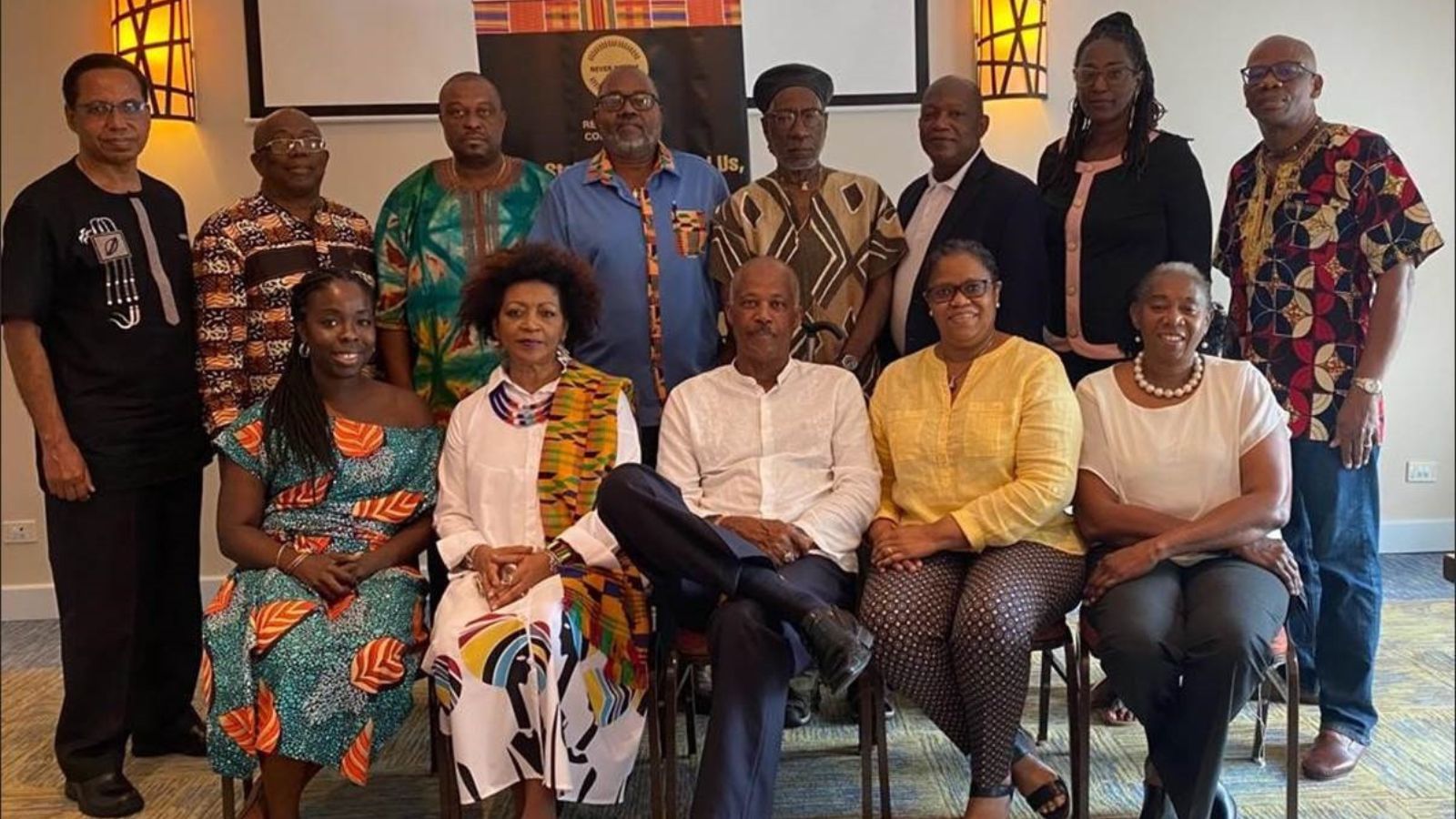
The convergence of sovereign rights, historical liabilities, and economic governance has reached a critical bottleneck. In July 2026, a diplomatic delegation representing twelve Caribbean nations, operating under the CARICOM Reparations Commission, advanced a structured mandate to the United Kingdom. The directive challenges the remaining vestiges of territorial administration in the region and ties the concept of national sovereignty directly to financial and structural restitution.
By demanding the return of the British Virgin Islands (BVI) alongside a formal framework for reparative justice, Caribbean leaders are shifting the conversation from symbolic moral declarations to actionable constitutional and economic transformations. This shift exposes a foundational friction between structural dependencies and the legal mechanisms required for full self-determination.
The Dual-Engine Framework of Reparatory Justice
The updated CARICOM manifesto transforms traditional statecraft by linking two distinct geopolitical goals: constitutional decolonization and macroeconomic restitution. Historically, these concepts operated independently. Colonial exit strategies focused on political transition, while economic developmental aid was handled through separate diplomatic channels. The commission's framework treats them as an indivisible unit.
[Constitutional Sovereignty] + [Macroeconomic Restitution] = True Decolonization
This model is built on two primary structural engines:
- The Sovereign Recovery Engine: This component asserts that self-governance is the baseline requirement for any meaningful negotiation. Under the current framework, territories like Anguilla, Bermuda, the Cayman Islands, Montserrat, the Turks and Caicos, and the BVI exercise internal self-governance. However, the UK retains definitive authority over defense, foreign affairs, internal security, and judiciary structures. CARICOM positions this split governance as an active bottleneck that limits domestic policy and economic choice.
- The Structural Capital Engine: This engine rejects the assumption that political independence automatically fixes historical wealth extraction. Instead, it frames centuries of chattel slavery and systemic resource draining as a permanent shock to the region's capital accumulation capacity. Restitution is therefore defined not as a wealth transfer, but as a capital injection designed to correct long-term market imbalances and infrastructure underinvestment.
The Constitutional Overlap and Legal Bottlenecks
The demand for the immediate return of the British Virgin Islands highlights a structural flaw in the UK’s overseas territory model. While local assemblies pass domestic legislation, the executive authority wielded by a UK-appointed governor creates an asymmetric veto power. This division of authority breaks the direct feedback loop between local voter intent and executive action.
CARICOM argues that this structural arrangement prevents the BVI and similar territories from optimizing their internal legislative strategies. When a local territory must cross-reference its financial sector regulations, tax frameworks, or maritime border policies with Downing Street, it operates under a dual-master friction. This setup protects imperial geopolitical priorities at the direct expense of domestic growth.
The legal mechanism for addressing this overlap remains highly complex. Jamaica’s strategy involves filing a formal petition to request that King Charles III refer these legal questions regarding structural liabilities to the Judicial Committee of the Privy Council. This approach uses the colonizing state’s own highest court of appeal to test the validity of colonial-era laws and modern liabilities.
The strategy bypasses standard legislative blockages in Westminster by forcing a judicial review of constitutional obligations. However, this method faces a major limitation: the Privy Council is structurally tied to the British state, meaning any ruling that threatens the UK treasury faces uphill institutional resistance.
The Microeconomics of Intergenerational Capital Extraction
To understand the scale of the demanded restitution, the commission highlights how historic colonial legislation treated human capital as depreciable corporate assets. The economic mechanics of chattel slavery relied on legal frameworks designed to maximize the lifetime value of enslaved labor while minimizing maintenance costs.
The manifesto details an extractive capital cycle driven by specific demographic and legal variables:
- The Partus Sequitur Ventrem Rule: Under colonial slave codes, a child’s legal status matched that of the mother. This rule turned the reproductive capacity of enslaved women into a reliable generator of capital assets.
- The Capital Amortization Cycle: Historical ledgers show that the cost of acquiring an enslaved woman was amortized by her first offspring's entry into the labor force, typically around age 12. All subsequent children represented pure, unhedged profit for the plantation enterprise.
- The Symmetric Compensation Asymmetry: When slavery was abolished across the British Empire in 1833, the state executed a massive wealth transfer—not to the emancipated population, but to the slaveholders. The UK government borrowed £20 million to compensate owners for the loss of their "property." This debt was so massive it was not fully liquidated until 2015.
This historical capital transfer means that modern British infrastructure was partially funded by debt issued to secure colonial asset values. Meanwhile, the emancipated labor force entered the free market with zero capital, zero land, and zero institutional backing, creating a long-term structural deficit that persists today.
Strategic Realities and Geopolitical Friction
Executing this reparatory framework requires navigating a complex field of international relations and domestic political resistance. In 2024, at the Commonwealth Heads of Government Meeting in Samoa, the UK government ruled out direct financial reparations. British policymakers frequently argue that current generations should not bear financial liability for historical actions. They instead advocate for forward-looking initiatives focused on modern challenges like climate change mitigation and green energy financing.
This stance creates a clear diplomatic split. CARICOM views climate vulnerability not as an isolated issue, but as a direct consequence of colonial-era underdevelopment, which left small island states without the financial reserves needed to build resilient infrastructure.
[Historic Underinvestment] ──> [Capital Depletion] ──> [High Climate Vulnerability]
The UK's strategy aims to shift the narrative from legal restitution to voluntary development aid, preserving its treasury control. Conversely, CARICOM demands a legally binding framework that treats funding as an obligation, not charity.
The international consensus also remains fragmented. In March 2026, a United Nations resolution spearheaded by Ghana declared the transatlantic slave trade a crime against humanity. While the resolution secured 123 votes, major economies including the United Kingdom abstained, while the United States voted against it. This split highlights the core challenge: CARICOM is using international bodies to build moral authority, but lacks the direct enforcement mechanisms needed to compel wealthy nations to pay.
The Targeted Execution Blueprint
To break through this diplomatic gridlock, CARICOM's strategy is shifting toward a diversified approach that targets specific civil, religious, and commercial institutions instead of relying solely on state-level actions:
- Institutional Alignment (The Church of England): The delegation has focused heavily on the Church of England, positioning its existing Project Spire—a fund set up to address its historical ties to slavery—as a key lever. By securing commitments from religious institutions, CARICOM builds ethical momentum that pressures the secular government to reconsider its position.
- Private and Corporate Liabilities: The campaign targets private wealth chains, specifically British families and corporations whose initial capital came from colonial plantations. This involves using archival data to map historical profits directly to modern asset portfolios, creating public reputational risks for these entities.
- Debt Restructuring Options: Recognizing the resistance to direct cash transfers, the commission is increasingly focusing on non-cash alternatives. This includes demanding bilateral debt cancellation, preferential trade access, and institutional reform at the World Bank and IMF to lower borrowing costs for vulnerable nations.
The success of CARICOM's strategy depends on its ability to convert historical moral claims into tangible economic costs for European states. If the commission can successfully combine its push for local sovereignty with targeted corporate liability campaigns and international legal challenges, it will rewrite the rules of post-colonial diplomacy.
The final strategic move will not play out in open diplomatic forums, but rather through systematic legal and financial pressure. By targeting the UK’s judicial structures, private capital markets, and institutional alliances, CARICOM aims to make maintaining the colonial status quo more expensive than negotiating a structural exit.
:max_bytes(150000):strip_icc():focal(749x0:751x2)/auschwitz-2-691cb034ee9e43cfa45a0969012c6337.jpg)