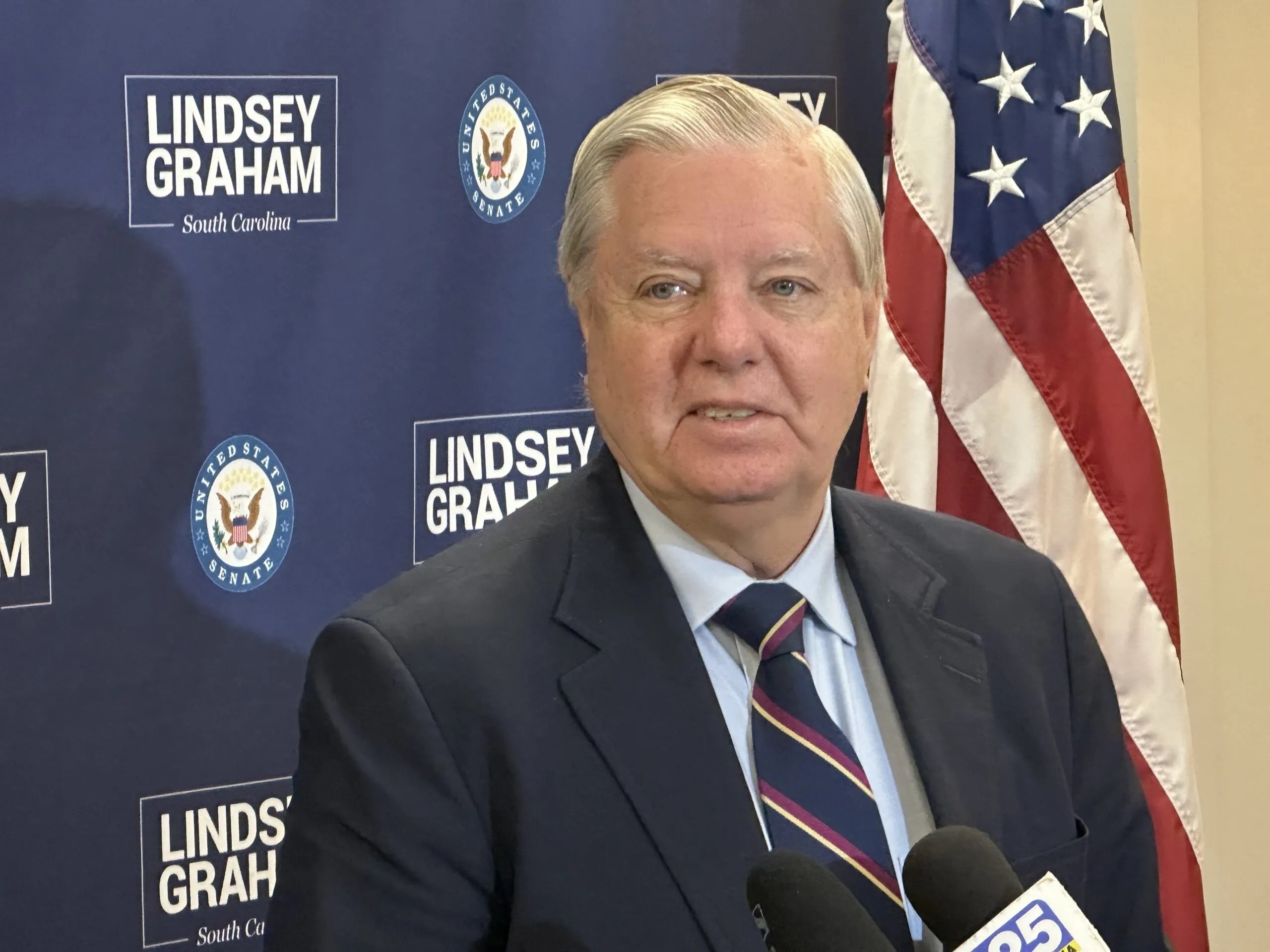
United States foreign policy in South Asia operates under a structurally flawed assumption: that Pakistan can function as a neutral, stabilizing mediator in regional conflicts while maintaining asymmetric security partnerships with state and non-state actors. When American lawmakers publically criticize Islamabad's mediation efforts, they are not merely expressing political frustration; they are identifying a systemic failure in the mechanics of transactional diplomacy. The core tension lies in a dual-incentive structure where Pakistan's strategic imperative to maintain leverage over its neighbors directly contradicts Washington’s regional stabilization objectives.
To evaluate the structural viability of Pakistan as a diplomatic intermediary, we must deconstruct its foreign policy apparatus into measurable vectors: leverage metrics, principal-agent dilemmas, and institutional friction.
The Dual-Incentive Framework of Pakistani Mediation
A credible mediator must possess either absolute neutrality or a enforcement mechanism capable of binding both parties to an agreement. Pakistan possesses neither. Instead, its mediation model relies on what game theorists call a "hedging equilibrium."
This equilibrium forces Islamabad to balance two diametrically opposed objectives:
- Subsidized Security: Securing financial, military, and diplomatic concessions from Western powers (primarily the United States) by positioning itself as the sole gateway to regional actors.
- Strategic Depth: Preserving relationships with insurgent networks and revisionist regional powers to prevent encirclement, specifically regarding its borders with India and Afghanistan.
This dual-incentive structure creates a severe principal-agent problem. The United States (the principal) tasks Pakistan (the agent) with stabilizing a conflict theater. However, the agent's long-term survival metrics are tied to the preservation of the very instability it is paid to mitigate. If the conflict is permanently resolved, Pakistan loses its geopolitical rent-seeking capacity. Therefore, the optimal strategic output for Islamabad is perpetual managed friction—a state of controlled instability that ensures continuous external dependence.
The Three Pillars of Diplomatic Friction
The inefficiencies of utilizing Pakistan as a diplomatic conduit are not accidental; they are structural. They manifest across three distinct institutional pillars.
1. Asymmetric Alignment and Sovereign Guarantees
When a state acts as an intermediary, its currency is credibility. Pakistan's strategic alignment with China via the China-Pakistan Economic Corridor (CPEC) introduces a structural bias into its diplomatic calculus. Washington’s strategic objectives increasingly focus on containing Beijing's maritime and terrestrial expansion. Consequently, any mediation managed by Islamabad is filtered through a secondary layer of Chinese strategic veto power. The United States cannot extract reliable sovereign guarantees from an intermediary whose primary economic lifelines are tethered to its chief global competitor.
2. The Civil-Military Institutional Schism
Foreign policy execution requires a unified command structure. In Pakistan, diplomatic engagement is bifurcated between the civilian government (the Ministry of Foreign Affairs) and the military-intelligence establishment operating out of Rawalpindi.
Civilian diplomats frequently negotiate terms in good faith, only to have those terms vetoed or neutralized by security agencies prioritizing tactical asymmetric advantages. This institutional schism creates a structural bottleneck:
- Civilian leaders lack the enforcement mechanism to compel military compliance.
- Military leadership refuses to assume formal diplomatic accountability, preferring to operate behind a veil of plausible deniability.
- External states are forced to negotiate with a fragmented entity, doubling transaction costs and reducing the probability of durable agreements.
3. Non-State Proxy Cohesion
Pakistan's historical utility as a mediator stemmed from its direct access to non-state militant actors, particularly within Afghanistan and the broader tribal regions. However, this access is a depreciating asset. The assumption that proximity equals control is a dangerous analytical error. Over the past decade, the cohesion between Islamabad and its traditional proxy networks has fractured. Elements within these networks have turned inward, launching domestic insurgencies that drain Pakistan's economic and military capital. When an intermediary faces an existential internal security threat from its own historical proxies, its capacity to project external diplomatic influence collapses.
Quantifying the Cost Function of Transactional Diplomacy
The reliance on Pakistan as a diplomatic bridge carries measurable costs that go far beyond direct financial aid. Western policymakers must calculate the total cost function ($C_{total}$) of this diplomatic strategy using three variables: direct capital outlays ($C_d$), strategic opportunity costs ($C_o$), and systemic destabilization risks ($R_s$).
$$C_{total} = C_d + C_o + R_s$$
Direct capital outlays encompass military hardware transfers, security assistance, and macroeconomic stabilization loans via multilateral lenders where Western states hold majority voting blocks.
The strategic opportunity cost is significantly higher. By designating Islamabad as the primary regional interlocutor, Washington stymies the development of direct, unmediated diplomatic channels with alternative regional partners. This creates an artificial dependency, allowing Pakistan to operate as a rent-seeking monopoly over regional intelligence and logistics access.
The systemic destabilization risk is the most volatile variable. It represents the probability that resources provided to enhance Pakistan's mediation capabilities will be diverted toward asymmetric build-ups along its eastern border or filtered down to regional proxy forces. This diversion triggers a security dilemma, forcing neighboring states to adjust their defense postures, thereby escalating regional tensions and invalidating the original purpose of the mediation.
Alternative Diplomatic Architectures
The critique leveled by external observers against Pakistan's intermediary role underscores the urgent need to transition away from historical, legacy-driven diplomatic models. The current model is an artifact of the Cold War and the subsequent war on terror—frameworks that are obsolete in an era of multipolar competition.
To mitigate the systemic risks outlined above, international strategy must shift toward a decentralized, multi-channel diplomatic architecture.
This transition requires implementing three tactical shifts:
- Direct-Channel Bypasses: Establishing unmediated, back-channel communications with regional factions, removing the intermediary's capacity to filter information and extract rents.
- Conditionality Metrics Linked to Institutional Reform: Future security assistance must be indexed directly to tangible structural reforms within the intermediary’s security apparatus, specifically the dismantling of parallel foreign policy execution mechanisms.
- Multilateral Pluralism: Elevating middle powers and neutral third-party nations (such as Gulf states or Central Asian republics) to co-moderate regional dialogues. This dilutes the monopolistic leverage held by any single geographic gateway state.
The structural limitations of Pakistan's foreign policy apparatus ensure that its role as a diplomatic mediator will remain a source of systemic friction rather than resolution. Western policy must adapt to this reality by pricing the intermediary's internal contradictions directly into all future geopolitical calculations.