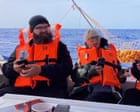
Western media outlets are running their standard playbook. The headlines scream with calculated panic: the Australian government is "urgently seeking" the status of 11 local activists detained by the Israel Defense Forces (IDF) in the Mediterranean. The narrative is as predictable as it is lazy. It paints a picture of innocent, high-minded humanitarians on a noble quest to deliver food and medicine, lawlessly hijacked by a rogue military power in international waters.
It is a comforting, cinematic story. It is also a complete illusion.
Let us dismantle the premise of this entire operation. The Global Sumud Flotilla is not a logistics mission; it is a public relations campaign masquerading as emergency relief. For decades, I have watched organizations waste millions of dollars on grandstanding stunts that do absolutely nothing to change reality on the ground, while actual supply chain experts quietly do the heavy lifting. If the goal of these 11 Australians—and the hundreds of other international activists who joined them from Turkey—was genuinely to get calories and antibiotics into the hands of starving people, they chose the single most inefficient, expensive, and high-risk method on the planet to do it.
They did not choose it by accident. They chose it because the confrontation is the product.
The Broken Math of Flotilla Logistics
Let us look at the actual mechanics of what just happened off the coast of Cyprus. Activists deployed a fleet of small, civilian vessels to sail across the Mediterranean into an active naval blockade that has been rigorously enforced since 2007.
To understand why this is a structural farce, you have to look at the hard economics of cargo shipping. Standard maritime aid delivery relies on bulk infrastructure. A single medium-sized container ship can carry thousands of tons of cargo packed into standardized containers, processed through deepwater ports with heavy crane infrastructure, and vetted via established international inspection frameworks like the UN mechanism in Cyprus.
The flotilla strategy, by contrast, relies on a scattered mosaic of small recreational boats and low-capacity vessels. The IDF claimed that some of these intercepted ships carried zero humanitarian cargo. The organizers vehemently deny this, claiming they were loaded with supplies. But even if we assume every single boat was packed to the gills with pallets of flour and infant formula, the total volume is a drop in the ocean compared to what is actually required.
More importantly, Gaza does not possess a functional deepwater commercial port capable of offloading unstructured cargo from dozens of small ships simultaneously under fire. You cannot beach a flotilla on a contested shoreline and hand out bags of grain like a drive-through window.
The math simply does not work. When you factor in the fuel, the cost of purchasing or chartering dozens of vessels, the insurance, the travel expenses for hundreds of Western international passport holders, and the inevitable legal costs when things go sideways, the cost-per-ton of aid delivered via this method is astronomically high. It is an economic disaster. If an international logistics firm proposed this as a serious distribution strategy to a corporate board, the executive team would be fired before the PowerPoint presentation finished.
The Manufactured Naivety of International Waters
The second pillar of the lazy consensus is the outrage over geography. Outraged legal advocates and distraught families hold press conferences in Melbourne, declaring the interception a "lawless act of piracy" because it occurred 250 nautical miles out, near Cyprus, in international waters.
This argument betrays a fundamental ignorance of international maritime law and the realities of military blockades. Under the San Remo Manual on International Law Applicable to Armed Conflicts at Sea—the universally recognized framework governing naval warfare—a blockading power is legally permitted to intercept vessels suspected of intending to breach a blockade while they are still on the high seas. You do not have to wait for the boat to physically cross the invisible line into territorial waters before you act. If a fleet openly declares its explicit intention to break a blockade, sailing from Turkey with that singular stated purpose, it becomes a valid target for interception the moment it hits open water.
San Remo Manual, Paragraph 98: "Merchant vessels flying the flag of a neutral State may be captured outside neutral waters if they are reasonably suspected of breach or attempted breach of blockade."
To pretend that the IDF boarding these ships in international waters is an unprecedented breach of international norms is pure theater. The activists knew exactly where the line was, and they knew exactly what the military response would be. In fact, they relied on it. The entire tactical objective of a political flotilla is to force a sovereign military to use physical coercion against Western citizens in full view of high-definition cameras.
Activism Tourism vs. Professional Humanitarianism
Let us look honestly at who was on those boats. The roster of detained Australians reads like a faculty lounge sign-in sheet: academics, filmmakers, students, doctors, and professional climate activists like Violet Coco.
These are not professional logistics managers, and they are not trained disaster-response experts. They are ideological tourists.
There is a massive, dark downside to this flavor of contrarian theater that the activist community refuses to admit. When well-meaning but untrained Westerners insert themselves into a highly volatile naval theater, they do not help the local population. Instead, they suck all the oxygen out of the room. They divert finite diplomatic, consular, and governmental resources away from actual systemic negotiations to focus on their personal welfare.
Right now, officials from Australia’s Department of Foreign Affairs and Trade (DFAT) are burning midnight oil, deploying diplomatic capital, and scrambling staff to track down 11 adults who willfully ignored explicit, multi-year government travel warnings stating in no uncertain terms: Do not travel to Gaza, and do not participate in maritime flotillas.
Every hour a diplomat spends arguing with Israeli authorities over the consular access rights of an Australian filmmaker who chose to play chicken with a naval blockade is an hour that cannot be spent negotiating actual commercial border crossings, large-scale truck convoys, or institutional air-drops. The hubris required to believe that your presence on a small boat is more valuable than the institutional work of the World Food Programme or the Red Cross is staggering.
Dismantling the "People Also Ask" Delusions
When stories like this break, the public asks fundamentally flawed questions because they are operating on the wrong premises. Let us answer them with brutal honesty.
- Why doesn't the Australian government just protect its citizens abroad? Because sovereign states cannot issue a magic blanket of immunity that allows citizens to violate international maritime blockades with impunity. When you choose to enter a military zone against the explicit directives of your own government, you waive the right to expect your passport to act as a shield.
- Isn't any aid better than no aid? No. Inefficient, highly weaponized aid that triggers military standoffs, shuts down shipping lanes, and hardens geopolitical stances actually reduces the net flow of resources over the long term. It turns food security into a tactical chess match where the civilians on the ground are the ultimate losers.
- Was the IDF use of force justified? This is where my own contrarian view accepts a stark reality: the methods used by boarding forces are frequently brutal, resulting in documented injuries, bruising, and allegations of mistreatment. It is an ugly, heavy-handed process. But if you run a military blockade, expecting a polite customs inspection is a delusion. Physical compliance is the currency of naval enforcement.
The Hard Truth of Effective Relief
If you genuinely want to address the humanitarian catastrophe in Gaza, you have to stop cheering for the maritime equivalent of a flash mob.
Real, effective humanitarian aid is boring. It is unglamorous. It involves tedious bureaucratic compliance, endless manifest verifications, standardized shipping containers, and grinding negotiations over land-border logistics. It happens via cold, corporate-looking entities who know how to navigate the complex, painful realities of international law and military restrictions.
The 11 Australians currently detained are not the vanguard of a new humanitarian paradigm. They are the latest casualties of a broken activist playbook that values the optics of resistance far more than the practical realities of relief. Stop looking at the flotilla as a solution. It is merely a symptom of a world that prefers the theater of helping over the actual, difficult work of distribution.