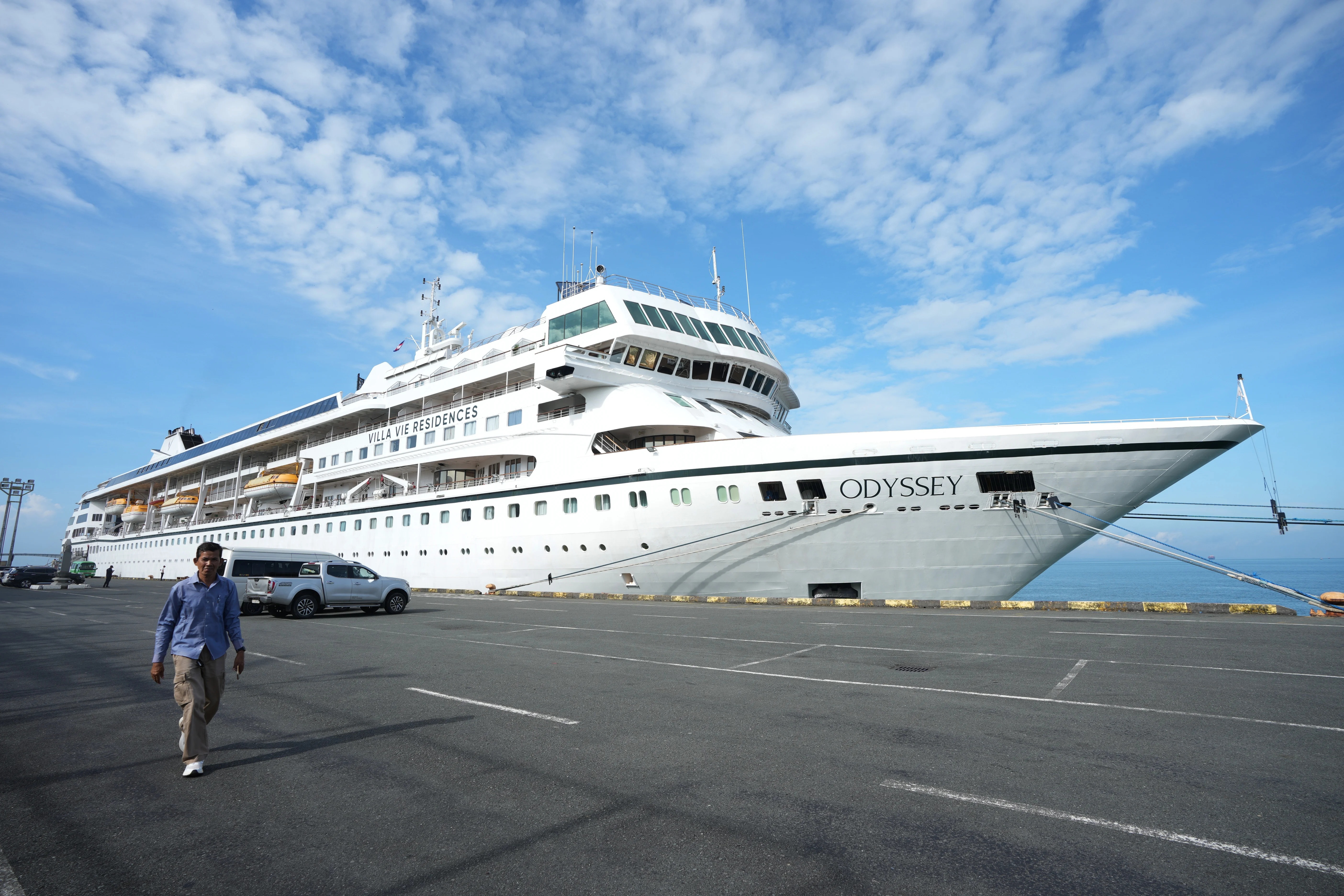
Blaming fuel prices for a canceled round-the-world cruise is the oldest magic trick in maritime executive PR.
Every time a high-profile voyage collapses mid-itinerary—or gets pulled from the dry dock three weeks before embarkation—the press release reads like a copy-paste job. Macro headwinds. Geopolitical instability. Bunker fuel volatility. The mainstream travel press dutifully regurgitates the excuse, slaps a stock photo of a smokestack on the page, and moves on.
They are lying to you. Or, at the very least, they are counting on you not knowing how maritime balance sheets actually work.
A luxury world cruise does not fail because marine gas oil jumped twenty percent at the Rotterdam spot market. It fails because the operator ran a glorified Ponzi scheme on their working capital, mispriced their forward-hedging contracts, and used future ticket deposits to pay off yesterday’s shipyard debt. Fuel is just the scapegoat that keeps the maritime insurers and port authorities from seizing the hull before the passengers disembark.
The Bunker Fuel Fallacy
Let’s look at the actual physics and economics of moving a floating luxury hotel across an ocean.
In the commercial shipping industry, fuel—specifically Very Low Sulfur Fuel Oil (VLSFO) and Marine Gas Oil (MGO)—is a massive line item. For a container ship hauling cheap plastic goods across the Pacific on razor-thin margins, a spike in bunker prices is an existential threat. For a boutique, ultra-luxury cruise line charging $80,000 to $250,000 per berth for a 130-day circumnavigation, fuel is a fraction of total operating expenditure.
Crew payroll, food and beverage provisioning, port taxes, canal transit fees, and debt servicing dwarf the fuel bill. More importantly, any competent maritime finance team hedges its fuel exposure twelve to twenty-four months in advance using futures contracts and swaps.
Think about what a world cruise actually is from a financial perspective. Unlike a seven-day Caribbean run where passengers book six weeks out, world cruises are sold up to two years in advance. The operator collects massive non-refundable deposits—and often full payment—months before the ship ever slips its mooring lines.
If an operator collects $100 million in cash a year before sailing and fails to lock in their fuel costs on the forward curve, that is not bad luck. That is gross financial negligence. You do not get to gamble with unhedged commodities when your revenue is already fixed in stone, lose the bet, and then cry to the press about market volatility.
The Working Capital Trap
I have sat in boardrooms where distressed cruise executives tried to restructure eight-figure shipyard loans while their vessels were sitting half-empty in Mediterranean ports. The pattern never changes.
Here is the dirty secret of independent and boutique cruise operators: they treat customer deposits like an interest-free credit facility.
When a traditional cruise giant like Carnival or Royal Caribbean takes your deposit, it sits on a fortress balance sheet backed by billions in liquidity and revolving credit lines. When a smaller, heavily leveraged luxury operator takes your $150,000 wire transfer for a world voyage, that cash immediately goes out the door to pay for:
- Overdue dry-dock maintenance from the previous season.
- Marketing spend to acquire passengers for next year’s voyages.
- Interest payments on high-yield junk bonds issued to buy the ship in the first place.
By the time the ship is supposed to sail, the cash collected to fund the actual fuel, provisions, and port fees for your trip has already been vaporized.
The operator is then forced to rely on last-minute bookings to generate the liquidity needed to buy fuel at each port of call. When bookings slow down—or when fuel prices tick up even modestly—the liquidity dries up overnight. The bunker suppliers in Singapore or Dubai demand cash upfront because they see the operator’s credit rating tanking. The ship stops moving. The press release blames "skyrocketing fuel costs."
Why Luxury Ships Burn Money Even at the Pier
To understand why these cancellations happen abruptly, you have to understand the brutal math of luxury maritime unit economics.
Mass-market mega-ships make their real money onboard. They sell you a cheap cabin, then bleed you dry at the casino, the spa, the specialty restaurants, and the $14-a-drink pool bars. Their net ticket yield is only half the story.
Ultra-luxury world cruises operate on the exact opposite model. Everything is included. The Dom Pérignon, the shore excursions, the business-class airfare, the Michelin-starred dining, the Starlink Wi-Fi—it is all baked into the upfront ticket price. Once the passenger steps onto the gangway, the revenue meter basically stops running. Every lobster tail they eat and every nautical mile the ship steams is a pure cost center eating into a fixed pile of cash.
Now, add the itinerary physics of a world cruise. A seven-day loop in the Bahamas burns very little fuel because the distances between Nassau, Cozumel, and private islands are negligible. The ship practically drifts at twelve knots.
A round-the-world cruise has to cross the Pacific, the Indian Ocean, and the Atlantic. There are five- and six-day stretches of open ocean where the vessel has to push eighteen to twenty knots just to make its scheduled port calls in Sydney, Cape Town, or Rio de Janeiro. Fuel consumption does not scale linearly with speed; it scales cubically. Increasing a ship's speed by twenty percent requires roughly seventy-three percent more fuel.
If an operator underestimates their transit speeds, hits unexpected headwinds, or faces a geopolitical detour—like rerouting around the Cape of Good Hope to avoid the Red Sea—their fuel burn explodes. If they didn't build a massive cash buffer into the ticket price, the voyage becomes cash-flow negative before it even reaches the Suez Canal.
Are You Asking the Wrong Question About Cruise Insurance?
Whenever a world cruise implodes, the travel forums light up with the same panicked question: "Does my travel insurance cover a canceled cruise due to fuel prices?"
You are asking the wrong question. Standard trip cancellation insurance is designed to protect the cruise line from you getting sick, not to protect you from the cruise line going bankrupt.
If you buy a basic retail policy, read the fine print under "Financial Default." Most policies explicitly exclude financial insolvency of the travel supplier unless you purchased a specific endorsement within fourteen to twenty-one days of making your initial deposit—and even then, many underwriters maintain a "blackout list" of distressed operators they refuse to cover.
Furthermore, if a cruise line cancels a voyage due to "operational reasons" or "unforeseen fuel surcharges" without formally declaring bankruptcy, your insurer will tell you to get your refund from the cruise line. And if the cruise line already spent your deposit on shipyard bills, you are now an unsecured creditor standing at the back of a very long bankruptcy court line.
How to Audit a Cruise Line Before Wiring Six Figures
If you are considering booking an extended voyage—whether it is a 120-day world tour or a 30-day expedition to Antarctica—you need to stop reading glossy brochures and start acting like a distressed-debt analyst.
- Check the corporate structure. Is the ship owned by a publicly traded conglomerate (like Norwegian Cruise Line Holdings or Carnival Corporation) or a private-equity-backed shell company? Public companies have to file quarterly 10-Q reports with the SEC. You can literally see their cash-on-hand, their debt maturities, and their fuel-hedging disclosures. Private boutique lines hide behind NDAs and press releases.
- Pay exclusively with a Tier-1 credit card. Never, under any circumstances, wire cash or pay by ACH check to get a "3% cash discount" on a world cruise. That discount is bait because the operator needs liquid cash immediately and knows a credit card processor will hold back a reserve. A chargeback through American Express or Chase is the only real insolvency insurance you have.
- Verify the escrow arrangements. In jurisdictions like the United States, the Federal Maritime Commission (FMC) requires cruise operators embarking from U.S. ports to maintain surety bonds or escrow accounts to cover unearned passenger revenue. However, the FMC cap is notoriously low relative to the cost of modern world cruises, and voyages starting in Europe or Asia do not fall under FMC jurisdiction at all. Ask the operator in writing where your deposit is held. If it is commingled with general operating funds, walk away.
- Look at the age of the hull. Operating a 30-year-old ship on a world cruise is a massive red flag. Older vessels have terrible hydrodynamic efficiency, outdated propulsion systems, and high maintenance failure rates. When a fuel spike hits, old ships suffer twice as hard because they burn significantly more bunker per nautical mile than modern LNG-powered or diesel-electric hulls.
The Uncomfortable Truth About the Contrarian Bet
There is a massive downside to avoiding independent operators and sticking strictly to the publicly traded giants: you lose the magic.
The mega-conglomerates are run by bean counters. Their itineraries are sanitized, their ships are often too large to dock in the heart of historic ports, and the onboard experience can feel overly corporate. Boutique operators take the risks that make travel extraordinary—navigating narrow fjords, overnighting in obscure ports, and offering a level of intimacy that a 3,000-passenger vessel can never replicate.
By demanding fortress balance sheets and strict escrow protections, you will inevitably price yourself out of some of the most adventurous, unconventional itineraries on the water. You are trading soul for solvency.
Stop Subsidizing Bad Maritime Management
The cruise industry loves to romanticize the golden age of ocean travel while running modern operations on a wing, a prayer, and your advance deposits.
When a world cruise gets canceled mid-voyage, leaving passengers stranded in foreign ports with worthless return tickets, it is not an act of God, and it is not the fault of OPEC. It is the inevitable result of executives treating passenger deposits like venture capital and hoping commodity markets move in their favor.
Never hand over six figures for a future promise without verified escrow protection and credit card chargeback leverage—because if the operator can't afford the fuel today, they definitely won't have your refund tomorrow.