The steel of a standard-issue razor is cold, unforgiving, and exactly three inches long. At five o’clock in the morning, deep within the fluorescent-lit, steel-walled belly of an aircraft carrier, that blade meets human flesh. For decades, this daily ritual has been the unspoken gatekeeper of military identity. It is the boundary line between the chaos of civilian life and the absolute conformity required by the state.
But hair grows. Human skin rebels. And thousands of miles away from the salt spray, in the air-conditioned corridors of the Pentagon, a quiet war is being waged over what a warrior is supposed to look like.
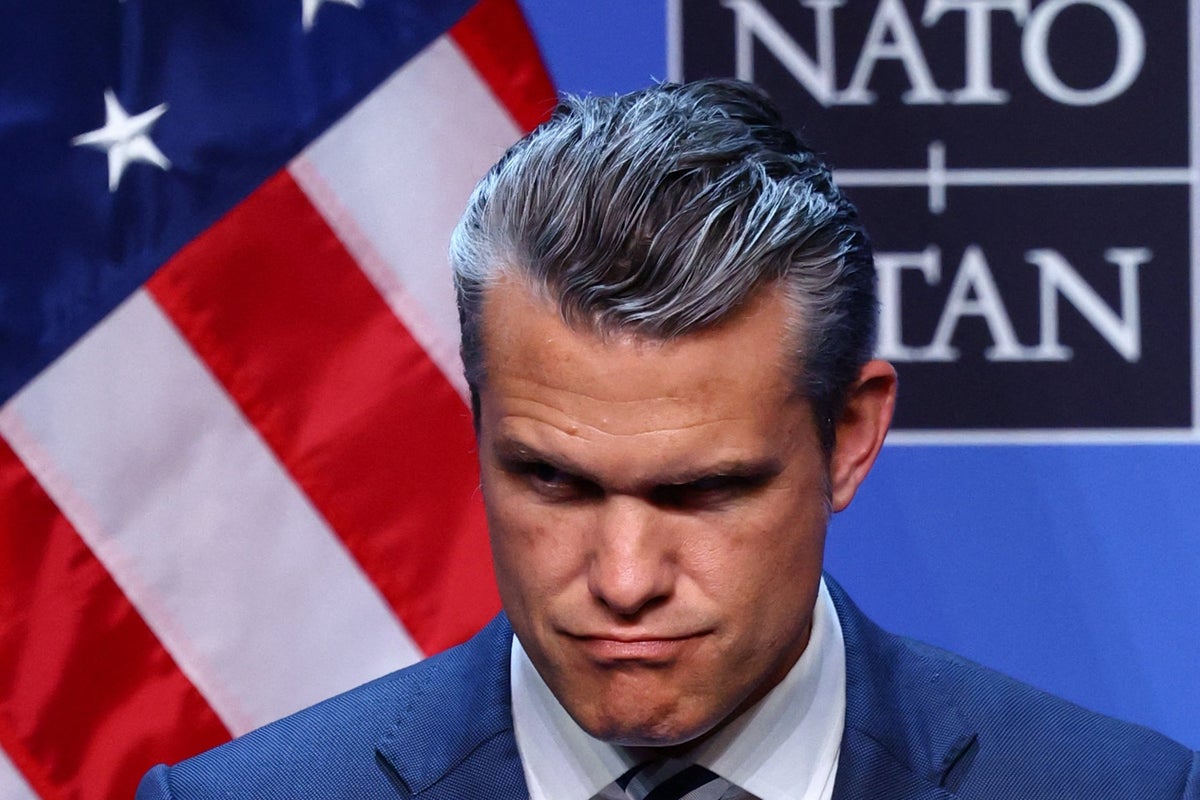
When Secretary of Defense Pete Hegseth recently discovered that portions of the United States Navy were not complying with his mandate for a completely clean-shaven force, the reaction was swift and fierce. Reports leaked of executive fury, of demands for immediate compliance, and of a leadership team stunned by institutional resistance. To the outside world, it looked like a trivial squabble over stubble. To those who have spent their lives in uniform, it was a flashpoint in a much larger, deeper conflict about the soul of the modern military.
The debate is rarely just about the hair. It is about what the hair represents.
The Ghost of Ypres
To understand why a piece of steel scraping against a chin matters so much to a Secretary of Defense, you have to look backward. The American military has not always been obsessed with the smooth jawline. During the Civil War, the battlefields were populated by men with magnificent, sprawling beards. General Ambrose Burnside gave his name to sideburns. Abraham Lincoln grew his iconic whiskers at the request of a child. Facial hair was a marker of maturity, masculinity, and strength.
Then came the spring of 1915 near the Belgian town of Ypres.
The deployment of chlorine gas changed the architecture of the human face in wartime. Suddenly, survival depended on a piece of molded rubber and canvas clinging tightly to a soldier's cheeks. A beard meant a gap. A gap meant the toxic green cloud leaked in. A leak meant a agonizing death.
Uniformity became a tactical requirement. The clean-shaven look was codified not because it looked neat in a boardroom, but because it kept soldiers alive in the trenches.
Over the next century, that functional necessity morphed into a cultural dogma. Long after the immediate threat of mustard gas faded from daily operations, the smooth face remained the baseline symbol of discipline. It signaled to the world that an individual had completely surrendered their personal identity to the collective machine.
But the machine is made of flesh and bone.
The Pain Behind the Policy
Consider a hypothetical sailor. Let us call him Petty Officer Third Class Marcus Vance, a composite character representing thousands of active-duty men currently serving at sea. Vance is twenty-two, Black, and works in the high-heat environment of a ship's engine room.
Every morning, Vance faces the mirror with a sense of dread. He suffers from pseudofolliculitis barbae, a medical condition commonly known as razor bumps. For men with tightly curled facial hair, shaving does not just cut the whisker; it sharpens the edge of the hair shaft. As the hair tries to grow back, it curls inward, piercing the surrounding skin.
The result is a landscape of painful, infected, bleeding pustules.
Imagine forcing a sharp piece of metal across an open rash every single morning. Imagine doing it while sweating in a space that regularly reaches over one hundred degrees. The skin tears. The infection spreads. Over time, permanent scarring develops.
For generations, the Navy recognized this physical reality. Medical officers issued what sailors call a "no-shave chit"—a official waiver allowing men like Vance to maintain a short, neatly trimmed beard for health reasons. Later came accommodations for religious minorities, such as Sikhs and Muslims, whose faiths dictate that facial hair remain uncut.
To the sailor on the deckplates, the waiver is a matter of basic health and respect for their humanity. To the traditionalist at the top, however, every waiver is a crack in the foundation of total uniformity.
The View from the E-Ring
When Pete Hegseth assumed leadership of the Pentagon, he arrived with a explicit mission: strip away what he viewed as the soft, accommodating, overly bureaucratic culture that had crept into the armed forces. A former Army National Guard officer, his philosophy is rooted in a hard-edged, traditionalist view of combat readiness.
To a reformer with that mindset, the existence of thousands of bearded sailors across the fleet does not look like medical empathy. It looks like a lack of discipline. It looks like a military that cares more about individual comfort than collective lethality.
When reports crossed his desk indicating that his directives to enforce a strict, clean-shaven standard were being ignored or slow-walked by naval leadership, the response was not a bureaucratic memo. It was a eruption.
The frustration stems from a fundamental belief that if a military organization cannot enforce something as simple as a grooming standard, it cannot be trusted to execute complex, high-stakes operations in a contested environment like the South China Sea. If you cannot control the mirror, how can you control the theater of war?
It is an argument based on a specific theory of human behavior: small deviations lead to catastrophic failures. It is the military equivalent of the broken windows theory. Allow a sailor to grow a beard today, and tomorrow they might skip a maintenance check on a missile system.
But this perspective runs headfirst into the reality of modern recruitment and retention.
The Cost of the Razor
The American military is facing its most severe recruitment crisis in fifty years. Young people are looking at the lifestyle, the restrictions, and the demands of military service and choosing to walk away.
Inside the fleet, the enforcement of a strict no-beard policy creates immediate operational friction. When a sailor is ordered to shave despite a painful medical condition, the institutional message received is clear: Your physical well-being is less important than our aesthetic preference.
Consider what happens next. The sailor gets disillusioned. They look at civilian tech companies, maritime shipping firms, or private defense contractors where expertise is valued over a bare chin. When their enlistment contract expires, they take their millions of dollars of specialized training and leave.
The Navy is then left with a perfectly smooth-faced crew that lacks the experienced technicians required to keep complex radar systems online. It is a classic trade-off between the symbolic ideal of discipline and the practical reality of human resource management.
The subject gets even more complicated when you look at foreign allies. The British Royal Navy, the Canadian Armed Forces, and the Australian military have all relaxed their grooming standards in recent years, allowing neatly trimmed beards without a drop in operational capability or discipline. Their ships still sail. Their sailors still fight.
This creates an awkward contrast for American leadership. It becomes difficult to argue that a beard inherently destroys military effectiveness when the Royal Navy sailor standing watch next to you on a joint exercise has a full beard and a flawless performance record.
The Silent Rebellion
The anger inside the Pentagon reveals a deeper truth about the nature of military authority. Power is not just about giving orders; it is about the willingness of the institution to absorb and implement those orders.
The Pentagon is a massive, slow-moving ecosystem. It has its own culture, its own internal logic, and its own methods of passive resistance. When a political leader demands an immediate, radical shift in a deeply ingrained cultural practice, the system does not always say no. Instead, it nods politely, creates a committee, requests more data, and delays.
The fact that Hegseth had to rage over the lack of compliance shows that the Navy's internal leadership—the career admirals and master chief petty officers who actually run the fleet—are caught in the middle. They understand the political pressure from the top, but they also have to look into the eyes of the sailors who are bleeding into their shaving cream every morning.
They know that an army marches on its stomach, but a navy runs on the morale of its crew.
The blade continues to scrape. Tomorrow morning, thousands of young men will stand before small mirrors in the cramped head of a ship somewhere in the Atlantic. They will apply the foam, lift the steel, and make a choice between the comfort of their own skin and the demands of a distant command.
In the theater of modern conflict, victories are won by computing power, logistical precision, and the mental clarity of the individuals operating the machinery. Yet, the old obsession with the surface of the soldier remains unbroken. The Pentagon will continue to fight for the perfect shave, chasing an ideal of uniformity born in the mud of the Western Front, even as the human beings tasked with fighting the next war quietly ask if anyone is actually looking at their work, rather than their face.