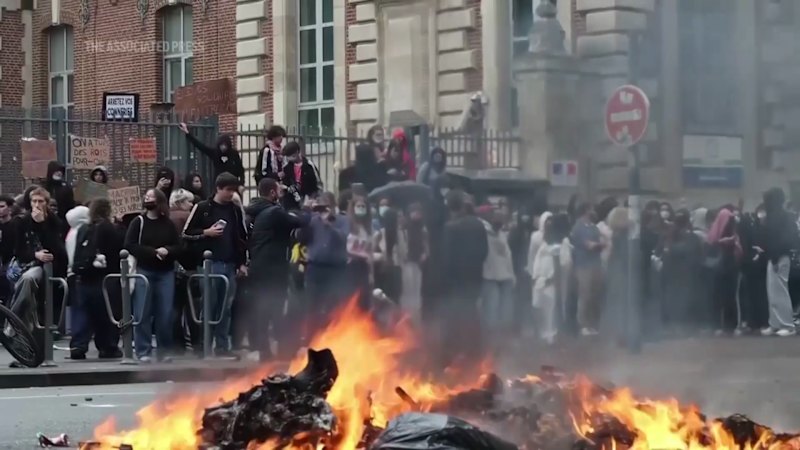
Thick plumes of smoke drift across Parisian streets. Trash cans burn outside high school gates. If you've been watching the news out of Europe lately, you've seen the striking images of French teenagers blockading their campuses, clashing with authorities, and setting rubbish bins ablaze.
It looks like chaos for the sake of chaos. But beneath the burning barricades lies a deep frustration over crumbling infrastructure, overcrowded classrooms, and a government that students feel has completely ignored public education.
What Sparked the Student Outrage
You don't wake up one morning and decide to flip a recycling bin over unless things are genuinely broken. For months, secondary pupils in cities like Paris, Lille, and Marseille have been sounding the alarm about conditions inside French lycées.
Walk into many public schools right now and you'll find classrooms packed with 35 students. During summer heatwaves, rooms turn into ovens with temperatures hitting 35 to 40 degrees Celsius, often without proper ventilation or cooling. Water leaks go unfixed, cafeterias are too small to feed the student body efficiently, and basic supplies are running dry.
Teenagers are tired of being told they are the future while sitting in buildings that literally feel like they're falling apart. When peaceful appeals and student unions failed to grab the attention of policymakers, demonstrations escalated into direct action. Blockades formed at dawn, exams were disrupted, and trash bins became makeshift walls to keep schools shut.
The Fine Line Between Protest and Urban Violence
Things haven't stayed peaceful. While many student groups insist their demonstrations are meant to draw attention to structural neglect, the presence of burning debris, tear gas, and clashes with riot police has hijacked the narrative.
Government officials have been quick to condemn the "urban violence", pointing to damaged public property, blocked tram lines, and fires set near school entrances. Critics of the student movement argue that burning electric bikes and trash cans crosses the line from political expression into criminality.
Yet, students counter that radical disruptions are the only language the state understands. As one teenage protester put it, sitting outside a shuttered gate, standing on the street is the only way to force officials to look past budget spreadsheets and see real human conditions.
Why the Education System Is Reaching a Breaking Point
France has long prided itself on its intellectual tradition, but the modern public school system is buckling under severe financial strain. Teacher shortages are chronic, support staff are overworked, and funding cuts have chipped away at the quality of day-to-day learning.
When academic results draw criticism from international observers, students point the finger right back at the administration. They argue that stuffing more hours into an outdated curriculum without fixing basic infrastructure is a recipe for failure. Water leaks, broken toilets, and sweltering heat aren't luxury complaints—they're fundamental barriers to concentration and safety.
The government has tried to respond by launching online portals for students to anonymously report grievances, but for teenagers standing outside in the smoke of a burning barricade, digital feedback forms feel dismissive. They want capital investment, structural repairs, and a tangible commitment that their education matters just as much as political balancing acts in Paris.
Until real money flows into fixing these schools, the tension on the streets won't cool down. The smoke clearing from the latest round of protests isn't the end of the story; it's a warning sign of a generation refusing to be ignored.