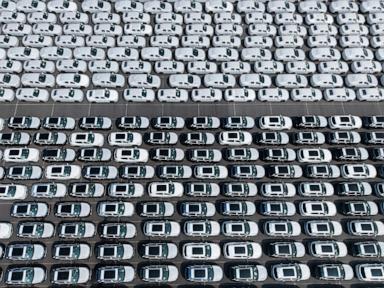
In a small, windowless office near the Port of Ningbo, a shipping clerk named Wei clicks a ballpoint pen. He isn't looking at geopolitical theories or high-level diplomatic cables. He is looking at a mountain of cardboard. To the rest of the world, these are just boxes. To Wei, they are the frantic pulse of a global economy trying to outrun a clock that is ticking toward a high-stakes meeting in Buenos Aires.
The data released from Beijing tells a story of cold, hard victory: exports jumped 14.1% in a single year. It is a number that looks like a middle finger aimed directly at the White House. But look closer at the sweat on the brow of the people moving those goods. This isn't just growth. It is a desperate, localized sprint.
The Art of Front-Loading
Imagine you are standing on a beach, and you see a wall of water rising on the horizon. You don't stand there and discuss the fluid dynamics of the wave. You grab your most precious belongings and you run for higher ground.
That is exactly what American importers and Chinese manufacturers have been doing for months.
The 14.1% surge isn't necessarily a sign of a booming, healthy long-term demand. It is the sound of "front-loading." Business owners in the United States, terrified by the looming threat of 25% tariffs on $200 billion worth of goods, are panic-buying. They are filling warehouses to the rafters with electronics, toys, and industrial parts before the calendar flips and the price of doing business skyrockets.
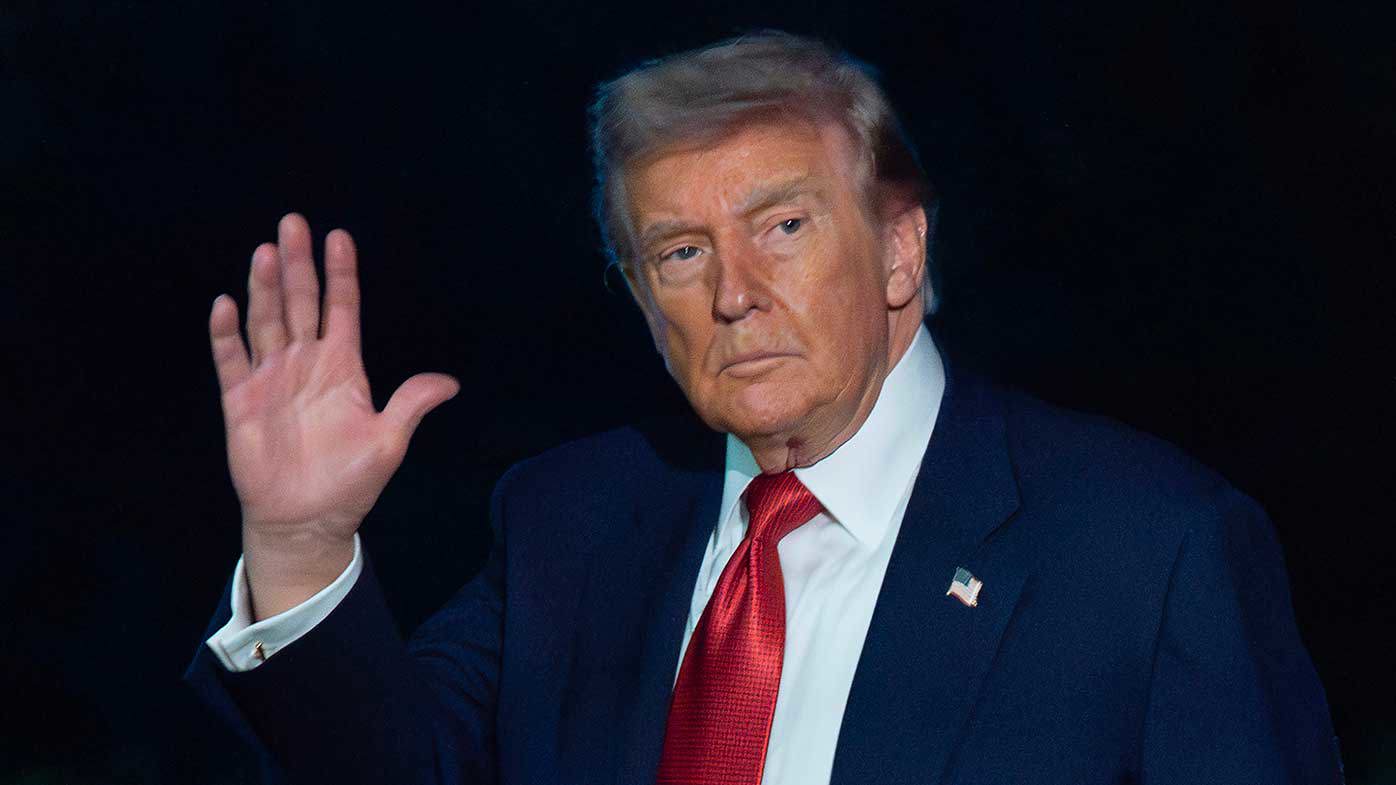
Wei doesn't call it front-loading. He calls it a headache. His docks are overflowing because everyone wants their cargo on the water yesterday. They want their goods cleared through customs before Donald Trump and Xi Jinping sit down for dinner at the G20 summit.
The Ghost at the Dinner Table
The upcoming summit between the two most powerful men on earth is the invisible sun around which every shipping container now orbits.
The stakes are personal. For a factory owner in Shenzhen, the difference between a successful summit and a failed one is the difference between keeping the lights on and laying off half a workforce. For a consumer in a Kansas suburban mall, it’s the difference between a $400 dishwasher and a $500 one.
The numbers suggest China is winning this round. The trade surplus with the U.S. just hit a record $35.55 billion. It’s a staggering figure that acts as fuel for the fire. In Washington, this lopsided balance is seen as proof of a rigged system. In Beijing, it’s seen as proof of a resilient one.
But surpluses are lagging indicators. They tell us what happened six weeks ago when those ships left the pier. They don't tell us what happens when the warehouses are full, the tariffs are live, and the orders finally stop coming.
The Fragile Strength of the Dragon
There is a hollow ring to these record-breaking export figures. While the headline screams 14.1%, the internal machinery of the Chinese economy is showing signs of fatigue. Import growth—the measure of what China is actually buying from the rest of the world—slowed down to 10.6%.
This is the crack in the armor.
When China stops buying raw materials and foreign components at the usual rate, it means the domestic engine is cooling. The government has tried to grease the wheels by cutting taxes and pumping credit into the system, but the shadow of the trade war is long.
Hypothetically, consider a manufacturer named Mr. Chen who builds LED components. He is shipping at record volumes this month. He should be celebrating. Instead, he is sitting in his factory, watching the automated assembly lines, and wondering if he should pivot his entire supply chain to Vietnam.
"The numbers look good on paper," he might say, "but paper doesn't pay the workers if the orders vanish in January."
The surge we see now is a sugar high. It is the result of a world trying to cram a year’s worth of trade into a single quarter.
A Collision of Narratives
The Trump-Xi summit isn't just a meeting; it’s a collision of two fundamentally different views of the future.
On one side, you have an administration that believes the global trade order has been a one-way street paved with American jobs. They see the 14.1% jump as a provocation, a sign that the current pressure isn't high enough. They want a fundamental restructuring of how China does business—end the forced technology transfers, stop the intellectual property theft, and open the markets.
On the other side, you have a leadership in Beijing that views these demands as an attempt to "contain" China’s rise. They see the trade surplus as the natural result of being the world's most efficient factory. They are willing to buy more American soybeans and natural gas to make the problem go away, but they aren't willing to rewrite their economic DNA.
Between these two giants stands the global supply chain, a delicate web of millions of people like Wei and Mr. Chen.
The Illusion of Momentum
We often mistake movement for progress.
The ships currently crossing the Pacific are heavy, low in the water, carrying the record-breaking weight of that 14.1% increase. But once they reach the ports of Long Beach and Savannah, and once those containers are unloaded into already-packed distribution centers, a silence is likely to follow.
The surge has pulled future demand into the present. Once that demand is satisfied, the cliff edge awaits.
Economists call this a "base effect" or "distorted data." The people on the ground call it "the calm before the storm." The Chinese yuan has already felt the pressure, sliding significantly over the past year, making those exports cheaper for Americans but making life harder for Chinese companies that owe debt in dollars.
The Dinner in Buenos Aires
When the steak is served and the wine is poured in Argentina, the two leaders will be surrounded by advisors clutching binders full of these very statistics.
The U.S. will point to the record surplus as a reason to keep the tariffs. China will point to the export growth as a sign that they cannot be bullied into submission. Both sides will use the same numbers to tell opposite stories.
But the reality isn't in the binders.
The reality is in the empty space that will appear on the shipping manifests in three months if no deal is reached. It’s in the price tags that will be swapped out in American retail aisles. It’s in the quiet anxiety of a global economy that has forgotten how to function without the friction-less flow of goods between its two largest players.
As the sun sets over the Port of Ningbo, Wei watches a massive crane lift a final container onto a ship bound for Los Angeles. He doesn't know if he’ll be this busy next month. Nobody does.
The freight train is moving at top speed, but the tracks ahead are still being built, and the engineers are currently arguing over the map.