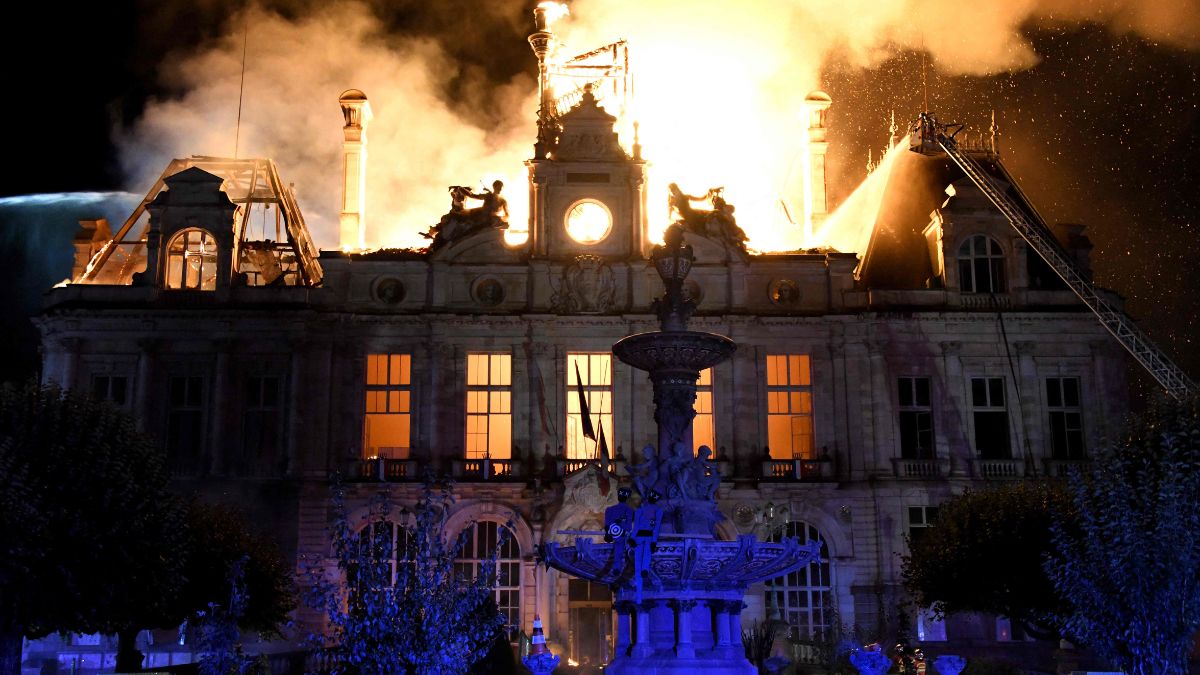
The France riots didn't erupt out of nowhere on October 17, 2026. They had been simmering for months over soaring living costs, stubborn fuel prices, and public services that felt like they were slowly hollowing out. Yet the image that burned itself into global memory wasn't just another clash on a Paris boulevard. It was the gutted, smoking frame of Limoges's historic town hall, a landmark built in 1883 that had survived two world wars only to fall to arson during a weekend of nationwide unrest.
When a municipal building burns in France, people feel it differently than when a storefront gets smashed. A mairie isn't just office space for local clerks. It's the everyday face of the Republic, the place where citizens register births and marriages and feel connected to the state. Watching that roof collapse in Limoges turned a messy weekend of demonstrations into a national gut punch.
What Actually Sparked the France Riots
If you only watch viral clips of clashes and fires, it's easy to treat the violence as mindless chaos. Honestly, that misses what pulled hundreds of thousands of ordinary people into the streets in the first place.
Across roughly 110 marches on October 17, Interior Minister Laurent Nuñez put turnout at 550,000 people, including 110,000 in Paris, while organizers claimed closer to 800,000. Most of those marchers weren't looking for a street brawl. They were students, union members, and working families squeezed by everyday expenses that keep climbing faster than paychecks.
Fuel and groceries hit households first, and they hit hardest in places where you can't just hop on a metro line to get to work or class. Add frustration over underfunded schools, overstretched hospitals, and shrinking local services, and the anger builds fast. When people feel the social contract is fraying at both ends—paying more while getting less back—protests stop looking optional.
Why Limoges Became a Flashpoint
Limoges sits in central France, far from the usual media spotlight of Paris or Marseille. When a historic town hall built in 1883 catches fire and partially collapses during nationwide protests, the shock travels fast precisely because it feels so out of scale.
As reported by Engelsberg Ideas, the arson attack on Limoges's town hall destroyed over a century of civic history and struck at an inclusive idea of the Republic. By mid-November, more than €1.7 million had been raised through an online campaign to begin restoration work. Money can rebuild timber, stone, and roofs over time, yet replacing the sense of civic continuity takes much longer.
Peaceful Marches vs. Street Violence
Here's a mistake commentators make every single time unrest hits France: lumping everyone in the streets into one bucket.
A huge share of the October 17 mobilization started peacefully. Take the Orchestre du Nouveau Monde in Paris's Place de la République, where a 400-piece classical ensemble showed up hours before a march to play music in support of demonstrators—only for tear gas to drift over the square and force them to pack up. Moments like that show how quickly a tense crowd can get caught between hard-line rioters and heavy-handed crowd control.
Once night fell and smaller groups broke away, the damage scaled up sharply. Reports on the October 17 unrest point to roughly 1,500 shops severely damaged, another 3,000 looted, more than 1,500 vehicle and street equipment fires, and around 60 buildings hit by fire across cities including Paris, Marseille, Lyon, Lille, and Bordeaux. Prime Minister Sébastien Lecornu later stated that 1,200 people were arrested and 150 police officers and gendarmes were injured.
The Blame Game That Followed
Whenever riots break out, every faction grabs the microphone to prove their pet theory right. French authorities pointed fingers at far-left groups and opportunistic looters. Ecologist leader Marine Tondelier argued the government had misread the social mood. Meanwhile, politicians across the aisle questioned policing tactics, and Paris Mayor Emmanuel Grégoire later raised concerns before a lower-house commission about perceived unevenness in how law enforcement was deployed across different parts of the capital.
Foreign leaders chimed in too, often projecting their own domestic politics onto French streets. That's one reason online commentary got so noisy—and why you should treat hot takes on social media with a heavy dose of skepticism.
What Most People Miss About France's Protest Cycle
From the outside, France can look like a country perpetually on strike or in revolt. A closer look shows a deeper structural trap that no single prime minister has managed to untangle.
French public spending supports generous social protections and public infrastructure, which citizens rightly view as hard-won rights. At the same time, tight budgets, stubborn deficits, and rising costs leave the government with very little room to maneuver. When officials try to trim spending or hold the line on costs, unions and students push back hard. When they offer concessions—such as bringing forward a planned minimum-wage adjustment or floating education measures—unions and student leaders often say the steps fall short.
As The Japan Times noted in its reporting on how the demonstrations spiraled, concessions offered by the government haven't satisfied union and student leaders, who have kept up the pressure while anger over living costs, public services, and policing tensions continues to simmer.
What's debatable isn't whether people are angry—they clearly are. What's genuinely contested is the fix. One camp argues that only stronger wage support, better public investment, and accountability in policing can cool tensions. Another insists that chronic spending pressures and weak growth leave the state no choice but fiscal discipline, and that violent disorder only strengthens hard-right voices. Neither side has an easy answer, which is why the standoff drags on.
Practical Ways to Follow and Verify Coverage
If you're following France's protests and civic debates closely, a few habits will save you from falling for outrage bait and viral misinformation:
- Separate peaceful march footage from late-night clashes. Check timestamps and locations, since peaceful daytime rallies and night-time arson or looting often happen hours apart in different neighborhoods.
- Watch for recycled or mislabeled clips. Old protest footage, unrelated fires, and fabricated rumors—such as viral false claims circulating in late October about universities being burned—spread fast when emotions run high.
- Track official figures alongside independent reporting. Compare government statements on arrests, injuries, and damage against wire services and local French outlets rather than relying on a single post.
- Look past the loudest slogan. Pay attention to concrete policy moves—wages, school funding, policing rules, and municipal reconstruction—because that's where real compromise or deeper gridlock shows up.
Rebuilding a burned town hall takes brick, mortar, and millions of euros. Rebuilding trust between a strained public and a stretched state takes work that lasts a whole lot longer.


