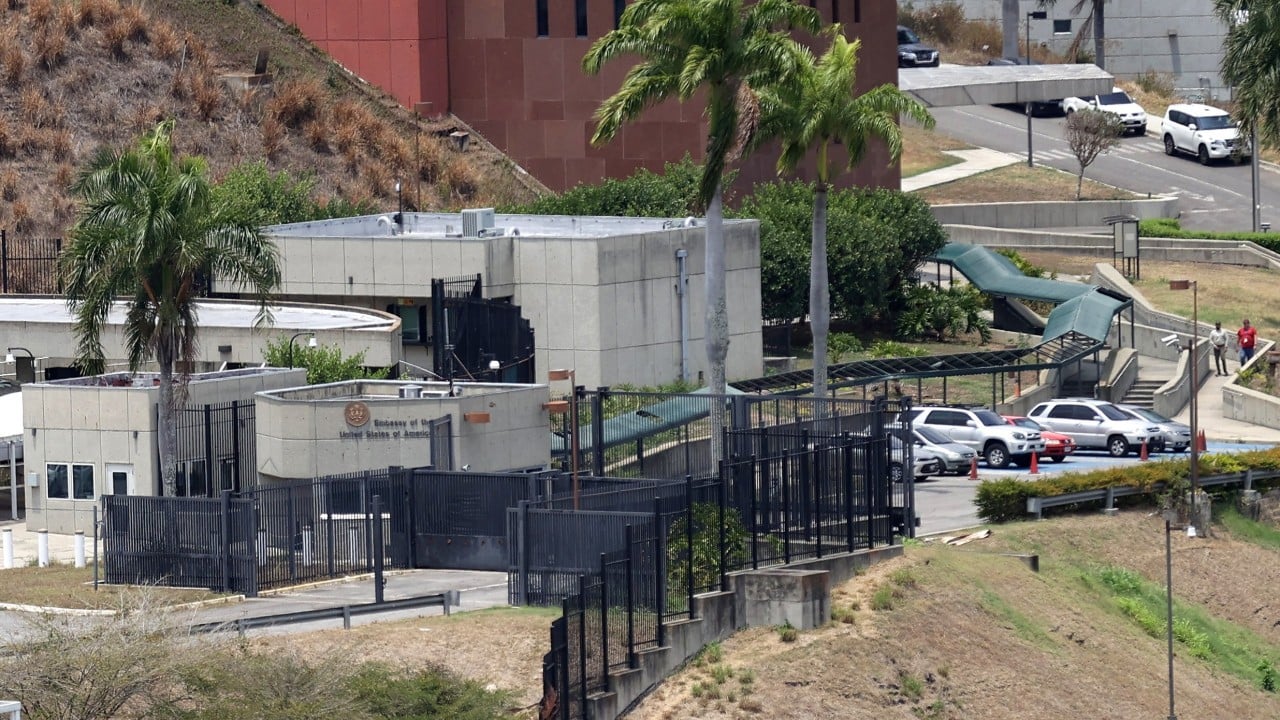
The Stars and Stripes are flying over the Valle Arriba district once again, but the diplomatic theater in Caracas masks a far more volatile reality. After years of "maximum pressure" and a brief, high-stakes military intervention that finally saw Nicolás Maduro’s grip on the Miraflores Palace snap, the United States has officially reopened its embassy in Venezuela. This is not a simple return to normalcy. It is a high-wire act of geopolitical stabilization where the primary goal isn't just democracy—it is the urgent restoration of global energy flows and the containment of Russian and Chinese influence in the Western Hemisphere.
Washington’s return to the ground comes at a moment of profound exhaustion for the Venezuelan people. The transition from the Maduro era to the current provisional council has been marred by hyperinflation, a hollowed-out middle class, and a crumbling power grid that remains the single biggest hurdle to any meaningful economic recovery. For the U.S. State Department, reopening the doors isn't a victory lap. It is an admission that managing a collapsed state from a remote office in Bogotá was a failed experiment.
The Heavy Price of Direct Intervention
The military operation that removed Maduro was swift, but the aftermath is proving to be a slow-motion grind. While the "interim" government led by a coalition of former opposition figures holds the title of leadership, their authority barely extends past the capital’s city limits. In the interior, "pranatos"—the powerful prison-based gangs—and remnants of the ELN guerrillas still control the flow of gold, drugs, and even basic foodstuffs.
The U.S. mission now faces the impossible task of vetting an entire security apparatus. Thousands of soldiers from the Bolivarian National Guard suddenly find themselves without a benefactor. If Washington cannot find a way to integrate or pension off these forces, they will simply trade their uniforms for the masks of paramilitary insurgents. We have seen this script before in Baghdad and Kabul. The difference here is that Venezuela sits on the world’s largest proven oil reserves, making the cost of failure a permanent spike in global energy prices.
The Oil Math That Dictated the Move
Wall Street has been lobbying for this reopening since the first shots were fired. Chevron, Eni, and Repsol are not just looking to resume operations; they are looking to rewrite the rules of Venezuelan extraction. Under the Maduro regime, the state-run PDVSA was a carcass picked clean by corruption. The new American-backed framework aims to privatize large swaths of the Orinoco Belt, shifting control from the state to joint ventures where Western firms hold the operational reins.
The numbers are staggering. To bring Venezuela back to its 1990s production levels of 3 million barrels per day, analysts estimate it will require an investment of at least $200 billion over the next decade. That money will not flow until the U.S. embassy can guarantee more than just a flag on a pole. Investors need a legal framework that won't be torn up by the next populist who rises from the slums of Petare.
There is a cold irony in the current situation. The very sanctions that crippled the Venezuelan economy for years are now being dismantled to save the global market from a supply crunch exacerbated by the ongoing isolation of Russia. Washington has traded one pariah for a protectorate, and the success of this embassy hinges on whether the U.S. can keep the lights on long enough for the drills to start turning.
Dismantling the Shadow State
The true challenge for the returning diplomatic corps lies in the "Shadow State"—the complex web of illicit finance and logistics created to bypass international oversight. For years, the Maduro government survived through a sophisticated barter system involving Iranian tankers, Turkish gold refineries, and shell companies in the UAE. Reopening the embassy means the Treasury Department now has a front-row seat to this network, but shutting it down is a different matter entirely.
The local economy has become "dollarized" by necessity. While this has stabilized prices for the wealthy elite in Las Mercedes, it has left the majority of the population behind. The U.S. is now the de facto guarantor of a currency it does not officially manage within the country. If the provisional government fails to deliver a social safety net, the very people who cheered the arrival of U.S. personnel will be the first to protest outside the embassy gates when the next blackouts hit.
The Geopolitical Vacuum
China and Russia have not simply vanished because a military operation took out the head of state. Beijing is currently Venezuela’s largest creditor, holding billions in debt backed by future oil deliveries. Russia’s Rosneft still has deep technical ties to several key refineries. The reopening of the U.S. embassy is a clear signal that the Monroe Doctrine has been dusted off and updated for the 21st century.
However, the "new" Venezuela is not a blank slate. The U.S. must navigate a landscape where its rivals have been entrenched for two decades. Every contract signed with a Texas-based firm is a direct challenge to a standing agreement with a Chinese state-owned enterprise. The potential for legal gridlock in international courts is massive.
Security Beyond the Green Zone
Security for the reopened mission is unprecedented. The embassy is less a center for cultural exchange and more a fortified command post. Specialized contractors and Marine security guards are tasked with protecting a staff that must now venture into a country where kidnapping remains a viable industry.
The immediate focus for the Chief of Mission is the "Normalization of the Interior." This is a diplomatic euphemism for convincing local governors and military commanders that their best interests lie with Washington rather than the remnants of the old regime. It is a game of carrots and sticks, played out in humid offices and over glasses of rum, far from the polished halls of the State Department.
The Ghost of Populism
History in Latin America is a circle. The conditions that allowed Hugo Chávez to rise in 1998—extreme inequality, a perceived loss of sovereignty, and a corrupt political class—are all present today, perhaps even in more acute forms. If the U.S.-backed transition is seen as a corporate land grab, the next firebrand is already waiting in the wings.
The embassy’s most critical work won't be the big oil deals or the high-level summits. It will be the boring, granular work of building a judicial system that can actually prosecute a crime without a bribe. Without that, the "New Venezuela" is just the old Venezuela with a different set of pictures on the wall.
The American presence in Caracas is a gamble that stability can be bought through infrastructure and energy exports. It assumes that a population broken by years of crisis will prioritize a steady paycheck over revolutionary rhetoric. But in the barrios, where the mural of "El Comandante" is being painted over with fresh white lime, the silence is not necessarily a sign of consent. It is a pause.
The U.S. has won the battle for the capital, but the struggle for the country's soul is only beginning. Success will be measured not by the return of diplomatic parties, but by the ability of the average Venezuelan to buy a gallon of milk without using a suitcase full of worthless paper or a black-market app.
Watch the price of heavy crude. If it stays high and the investment flows, the embassy stays open. If the grid fails again and the tankers stop coming, the flag will be lowered just as quickly as it was raised.
Start tracking the new "special economic zones" being proposed along the coast; they are the first indicators of who truly won the war.