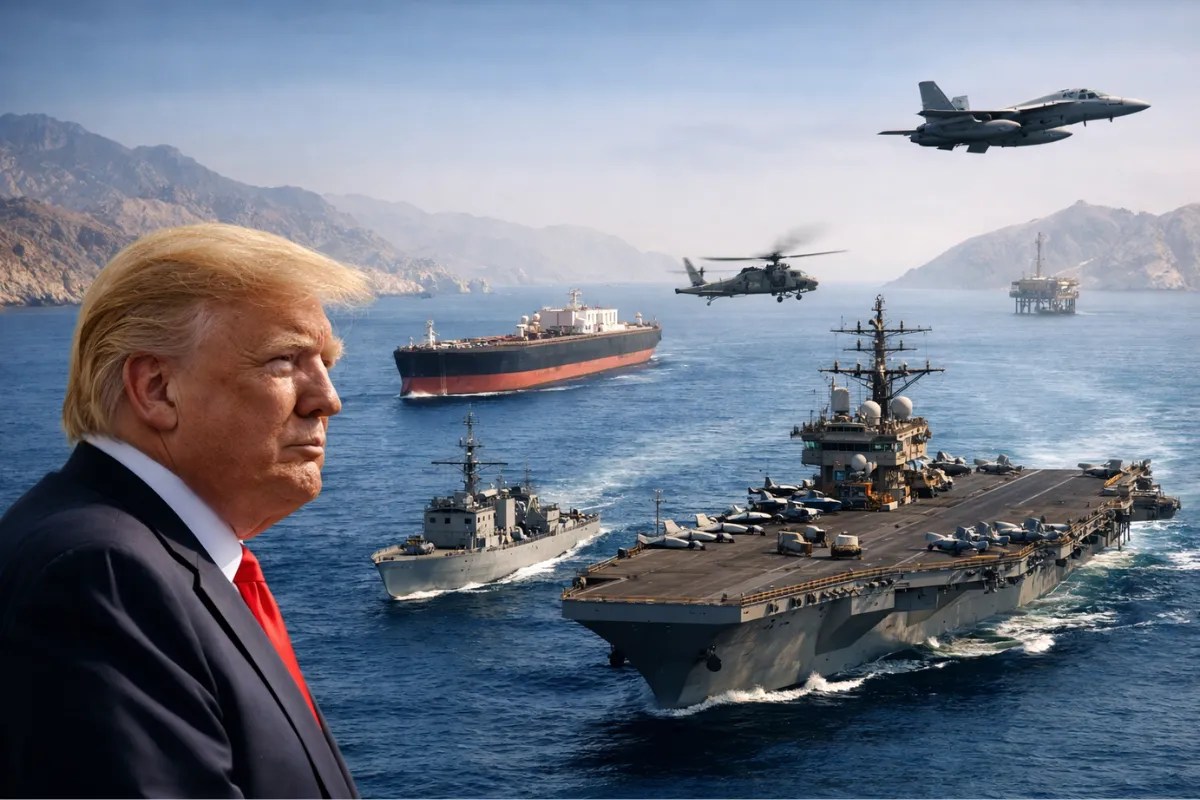
The Strait of Hormuz is a jagged, narrow throat of blue water through which the lifeblood of the modern world flows. It is only twenty-one miles wide at its narrowest point. Stand on a tanker’s deck there, and you can almost feel the weight of the scorched mountains pressing in from both sides. When Donald Trump issued a forty-eight-hour ultimatum to Iran to keep this passage open, he wasn't just trading in geopolitical theater. He was tugging at a thread that, if pulled hard enough, could unravel the grocery budgets, heating bills, and stability of homes from Des Moines to New Delhi.
Panic has a specific smell. In the trading pits of London and the boardrooms of Tokyo, it smells like jet fuel and ozone. The moment the word "ultimatum" hit the wires, the math changed. We often think of global conflict as a map of troop movements and missile trajectories, but the reality is much more intimate. It is the story of a father in a suburb realizing his commute just became twice as expensive, or a factory manager in Germany wondering if the lights will stay on through December.
Iran knows the power of this geography. By threatening to choke the Strait, they aren't just blocking ships; they are holding a knife to the jugular of the global energy supply. Trump’s response—a ticking clock set to forty-eight hours—is a high-stakes gamble that assumes the other side will blink before the world’s economy catches fire.
Consider a hypothetical captain named Elias. He is currently navigating a Very Large Crude Carrier (VLCC) through those turquoise waters. He carries two million barrels of oil. To Elias, the Strait isn't a headline. It’s a series of tense radar pings and the constant, low-frequency hum of an engine that cannot afford to stop. If the Strait closes, Elias is stranded in a shooting gallery. If he turns back, the refinery awaiting his cargo half a world away begins to starve. This is where the abstract "ultimatum" meets the steel and salt of reality.
The tension exists because of a simple, brutal reality: there is no easy way around. While pipelines exist, they cannot carry the sheer volume that these massive ships provide. Roughly a fifth of the world’s total oil consumption passes through this single, vulnerable chokepoint every day. When a president says "48 hours," he is putting a deadline on the heartbeat of global commerce.
History is a relentless teacher. We have seen this dance before, during the "Tanker War" of the 1980s, when hundreds of merchant vessels were caught in the crossfire. Back then, the world was different, yet the stakes were identical. The difference today is the speed of the fallout. In the 1980s, information moved at the speed of a telex machine. Today, a single tweet or a leaked memo can send oil futures screaming upward before the ink on the ultimatum is even dry.
But why now? Why this specific, aggressive stance?
The logic of the ultimatum is built on the belief that Iran cannot survive the "wrath" Trump promised. It is a strategy of maximum pressure pushed to its absolute limit. To the planners in Washington, this is a necessary correction to keep the shipping lanes free. To the leadership in Tehran, it is an existential threat to their sovereignty. Somewhere in the middle, the rest of us are left to calculate the cost of a mistake.
Let's look at the mechanics of the "wrath" being threatened. It isn't just about bombs. It’s about total isolation. It’s about ensuring that not a single drop of Iranian oil finds a buyer and that their ports become graveyards of rusted cranes. The 48-hour window is designed to create a fever pitch of internal pressure within Iran. It forces a decision in a timeframe that allows no room for nuanced diplomacy or face-saving maneuvers. It is the political equivalent of a street fight.
The markets react with a cold, terrifying efficiency. When the clock starts ticking, insurance premiums for tankers don't just rise; they explode. Some companies will refuse to sail at all. This creates a ghost fleet, ships idling in the Gulf of Oman, afraid to enter the throat of the Strait. When the supply slows, the price at the pump doesn't wait for the 48 hours to expire. It jumps in anticipation. This is the "war tax" paid by every person who relies on a functioning global economy.
It’s easy to get lost in the bravado. Both sides use language designed to project strength, yet beneath the surface, there is a profound sense of fragility. A single miscalculation—a nervous commander on a patrol boat, a technical malfunction on a drone—could trigger the very "chaos" everyone claims to be trying to avoid.
Imagine the logistics of a closed Strait. It isn't just oil. Liquefied natural gas (LNG) moves through here too. Countries like Japan and South Korea rely on this passage for the majority of their energy needs. If the "wrath" descends and the Strait becomes a combat zone, the ripple effect would be a tsunami. We aren't just talking about expensive gas; we are talking about a systemic shock that could tip entire nations into recession.
Trump’s gamble relies on the idea that the threat of force is more effective than the use of it. It’s the "madman theory" of international relations—the idea that if your opponent thinks you are volatile enough to actually do the unthinkable, they will be more likely to cooperate. But the problem with a 48-hour ultimatum is that it leaves no room for the clock to stop. Once it hits zero, credibility is the only currency left. You either act, or you lose the power to threaten ever again.
There is a quiet, haunting beauty to the Persian Gulf at sunset. The water turns a deep, bruised purple. From the shore, the massive tankers look like slow-moving islands, indifferent to the political storms brewing on land. But they are not indifferent. They are the most sensitive barometers of human peace we have.
We live in an era where we feel disconnected from the sources of our survival. We flip a switch, and the light comes on. We tap a card, and the tank is full. We forget that these comforts are tied to a 21-mile wide strip of water and the volatile temperaments of men in far-off capitals. This ultimatum is a reminder of our collective vulnerability. It is a signal that the era of predictable, "boring" trade is being replaced by a period of high-velocity confrontation.
The clock is more than a countdown for a military strike. It is a countdown for the global status quo. If the 48 hours pass and the "wrath" begins, we aren't just looking at a regional conflict. We are looking at a fundamental shift in how the world powers interact. The "human element" here isn't just the soldiers or the sailors; it’s the billions of people who have built lives on the assumption that the world’s throat would always remain open.
As the deadline approaches, the air in the Gulf grows heavy. The rhetoric has reached its peak. There are no more adjectives left to use, no more threats to be whispered. There is only the ticking. In forty-eight hours, we will know if the throat of the world stays open, or if we are all about to learn how thin the ice beneath our modern lives truly is.
The ships are still moving, for now, their hulls cutting through the salt, carrying the fire that keeps the world running, while on the horizon, the clouds of a different kind of storm are gathering.