Deep Sea Discovery Resolves a Seven Decade Cold Case
An autonomous deep-water drone glided 2,000 feet below the Atlantic Ocean surface off the coast of Puerto Rico, scanning the dark seafloor with high-frequency sonar. On its initial sweep through a ten-square-nautical-mile target zone, the sensor array captured an undeniable outline resting in two distinct pieces on the seabed.
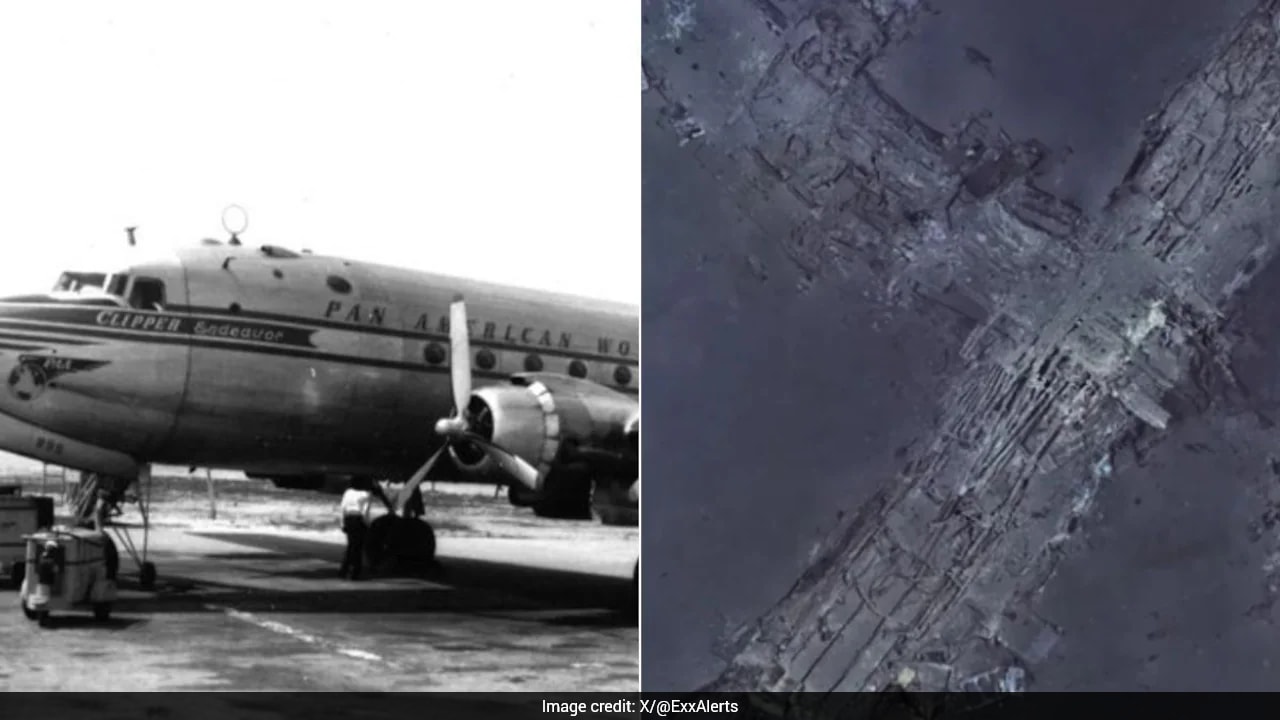
It was the Douglas DC-4 known as the Clipper Endeavor.
On April 11, 1952, Pan American World Airways Flight 526A plunged into the sea ten minutes after taking off from San Juan bound for New York City. Engine failures forced the crew to ditch the aircraft in heavy swells. Though all sixty-nine passengers and crew survived the immediate touchdown, fifty-two people perished in the water before rescue vessels arrived.
For seventy-four years, the wreck rested unmapped on the ocean floor. The recent discovery by the Air/Sea Heritage Foundation and undersea exploration firm Deep Sea Vision closes a long-standing historical mystery. More importantly, it brings fresh focus to a disaster that fundamentally altered commercial aviation protocol.
The mandatory safety briefings every airline passenger hears today before departure exist directly because of what went terribly wrong in the waves off Puerto Rico.
Minutes of Chaos in the Atlantic
Flight 526A took off on Good Friday in 1952 carrying sixty-four passengers and five crew members. Shortly after takeoff, the aircraft suffered catastrophic mechanical failures in both right-side engines. Realizing the plane could not maintain altitude, the flight crew executed an emergency water landing.
The touchdown was remarkably soft for an ocean ditching. The airframe remained intact upon impact.
Emergency exits were popped open, but what followed was absolute breakdown. In 1952, airlines did not conduct pre-flight safety demonstrations. Flight attendants were not required to show passengers how to put on life vests, where the emergency exits were located, or how to operate flotation equipment.
Panic set in rapidly as seawater rushed into the cabin.
Pan Am Flight 526A Breakdown:
• Total occupants: 69 (64 passengers, 5 crew)
• Immediate crash impact survivors: 69
• Fatalities from drowning/exposure: 52
• Final survivors rescued: 17
• Ditching duration before sinking: ~3 minutes
Passengers struggled in the dark to find life jackets stowed under seats. Many could not figure out how to strap them on in the emergency. Others were afraid to jump into rough ocean waves and stayed inside the sinking fuselage. The crew wrestled with heavy life rafts that proved difficult to deploy under violent surface conditions.
Within three minutes, the heavy four-engine aircraft sank beneath the waves.
Seventeen survivors were pulled from the water by responding military vessels and local craft. Fifty-two passengers drowned in and around the airframe. The tragedy revealed a deadly gap in civil aviation: surviving a forced crash landing meant little if passengers were unprepared to evacuate.
How Archives and Air Force Maps Cracked the Case
Finding an aircraft in deep ocean waters usually requires budgets running into tens of millions of dollars. The search for the Clipper Endeavor succeeded through methodical archival work rather than brute-force spending.
Russ Matthews, president of the Air/Sea Heritage Foundation, began investigating the crash in 2019 after coming across an obscure historical note regarding a passenger luggage tag that had washed ashore on a Florida beach decades earlier.
Matthews and a team of historical researchers spent five years scouring records across multiple institutions:
- Civil Aeronautics Board archives containing early technical analysis and pilot statements.
- U.S. Coast Guard logs detailing ocean currents and coordinates from initial rescue operations.
- Puerto Rican tribunal records from local inquiries held shortly after the crash.
- U.S. Air Force training logs revealing that a military flight crew in the area had witnessed the plane go down and mapped the estimated splash point.
Synthesizing historical weather data with the Air Force coordinates allowed researchers to narrow down a precise search area off the northern coast of Puerto Rico.
In April, Deep Sea Vision CEO Tony Romeo routed an exploration vessel to the site between scheduled commercial surveys. Utilizing an autonomous underwater drone equipped with synthetic aperture sonar, the search team scanned the designated zone. Upon analyzing the downloaded data, researchers spotted the fuselage and tail section, with the original Pan American logo clearly visible on the aluminum skin.
The Regulatory Shockwave That Followed
The Civil Aeronautics Board, predecessor to the modern Federal Aviation Administration, launched an exhaustive inquiry following the 1952 disaster. The findings were damning. The aircraft was survivable, yet more than three-quarters of those on board died because of confusion, lack of preparation, and equipment failures.
Regulators acted swiftly, establishing safety requirements that endure today.
Mandatory Passenger Briefings
Prior to Flight 526A, commercial air travel was treated like luxury rail or ocean liner transit. Pre-flight announcements were non-existent or informal. Regulators mandated that cabin crews demonstrate the location of exits, explain how to fasten seatbelts, and show how to put on flotation devices before every takeoff.
Accessible Flotation Devices
Investigators noted that passengers could not easily extract life vests from beneath their seats during a rapid evacuation. Regulations were updated to mandate standardized stowage locations, high-visibility labeling, and intuitive self-inflating mechanisms.
Standardized Evacuation Procedures
Airlines were forced to establish clear floor-path lighting, clear emergency exit pathways, and mandatory evacuation training for all flight attendants.
The crash demonstrated that passenger behavior during a crisis depends heavily on clear, repetitive instructions provided prior to an emergency. The quick briefings delivered on thousands of daily commercial flights around the world trace their origins directly to the lessons learned in the waters off San Juan.
Modern Deep Sea Tech Changes the Search Paradigm
The recovery of the Clipper Endeavor highlights an extraordinary shift in deep-ocean exploration. Historically, locating sunken aircraft required surface ships towing heavy sonar arrays on miles of cable, a slow process vulnerable to deep currents and severe weather.
Autonomous underwater vehicles operating independently near the ocean floor have changed those economics completely.
These untethered drones navigate complex terrain using programmed search grids, firing acoustic pulses sideways to construct ultra-high-resolution acoustic images. They operate beneath ocean swells, maintaining consistent altitude and heading regardless of surface conditions.
This technological evolution makes deep-water search operations faster and significantly more affordable for non-profit foundations and independent researchers. Sites once deemed permanently lost in thousands of feet of water are now well within reach.
Preserved as an Ocean Grave
Authorities in Puerto Rico and international aviation historical groups have confirmed the wreck site will remain undisturbed. The aircraft rests in dark, cold water 2,000 feet down, serving as a maritime grave for the fifty-two people who lost their lives.
Researchers recorded comprehensive sonar and visual data to build a complete three-dimensional model of the site for historical archives and educational exhibits.
The physical remains of the DC-4 sit quietly on the seafloor, but its legacy remains active in every airport terminal worldwide. Every time a flight attendant steps into the aisle to demonstrate a life vest, the lessons of Pan Am Flight 526A continue to save lives.


