January in Maine is not a season; it is an interrogation. The light leaves the sky by four in the afternoon, replaced by a slate-gray dome that presses down on the coast like a wet wool blanket. The wind does not merely blow; it strips the heat from your bones, turning the salt spray into stinging needles before it can even touch the frozen ground.
Down at the edge of the Atlantic, the ocean has stopped being a backdrop for summer postcards. It is dark, heavy, and furious.
If you stand on the shore of South Portland during a winter nor’easter, you hear the coastline before you see it. You hear the deep, concussive thud of water slamming against earth, a sound like a bass drum beaten by a giant. You watch the water crawl higher than it did last year, chewing away at the banks, swallowing the dunes, turning centuries of stubborn granite and packed sand into a slurry of foam and loss.
We tend to think of the coast as permanent. It is a comforting illusion. We build our homes, our walking paths, and our memories on the edge of the continent, pretending the line between land and sea is written in ink rather than erased by every tide. But the ocean is always keeping score.
Then come the trees.
Not fresh-cut timber or massive engineered seawalls of poured concrete and rusted rebar. No. These are the ghosts of December. They are the Balsam firs and Fraser pines that stood in living rooms across the city just weeks ago, draped in tinsel, catching the glow of fairy lights while children shook wrapped boxes beneath them. Now, stripped of their ornaments and dumped curbside, they are dead wood.
Or so it seemed.
In South Portland, someone looked at a pile of discarded holiday greenery and saw an army.
To understand why this matters, you have to look past the romanticism of the coast and look at the physics of destruction. When a storm surge pushes inland, it hits a beach with raw, unmitigated kinetic energy. It hits a slope of sand, picks it up, and drags it back out to sea. Without a physical barrier to break that momentum, the beach retreats yard by yard, winter by winter, until there is nothing left between the water and the infrastructure behind it.
Engineers will tell you to build bulkheads. Pour the concrete. Drive steel sheets deep into the bedrock. Fight the water with harder water, heavy and gray and expensive.
It never works for long. The ocean is patient. It undermines the concrete, scours the base of the seawall, and laughs at our arrogance. When you fight nature with sheer force, nature simply waits for you to run out of money.
The people of South Portland chose a different path. They chose humility.
Picture Arthur, a hypothetical lifelong resident whose family has watched the local shoreline shift for three generations. He isn't a marine biologist or a coastal engineer. He is a guy with calloused hands, a heavy Carhartt jacket, and a beat-up pickup truck with salt crusting the wheel wells. When he looks at the eroding bank behind the local park, he doesn't see a complex ecological crisis requiring a million-dollar federal grant. He sees a problem that needs a shovel, some sweat, and a few hundred discarded trees.
"People think you need heavy machinery to fix a beach," Arthur might tell you, leaning against the tailgate of his truck while his breath plumed white in the freezing air. "You don't. You just need to know how to catch what the wind is already throwing at you."
That is the secret. That is the entire mechanism of the operation.
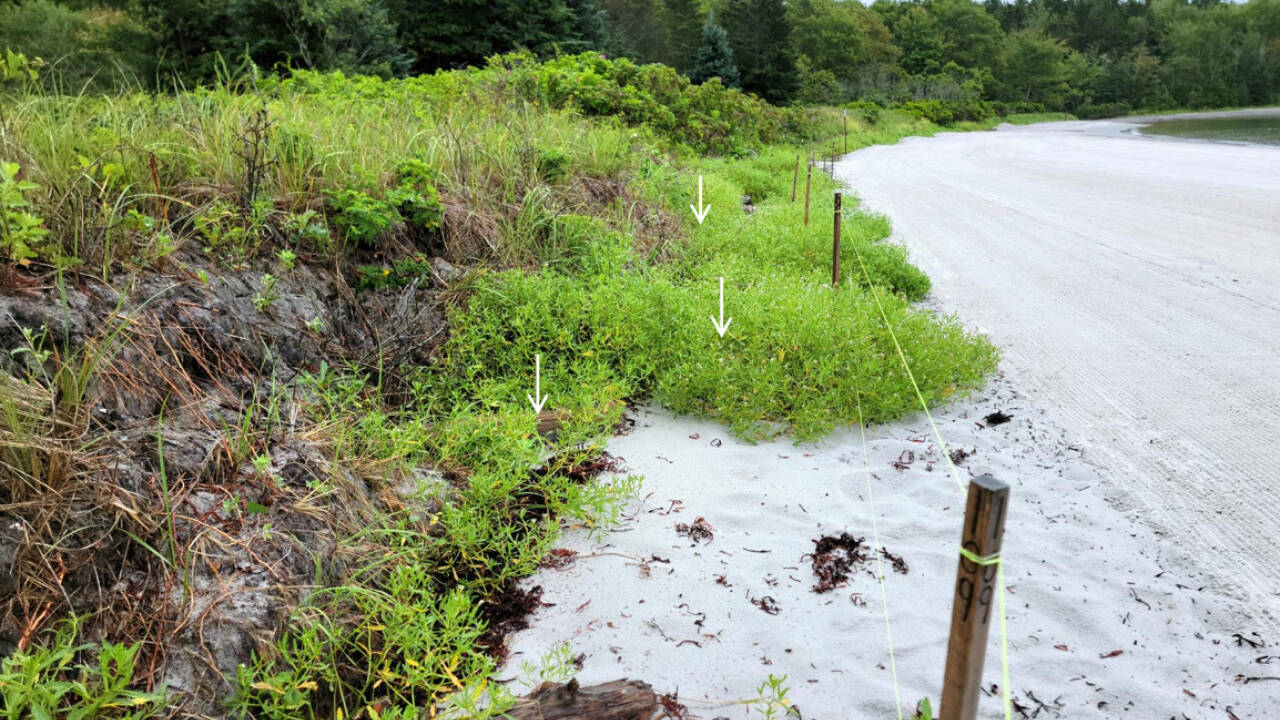
Over two hundred Christmas trees, collected from curbs and transfer stations across the city, were hauled down to the eroded beach. Workers and volunteers didn't plant them upright to pretend they were still alive. They laid them down horizontally, stacking them in overlapping rows at the base of the eroding dunes, anchoring them securely with stakes and heavy cables.
At first glance, it looks like a bizarre graveyard of the holidays. A haphazard pile of drying needles and bare brown branches sitting right where the tide rolls in.
Walk away and come back a month later.
The wind is blowing off the water, howling across the frozen sand, carrying thousands of tiny, invisible grains inland. Normally, that wind-blown sand would drift harmlessly across parking lots or blow back out to sea. But today, it hits the wall of discarded pine and fir branches.
The needles act as fingers. The complex matrix of twigs acts as a comb.
As the wind rushes through the dense lattice of the tree branches, it loses velocity. When air slows down, it drops its cargo. The sand falls out of the wind and settles deep within the shelter of the branches.
Day by day, storm by storm, tide by tide, the sand piles up. It fills the spaces between the boughs. It buries the trunks. It forms a new, stable core beneath the surface.
Nature does the heavy lifting. The trees are merely the scaffolding, a biodegradable skeleton that tricks the elements into repairing the damage they caused.
By spring, the needles will have dropped, enriching the soil. The branches will slowly break down over years, feeding the microbes and beach grasses that take root in the newly captured earth. The marram grass moves in next, sending its deep, anchoring roots through the buried pine needles, knitting the loose sand into a living, breathing dune.
It is brilliant in its simplicity. And it costs next to nothing compared to the millions spent on artificial nourishment projects that get washed away by the very next hurricane.
Yet, looking at this operation reveals a deeper truth about how we inhabit the world. We live in an era obsessed with high-tech solutions. We look to algorithms, synthetic materials, and massive infrastructure projects to save us from the consequences of our changing climate. We want a clean, sterile, engineered fix that requires no mess and no effort.
The ocean does not care about our engineering degrees.
The ocean responds to cycles. It responds to systems that have been running for millions of years before the first concrete pourer ever mixed cement. By taking what we threw away—the discarded symbols of our fleeting domestic joy—and redirecting them back into the earth, the community closed a loop.
Trash becomes treasure. Death becomes foundation. The discarded pine tree that warmed a living room for a few weeks in December now anchors a coastline against the fury of January.
Consider the alternative. Every year, millions of Christmas trees are tossed into landfills or ground into mundane mulch, their potential wasted in bureaucratic disposal routines. Multiply that across thousands of coastal towns facing rising seas and intensifying storms. The raw material for coastal defense is sitting on curbsides every single winter, waiting for someone to look past its obsolescence.
This is not a cure-all. It will not stop sea-level rise on its own. It will not replace the urgent need to address the broader atmospheric realities warming our planet. To pretend otherwise would be foolish.
But it buys time. It protects a road, a park, a home, a piece of shared public coastline where children run in the summer and old men watch the gulls in the fall. It creates a buffer where none existed yesterday.
And more than that, it changes how we see our waste.
When you watch the tide recede from Willard Beach, leaving behind a thin skim of foam over a fresh, wide shelf of sand held in place by the hidden bones of yesterday's holiday decorations, you realize something profound. The solutions to our biggest problems are often right in front of us, discarded, overlooked, waiting for someone to recognize their worth.
The storm will come back next week. The wind will howl off the gray Atlantic. The water will rise, searching for weaknesses in the shore, hungry for earth.
Let it try. The trees are waiting.